Short Answer
On the morning of January 16, 1920, Americans woke to a nation that was, in the words of many editors, “bone dry.” The ratification of the 18th Amendment exactly one year earlier had set the stage for the nation’s most sweeping social experiment, and now the Volstead Act was in force. Newspapers, the primary source of information and opinion for the public, were filled with both celebration and foreboding. The New-York Tribune, reporting on the House vote in December 1917, had declared that “nationwide prohibition won in the House” and noted the narrow margin—”eight votes more than the necessary two-thirds of the membership of the House required for adoption and twenty-six more than two-thirds of those voting.” The press had been instrumental in the movement’s rise, but as the 1920s unfolded, it would also chronicle the law’s failures and ultimately become a powerful voice for its repeal. This article reconstructs that story through the pages of the era’s newspapers, showing what Americans read, believed, and feared as they lived through the “Noble Experiment.”
What Happened?
The Prohibition era began with the ratification of the 18th Amendment to the U.S. Constitution on January 16, 1919. The amendment, which banned the manufacture, sale, and transportation of intoxicating liquors, was the culmination of a century-long temperance movement. The House of Representatives had passed the resolution on December 18, 1917, after a long debate, and the Senate had already given its approval in August 1917. The amendment was sent to the states, and within a year it had the necessary three-fourths of the state legislatures. The Volstead Act, which provided the enforcement mechanism, was passed by Congress on October 28, 1919, over President Woodrow Wilson’s veto. The law defined “intoxicating liquor” as any beverage containing more than 0.5% alcohol by volume, effectively prohibiting all beer, wine, and spirits. The amendment took effect on January 16, 1920, exactly one year after ratification. The next day, the Volstead Act became the law of the land, and the federal government began enforcing the ban. The era lasted until December 5, 1933, when the 21st Amendment repealed the 18th, marking the first and only time in U.S. history that a constitutional amendment was repealed.
How It Was Seen at the Time
In the early years, the press was largely supportive of Prohibition. The temperance movement had long used newspapers to spread its message, and many editors saw the law as a great moral victory. The language of the era was filled with religious and patriotic fervor. The phrase “Noble Experiment” was coined by President Herbert Hoover, but even before that, the press spoke of the “great social experiment” and “the dry crusade.” The New-York Tribune’s December 1917 report celebrated the House vote as a triumph, and many editorials predicted that the nation would be transformed—that crime, poverty, and social disorder would decline. The Washington Herald in 1920 declared, “The saloon is gone, and with it the curse of the family.” Yet as the decade wore on, the tone of the press began to shift. Newspapers increasingly reported on the law’s unintended consequences: the rise of speakeasies, the smuggling of liquor, and the corruption of law enforcement. By the late 1920s, many papers were calling for modification or repeal. The journalism scholar Robert Colby Wilson, in his 2020 thesis, observed that “At the dawn of national Prohibition, the movement had large support in national media; by repeal, the media was leading the charge against it.” The press, which had helped to pass the law, would ultimately play a decisive role in its undoing.
Historical Snapshot
| Aspect | Detail |
|---|---|
| Date | January 16, 1919 (ratification of 18th Amendment); January 16, 1920 (amendment took effect); December 5, 1933 (repeal) |
| Place | United States, with enforcement centered in major cities and along borders |
| People | Members of Congress, state legislators, federal agents (Prohibition Bureau), bootleggers, temperance advocates, ordinary citizens |
| What Happened | The manufacture, sale, and transport of alcohol were banned, leading to a rise in illegal speakeasies, smuggling, and organized crime. |
| Why It Mattered | It was the first constitutional amendment to restrict individual liberties and the first to be repealed, and it reshaped American society, law enforcement, and politics. |
Contemporary Newspaper Coverage
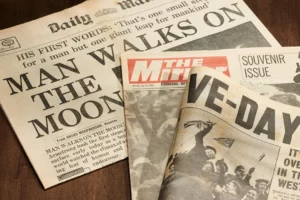
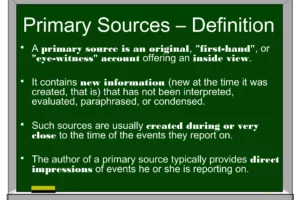
Newspapers were the primary source of information about Prohibition, and their coverage evolved from enthusiastic support to critical scrutiny. The New-York Tribune reported on the House vote on December 18, 1917, with the headline “Nationwide Prohibition Won in the House.” The article noted that the margin was “just eight votes more than the necessary two-thirds of the membership of the House required for adoption and twenty-six more than two-thirds of those voting.” This kind of precise reporting was typical of the era, as papers gave the public the details of the legislative process. When the amendment went into effect in 1920, many papers published editorials celebrating the “dry” era. The El Paso Herald ran a series of articles titled “Prohibition Before House” and “Prohibition in the House,” chronicling the debates.
As the 1920s progressed, the press turned to the law’s failures. Stories of raids on speakeasies, the capture of rum-runners, and the corruption of officials filled the front pages. The Chicago Tribune and the New York Times ran investigative pieces on the rise of the mob. By 1930, many papers were openly calling for repeal. The New York World famously ran a series of articles on the failures of Prohibition, and the Washington Post published a poll showing that a majority of Americans wanted the law changed. The press’s role was so significant that the historian Wilson concluded that journalism “shaped the rise and fall of Prohibition”—the same newspapers that had helped to pass the amendment were now helping to repeal it.
What People Feared
From the start, there were fears about the consequences of Prohibition. Temperance advocates had argued that alcohol led to crime, poverty, and the breakdown of the family. But as the law took effect, other fears emerged. Many Americans worried that the government was overstepping its bounds, violating individual liberties. The New York World editorialized in 1920 that “the right to drink is a natural right, and the government has no business to take it away.” Others feared that the law would create a class of criminals, as the demand for alcohol continued. Indeed, the rise of organized crime, personified by Al Capone, confirmed those fears. The newspapers reported on the “speakeasy” culture and the violent turf wars between rival gangs. There were also fears about the quality of the illegal liquor—many people were poisoned by tainted alcohol, and newspapers reported on the deaths and blindness caused by “rotgut” whiskey. The press also worried about the corruption of law enforcement, as officers were often bribed to turn a blind eye. These fears were not unfounded; by the late 1920s, the murder rate had climbed, and the public’s faith in the law had been eroded.
What People Expected Would Happen Next
In the early days, many people expected that Prohibition would be a great success. Temperance advocates predicted that the nation would become more productive, healthier, and more moral. The New York Times reported on the first day of Prohibition that “the first day of the dry era was marked by no disorder, no drunkenness, and no liquor.” Some even predicted that the law would be permanent. However, as the decade went on, expectations shifted. By the mid-1920s, many Americans expected the law to be modified, if not repealed. The newspapers published polls and surveys showing a growing number of people who wanted to legalize beer and wine. The Literary Digest ran a famous straw poll in 1922 that showed a significant minority wanted to repeal. The press also reported on the political movements to amend the law, such as the Association Against the Prohibition Amendment, which was founded in 1918 and gained strength. By 1930, many newspapers were predicting that the amendment would be repealed within a few years. They were right: the 21st Amendment was ratified in 1933.
Contemporary Terminology
The era gave birth to a rich vocabulary that reflected the conflict between the law and the people. The term “dry” referred to a person who supported Prohibition, while “wet” referred to an opponent. The “Noble Experiment” was a phrase used to describe Prohibition, often by President Hoover. “Speakeasy” was the name for an illegal bar, where patrons had to speak quietly to avoid detection. “Bootlegging” originally referred to the practice of hiding a flask in a boot, but came to mean the illegal production and sale of alcohol. “Rum-running” was the smuggling of alcohol by sea. “Bathtub gin” was a cheap, homemade gin often made in a bathtub. “Moonshine” was illegally distilled whiskey. The Volstead Act was also known as the “Dry Law” or the “Prohibition Law”. The press used these terms freely, and they remain part of the American lexicon.
Aftermath
When the 21st Amendment was ratified on December 5, 1933, the nation celebrated. The newspapers reported the repeal with jubilation. The New York Times ran a front-page headline “Prohibition Repealed” and described the scenes of celebration across the country. The amendment had been in effect for 13 years, 10 months, and 19 days. The repeal did not mean the end of all alcohol regulation; states and localities continued to have laws, and the federal government retained a role in taxing and regulating. But the era of national prohibition was over. The aftermath saw a new era of legal drinking, but the social and political changes of the 1920s left a lasting impact. The rise of organized crime continued for years, and the federal government’s power to regulate commerce was expanded. The newspapers that had helped to bring about the repeal moved on to other issues, but the lesson of the Noble Experiment was not forgotten.
How Historians See It Today
Modern historians view Prohibition not as a simple moral crusade, but as a complex intersection of social, political, and economic forces. At the time, many contemporaries saw it as a great moral victory or a disastrous infringement on liberty. Today, historians emphasize the role of the media in shaping public opinion, as well as the unintended consequences of the law. The 2020 thesis by Robert Colby Wilson, “Whiskey and Write: How Journalism Shaped the Rise and Fall of Prohibition,” argues that the press was not a neutral observer but a powerful actor that helped to build the movement and then to tear it down. Wilson writes that “the movement had large support in national media; by repeal, the media was leading the charge against it.” Modern scholars also point out that the prohibition had a disproportionate impact on immigrant and working-class communities, and that the law was often enforced selectively. The legacy of the era includes the creation of the Federal Bureau of Investigation and the expansion of federal law enforcement, as well as the cultural memory of the Roaring Twenties. The historical interpretation has shifted from a story of moral reform to a more nuanced analysis of the complexities of social engineering and the power of the press.
Common Misconceptions
Related Primary Sources
- Chronicling America – The Library of Congress’s digital collection of historic newspapers, which includes thousands of articles about Prohibition, from the debates in Congress to the repeal.
- Congress.gov – The official website for U.S. federal legislative information, with the full Congressional Record of the debates on the 18th Amendment and the Volstead Act.
- The Library of Congress’s Prohibition: Topics in Chronicling America – A research guide with links to selected articles and search strategies for finding more.
- University of Memphis Digital Commons – The full text of Robert Colby Wilson’s thesis, “Whiskey and Write: How Journalism Shaped the Rise and Fall of Prohibition.”
FAQ
How did newspapers report the start of Prohibition in 1920?
Newspapers in 1920 covered the start of Prohibition with a mix of optimism and skepticism. Many papers printed editorials celebrating the end of the 'saloon' and the promise of a more moral society. The New-York Tribune, for example, reported on the House vote with detailed statistics, while the Washington Post wrote that 'the first day of the dry era was marked by quiet and order.' However, some papers, especially those in large cities, expressed concerns about the enforcement and the potential for crime.
What was the role of the press in the repeal of Prohibition?
The press played a crucial role in the repeal of Prohibition. As the negative consequences of the law became apparent—the rise of organized crime, corruption, and the illegal liquor trade—newspapers began to report on these issues extensively. They published investigative articles, opinion columns, and polls showing that a majority of Americans wanted a change. This coverage helped to shift public opinion and put pressure on politicians to repeal the 18th Amendment. The 21st Amendment was ratified in 1933, and the press celebrated the end of the 'Noble Experiment'.




Leave a Reply