
Short Answer
Quick Snapshot
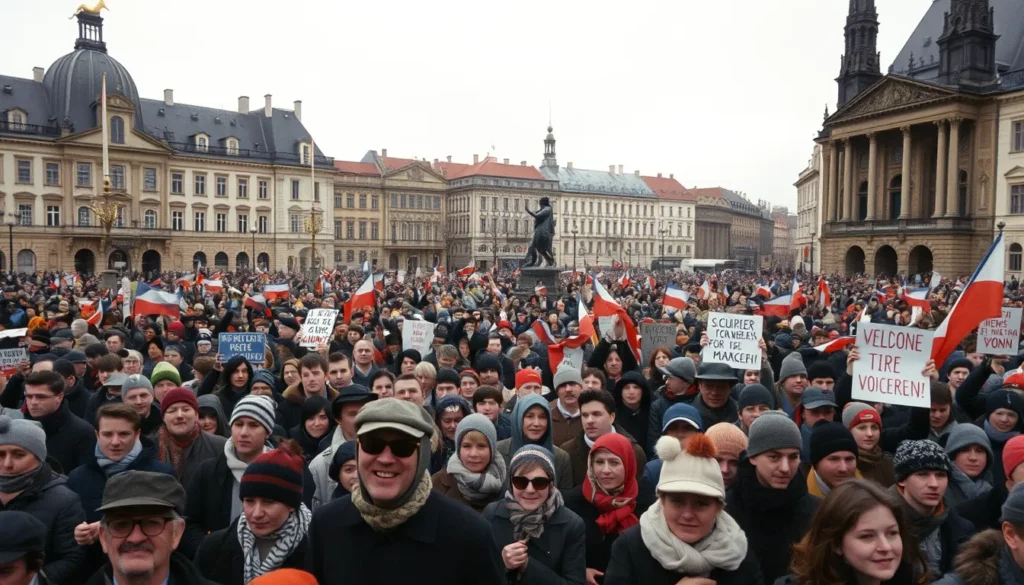
In 1989, Prague, the capital of communist Czechoslovakia, stood at the precipice of historic change. The city of a thousand spires, known for its Baroque architecture and rich cultural heritage, was also a place of grey uniformity and political repression. Yet beneath the surface, discontent simmered, particularly among students and intellectuals. The year culminated in the Velvet Revolution, a largely peaceful uprising that ended four decades of communist rule. From the brutal suppression of a student demonstration on November 17 to the euphoric jingling of keys in Wenceslas Square, Prague became the stage for a dramatic and swift transition. Through contemporary eyes—diaries, eyewitness testimonies, and newspaper reports—we can reconstruct the fear, hope, and determination that defined this pivotal year.
Prague in 1989
Prague, straddling the Vltava River, is a city of contrasts. In 1989, its historic center, with the iconic Charles Bridge and Prague Castle, remained a testament to centuries of Bohemian glory. However, the communist regime had left its mark: drab concrete housing estates (paneláky) on the outskirts, factories belching smoke, and a pervasive atmosphere of caution and conformity. The climate was temperate, with cold, snowy winters and warm summers. The city’s population was approximately 1.2 million, and it served as the political, economic, and cultural heart of Czechoslovakia. Despite the regime’s control, Prague retained a vibrant underground culture, with dissident circles, clandestine publications, and a lively music scene. The air in 1989 was thick with anticipation, as reforms swept through neighboring Eastern Bloc countries. As one witness recalled, ‘There was something in the air and the people could feel it.’
Population & Economy
In 1989, Prague had about 1.2 million inhabitants. The economy was centrally planned, with most enterprises owned by the state. Major industries included engineering, electronics, food processing, and chemicals. The city was home to large factories such as ČKD (transport machinery), Tesla (electronics), and the Prague Breweries (Staropramen). Employment was virtually guaranteed, but wages were low and productivity stagnant. The cost of living was heavily subsidized: a loaf of bread cost around 2.50 Czechoslovak korunas (Kčs), and rent for a state apartment was minimal. However, consumer goods were often scarce, with long queues for basic items like bananas or quality meat. A black market and ‘veksl’ shops (accepting Western currency) catered to the privileged. Despite these hardships, most Praguers enjoyed a modest standard of living, with access to healthcare, education, and public transport. The economy, however, was increasingly inefficient, burdened by outdated technology and Soviet-style planning.
Government & Politics
Prague was governed by the National Committee of the Capital City of Prague, headed by Mayor František Štafa, a member of the Communist Party of Czechoslovakia (KSČ). The city’s political life was tightly controlled by the party, with local elections offering only a single list of candidates. Key national figures included President Gustáv Husák and General Secretary Miloš Jakeš, both hardliners. Yet opposition existed: Charter 77, a human rights manifesto signed by intellectuals like Václav Havel, had been circulating since 1977. Dissidents faced surveillance, harassment, and imprisonment. In 1989, the political climate grew tenser as the regime resisted calls for reform. The Socialist Youth Union (SSM), a party-controlled organization, co-organized the November 17 demonstration to commemorate the 1939 Nazi closure of Czech universities. This official event, however, became a catalyst for protest when participants marched toward Wenceslas Square, demanding freedom and democracy.
Industry
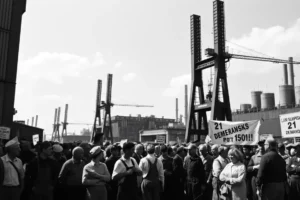
Prague’s industrial landscape was dominated by heavy engineering and manufacturing. The ČKD factory in Vysočany produced locomotives, turbines, and machinery for export. Tesla in Hloubětín manufactured electronics and radio equipment. The Prague Ironworks and the Vítkovice steelworks (though in Ostrava, Prague had processing plants) were vital. Food processing included breweries like Staropramen (founded 1869) and chocolate factories. The city also had a significant textile and clothing industry. Trades were highly specialized, with skilled workers forming the backbone of the industrial workforce. However, factories were often outdated, and environmental pollution was severe, particularly in areas like Vysočany. With the coming revolution, these enterprises would soon face privatization and restructuring, leading to economic upheaval.
Education
Prague was a center of learning. Charles University, founded in 1348, was the oldest university in Central Europe. Other institutions included the Czech Technical University (ČVUT), the University of Economics, and the Academy of Performing Arts (AMU). Literacy was nearly universal. Education was free and compulsory up to age 15. However, the curriculum was heavily indoctrinated with Marxist-Leninist ideology, and academic freedom was limited. Dissident professors and students faced expulsion or worse. The November 17 demonstration was initially a student commemoration of Jan Opletal, a medical student killed by the Nazis in 1939. Students played a crucial role in the Velvet Revolution, organizing strikes and protests that spread from universities to factories.
Transportation
Prague’s public transport system was extensive and well-used. Trams (streetcars) had been running since 1875 and covered the city with a dense network. The metro, opened in 1974, had three lines (A, B, and C) by 1989, connecting the outskirts to the center. Buses supplemented the system, especially in hilly areas. Private car ownership was growing, with Škoda and Trabant models common, but traffic was moderate. The city’s main railway stations—Hlavní nádraží and Masarykovo nádraží—linked Prague to the rest of Europe. Ruzyně International Airport handled domestic and international flights. Most people relied on public transport, which was cheap (a ticket cost 1 Kčs) and reliable, though often crowded. The transport network would later be modernized, but in 1989, it was a symbol of the city’s socialist infrastructure.
Everyday Life
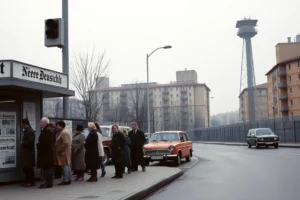
Daily life in Prague under communism was marked by routine and scarcity. People typically worked from 8 to 5, with a lunch break at a canteen or pub. Shopping involved frequent queues, especially for fresh produce, meat, and imported goods. Housing was largely in prefabricated paneláky, which were functional but drab. Many families also had a chata (weekend cottage) in the countryside, a cherished escape. Food was hearty and traditional: pork with dumplings and sauerkraut, goulash, and svíčková. Clothing was practical and often homemade, though Western brands were prized. Entertainment included television (two state channels), radio, cinema (both Czech and Soviet films), and pubs where people discussed politics in hushed tones. Social customs centered on family and friends, with weekend gatherings and celebrations like Christmas (though religious observance was discouraged). Despite the hardships, there was a strong sense of community and a deep appreciation for culture—theaters, concerts, and galleries were well-attended.
Major Events
The year 1989 was defined by a series of events that led to the Velvet Revolution. In January, the commemoration of Jan Palach’s self-immolation (1969) sparked a week of protests, brutally suppressed by police. In November, the fall of the Berlin Wall on November 9 inspired hope. On November 17, a student demonstration marking the 50th anniversary of the Nazi closure of universities took place at Albertov. It began as a permitted event but escalated when participants marched toward Wenceslas Square, chanting anti-communist slogans. Police stopped them on Národní třída, beating hundreds and arresting many. The violence, initially misreported by state media, galvanized public outrage. The following day, students declared a strike, and on November 19, the Civic Forum (led by Václav Havel) and Public Against Violence were founded. Massive demonstrations in Wenceslas Square grew daily, culminating in a general strike on November 27. By December, the communist government resigned, and on December 29, Václav Havel was elected president. The revolution was remarkably peaceful, hence the name ‘Velvet.’
What Newspapers Were Reporting
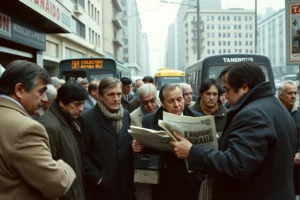
State-controlled newspapers like Rudé právo initially reported the November 17 events as a ‘provocation by anti-socialist elements’ and claimed the police had acted with restraint. They emphasized that the demonstration was unauthorized and that participants had attacked security forces. However, as the revolution gained momentum, the media began to shift. Independent publications like Lidové noviny, which had been circulating underground, emerged publicly, publishing eyewitness accounts and calls for change. Radio and television, initially loyal to the regime, faced pressure to report truthfully. By late November, even Rudé právo was publishing interviews with Civic Forum representatives. The contrast between the regime’s initial narrative and the actual events, as documented by later testimonies, underscores the role of media in both obscuring and revealing the truth.
What People Were Talking About
Conversations in late 1989 were dominated by the November 17 crackdown. A rumor spread that a student, Martin Šmíd, had been killed by police, which intensified protests. (In fact, Šmíd was alive, but the rumor, believed by many, became a powerful catalyst.) People spoke of police brutality, the courage of students, and the possibility of freedom. Diaries and letters from the period reveal a mix of fear and exhilaration. One participant recalled: ‘Wenceslas Square is the battlefield.’ The phrase captured the symbolic importance of the square as the site of historic struggles. In pubs and workplaces, people debated whether to join the strike, the future of the Communist Party, and the potential for Soviet intervention (which did not come). The jingling of keys during demonstrations—a symbol of opening doors to freedom—became a unifying sound. As the revolution progressed, conversations turned to hope and the daunting task of building a new society.
Historical Photographs
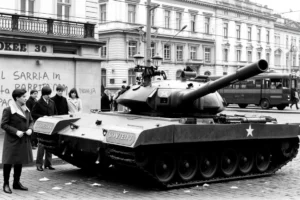
Numerous photographs document Prague in 1989, many taken by professional and amateur photographers. Notable images include Petr Čepek’s photograph of Národní třída on November 17, showing the confrontation between protesters and police. Other photos capture the massive crowds in Wenceslas Square, the jingling of keys, and Václav Havel addressing the nation. These photographs are preserved in archives such as the Czech Television Archive, the Václav Havel Library, and the National Museum. They provide a visual record of the fear, determination, and joy that characterized the revolution. The authenticity of these images, often grainy and black-and-white, evokes the raw emotion of the time. Together, they form a crucial primary source for understanding the atmosphere of 1989.
Documents & Primary Sources
Historians studying Prague in 1989 rely on a rich array of primary sources. Eyewitness testimonies, such as those collected in the book Ten den – 17. listopad 1989 (That Day – 17 November 1989), offer intimate perspectives from over 200 participants. The Václav Havel Library archives contain letters, speeches, and diaries from dissidents. State archives hold Communist Party records, police reports, and government documents, many of which were only opened after 1989. Newspapers like Rudé právo and Lidové noviny provide contemporary accounts, while photographs and video recordings (e.g., from Czech Television) capture the events. Personal diaries and letters, often donated to museums, reveal the emotional landscape. Additionally, the Oral History Center in Prague collects interviews with witnesses. These sources, taken together, allow a multifaceted reconstruction of the Velvet Revolution.
1989 Timeline
- January 15–21: Palach Week—protests commemorating Jan Palach’s self-immolation are suppressed.
- November 9: The Berlin Wall falls, inspiring Eastern Bloc reform movements.
- November 17: A student demonstration at Albertov turns into a march to Wenceslas Square; police violently disperse protesters on Národní třída.
- November 18: Students strike; protests spread across Prague.
- November 19: Civic Forum (Občanské fórum) and Public Against Violence (VPN) are founded; Václav Havel emerges as leader.
- November 20: A general strike is announced for November 27; massive demonstrations continue.
- November 24: Miloš Jakeš and the KSČ Presidium resign.
- November 27: A successful two-hour general strike demonstrates nationwide support.
- December 10: A government of national understanding is formed under Marián Čalfa.
- December 29: Václav Havel is elected President of Czechoslovakia.
What Changed Next
The Velvet Revolution transformed Prague and Czechoslovakia. In the following years, the country transitioned to a market economy, with rapid privatization and foreign investment. Political freedom allowed the emergence of a vibrant civil society, independent media, and a return of cultural life. However, the transition was not without hardships: unemployment rose, social inequalities widened, and corruption scandals emerged. In 1993, Czechoslovakia split peacefully into the Czech Republic and Slovakia, with Prague remaining the capital of the new Czech Republic. The city underwent extensive renovation, becoming a major tourist destination. The legacy of 1989 is commemorated annually on November 17, now a public holiday. The Velvet Revolution is remembered as a testament to the power of peaceful protest and the resilience of ordinary people.
Sources
- Ambrožová, Alžběta, et al. Ten den – 17. listopad 1989. Prague: Argo, 2019.
- Radio Prague International. ‘November 17, 1989 reconstructed through testimonies of 300 participants in new book.’ November 13, 2019. https://english.radio.cz/november-17-1989-reconstructed-through-testimonies-300-participants-new-book-8115631
- Václav Havel Library. ‘That Day, 17 November 1989.’ November 19, 2019. https://www.vaclavhavel.cz/en/index/calendar/1640/that-day-17-november-1989
- Wheaton, Bernard, and Zdeněk Kavan. The Velvet Revolution: Czechoslovakia, 1988–1991. Boulder: Westview Press, 1992.
- Shepherd, Robin. Czechoslovakia: The Velvet Revolution and Beyond. Basingstoke: Macmillan, 2000.
FAQ
What was the population of Prague in 1989?
Approximately 1.2 million people.
What major events happened in Prague in 1989?
The Velvet Revolution, which began with a student demonstration on November 17 that was brutally suppressed by police, leading to mass protests and the eventual fall of the communist regime.
What primary sources are available for studying Prague in 1989?
Eyewitness testimonies (e.g., in the book Ten den – 17. listopad 1989), newspaper archives (Rudé právo, Lidové noviny), photographs, diaries, and documents from the National Archive and the Václav Havel Library.
How did daily life in Prague in 1989 differ from today?
Under communism, there were shortages of consumer goods, limited freedom of speech, and state-controlled media. Today, Prague is a democratic market economy with a wide array of goods and freedoms.



Leave a Reply