
Short Answer
In the spring of 1944, the fields of southern England were alive with the rumble of tanks—but many of them were made of rubber and canvas. Inflatable Sherman tanks sat beside dummy aircraft, while radio operators sent signals from a headquarters that existed only on paper. This was the world of Operation Fortitude, a deception so successful that it convinced the German High Command that the Allied invasion of Europe would land at Pas-de-Calais, not the beaches of Normandy. As the real soldiers of the Allied Expeditionary Force prepared for the greatest amphibious assault in history, a phantom army of decoys and fabricated intelligence worked to send Hitler’s divisions in the wrong direction. For the men and women of the British and American film industry, who created these illusions, it was a secret war fought with paint, canvas, and radio waves.
What Happened?
Operation Fortitude was a military deception operation by the Allied nations as part of the larger Operation Bodyguard, the overall deception strategy during the buildup to the 1944 Normandy landings (Wikipedia). The plan evolved from proposals submitted by Noel Wild, head of Ops (B), and John Bevan of the London Controlling Section in late 1943. Early revisions in January 1944 suggested a fictional buildup of troops in southern England, with the hope of drawing German attention to the Pas-de-Calais (Wikipedia).
Fortitude was divided into two subplans:
- Fortitude North – aimed at misleading the Germans into thinking an attack on Norway was imminent.
- Fortitude South – designed to convince the Germans that the invasion would occur north-east of Normandy, in the Pas-de-Calais (IWM).
Both plans involved the creation of phantom field armies. A fictitious First U.S. Army Group (FUSAG) was based in southern England, while a separate phantom force threatened Norway from Edinburgh (Wikipedia). The deception employed a range of techniques: inflatable tanks, dummy aircraft, fake radio traffic, and even a network of double agents feeding the Germans misleading information. According to the BBC, men and women from the film industry helped create these decoys, including dummy tanks and decoy aircraft that fooled the Nazis (BBC).
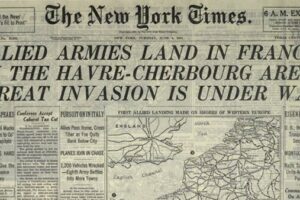
The operation was intended to divert Axis attention away from Normandy and, after the invasion on 6 June 1944, to make the Germans believe that the Normandy landing was a diversion and that the real invasion would come later at Pas-de-Calais (Wikipedia).
How It Was Seen at the Time
From the perspective of the German High Command, the threat of a landing at Pas-de-Calais was taken seriously. As the Imperial War Museum notes, “The Germans knew that at some stage the Allies would launch a cross-Channel invasion, but they were unsure of exactly where or when it would take place” (IWM). The deception was so effective that even after the Normandy landings, the Germans continued to hold significant forces in the Pas-de-Calais region, expecting a second invasion.
“The Germans knew that at some stage the Allies would launch a cross-Channel invasion, but they were unsure of exactly where or when it would take place.” – Imperial War Museum
For the Allied soldiers and civilians who participated in the deception, the secret was closely guarded. The BBC article recounts that the film industry created dummy tanks and decoy aircraft, and the participants were sworn to secrecy (BBC). Many of the men who built the decoys had no idea of the full scope of the plan.
Historical Snapshot
| Aspect | Detail |
|---|---|
| Date | 1943–1944 (planning and execution) |
| Place | England (southern coast and Scotland) and across the English Channel |
| People | Noel Wild, John Bevan, Colonel David Strangeways, British and American military planners, film industry craftsmen |
| What Happened | Allied forces created a phantom army, dummy tanks, and false radio traffic to mislead the Germans about the location of the D-Day invasion. |
| Why It Mattered | It diverted German forces away from Normandy, contributing to the success of the D-Day landings. |
What People Knew at the Time
| What People Knew Then | What We Know Now |
|---|---|
| The German High Command believed an invasion was imminent but was unsure of its location; they were convinced it would come at Pas-de-Calais. | We know the invasion was at Normandy, and that Fortitude was a deliberate deception that successfully misled the Germans. |
| The Allied public knew a major invasion was being planned, but had no knowledge of the deception operation. | We know the full extent of the dummy tanks, phantom armies, and double agents used in Fortitude. |
| Many soldiers and civilians in England saw inflatable tanks and dummy aircraft but were told they were for training or camouflage. | We understand that these were part of a coordinated deception strategy. |
Different Perspectives
Allied Perspective
For the Allied planners, Fortitude was a life-and-death gamble. Colonel David Strangeways, head of Montgomery’s R Force deception staff, was critical of early plans and rewrote them to focus on a more realistic threat (Wikipedia). The film industry professionals who created the decoys saw themselves as contributing to the war effort. The BBC notes that they “helped deceive the enemy into thinking that the invasion was going to happen in the Pas-de-Calais” (BBC).
German Perspective
The German High Command, including Hitler himself, was convinced by the deception. They kept strong divisions in the Pas-de-Calais region, waiting for a landing that never came. The IWM notes that the Germans were “unsure of exactly where or when” the invasion would occur, but the phantom army’s presence convinced them of the Pas-de-Calais threat (IWM). After D-Day, the Germans continued to expect a second invasion, which allowed the Allies to build up their forces in Normandy.
Aftermath
The immediate aftermath of the Normandy landings saw the deception continue. The Germans kept the 15th Army in the Pas-de-Calais for weeks, waiting for the “real” invasion. This allowed the Allies to consolidate their beachheads. Eventually, the phantom army was exposed, but by then the Allies had gained a decisive foothold in France. The success of Fortitude was a turning point in the war, as it prevented a German counteroffensive against the Normandy beaches.
How Historians See It Today
Historians today regard Operation Fortitude as one of the most successful deception operations in military history. Contemporary accounts, such as those from the Imperial War Museum, highlight the clever combination of physical decoys, radio deception, and double agents. The operation is studied as a model of strategic misdirection. Modern scholarship emphasizes the importance of the phantom army in convincing the Germans to commit their reserves away from the critical landing zone. The success of Fortitude is not only measured by the actual invasion, but by the fact that the Germans were still expecting an attack on Pas-de-Calais weeks after D-Day.
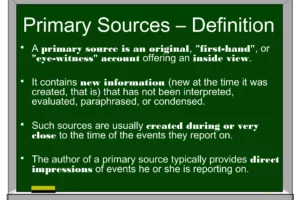
The primary sources—the inflatable tanks, the radio broadcasts, the secret reports—reveal a war of illusion as much as of force. Operation Fortitude teaches us that sometimes the greatest weapon is not the one that fires, but the one that makes the enemy look in the wrong direction. The phantom army, built of rubber and canvas, helped save thousands of lives and changed the course of the war.
FAQ
What was the purpose of Operation Fortitude?
Operation Fortitude was a military deception operation designed to mislead the German High Command about the location of the Allied invasion of Europe in 1944. It aimed to make the Germans believe the invasion would occur at Pas-de-Calais, not Normandy, by creating phantom armies and using dummy equipment and radio deception.
How did the Allies create the fake tanks?
The Allies used inflatable rubber tanks and dummy aircraft, often designed by the film industry. These decoys were set up in fields and airfields to give the appearance of a large military force. They were moved and replaced to simulate activity, and were used in conjunction with fake radio traffic and double agents to reinforce the deception.



Leave a Reply