
Short Answer
On August 9, 1945, Nagasaki lay beneath the heavy summer heat of Kyushu, Japan’s southern island. Three days had passed since the first atomic bomb destroyed Hiroshima, and the war had taken on a new and terrible shape. In Nagasaki’s wartime rhythm, schoolboys worked eight-hour shifts at the Mitsubishi Arms Factory under the student mobilization order. Sixteen-year-old Norio Gunge, a fourth-year student at Nagasaki Prefectural Middle School, was at home that morning, about 2.5 kilometers from the city center, resting before his night shift. At two minutes past eleven, he heard “an astonishing, weird sound of a B-29 swooping down” and looked up through a window. High above the city, New York Times science reporter William J. Laurence flew in the lead B-29 Superfortress of a three-plane mission, observing the weapon he called “this man-made meteor” — the second atomic bomb in three days, with an explosive energy equivalent to 20,000 to 40,000 tons of TNT. The bomb, code-named “Fat Man,” was about to fall.
What Happened?
The second atomic bomb, code-named “Fat Man,” was dropped on Nagasaki on August 9, 1945, three days after the first bomb destroyed Hiroshima on August 6. The mission consisted of three specially designed B-29 Superfortresses; two carried no bombs, while the lead plane carried the atomic bomb. William J. Laurence, a New York Times science reporter, was among the small group of scientists and Army and Navy representatives privileged to witness the loading of the bomb into the Superfortress the night before the mission.
The bomb exploded over the city at approximately 11:01 a.m. local time. Its explosive energy was equivalent to 20,000 tons of TNT, and under favorable conditions, 40,000 tons, according to Laurence’s report.
For those on the ground, the event was sudden and catastrophic. Norio Gunge, 16 years old, was at home about 2.5 km from the hypocenter because he was on the night shift at the Mitsubishi Arms Factory Saiwai-machi Plant, 1.5 km from the blast center. At two minutes after 11 o’clock, he heard “an astonishing, weird sound of a B-29 swooping down.” Torao Takemoto, 14 years old, was exposed at approximately 1 km from the hypocenter. Masahiro Ito, 10 years old, had been evacuated with his family to the countryside in the spring of 1945.
How It Was Seen at the Time
For the Americans, the bombing was framed as a scientific and military triumph. Laurence’s account, released through the War Department’s Bureau of Public Relations Press Branch, described the bomb in reverential terms:
“We are on our way to bomb the mainland of Japan. Our flying contingent consists of three specially designed B-29 Superforts, and two of these carry no bombs. But our lead plane is on its way with another atomic bomb, the second in three days, concentrating its active substance, and explosive energy equivalent to 20,000, and under favorable conditions, 40,000 tons of TNT.”
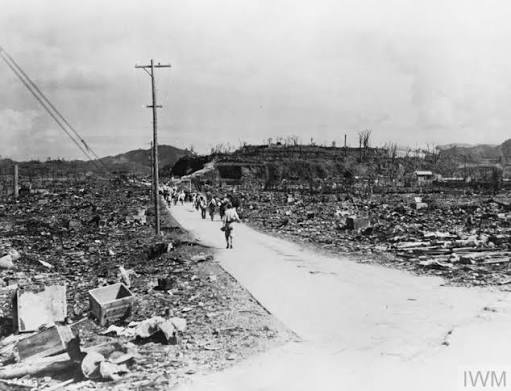
The language was that of a “ritual” and a “man-made meteor” — the bomb as a wonder of science, a marvel of engineering. For the Japanese survivors, the experience was entirely different. The bombing was a sudden, violent catastrophe that left physical and psychological scars. Their accounts speak of the sound of the B-29, the flash, and the aftermath — not of scientific achievement but of suffering and loss.
Historical Snapshot
| Aspect | Detail |
|---|---|
| Date | August 9, 1945 |
| Place | Nagasaki, Japan |
| People | William J. Laurence (New York Times reporter), Norio Gunge (16-year-old student), Torao Takemoto (14-year-old student), Masahiro Ito (10-year-old student) |
| What Happened | The second atomic bomb, “Fat Man,” was dropped on Nagasaki, three days after Hiroshima |
| Why It Mattered | Demonstrated the power of atomic weapons and helped bring the end of World War II |
Eyewitness Accounts
The eyewitness accounts of the Nagasaki bombing present a stark contrast between the perspective of the crew and the perspective of the survivors.
William J. Laurence, New York Times
“I watched the assembly of this man-made meteor during the past two days, and was among the small group of scientists and Army and Navy representatives privileged to be present at the ritual of its loading in the Superfort last night.”
Norio Gunge, 16 years old
Gunge, a student of Nagasaki Prefectural Middle School, was at home 2.5 km from the hypocenter on the morning of the bombing. “Two minutes after 11 o’clock, I heard an astonishing, weird sound of a B-29 swooping down. I looked up at the sky through a window, but…” — the account trails off, leaving the next moments beyond words.
Torao Takemoto, 14 years old
Takemoto, who was 1 km from the hypocenter, survived the blast but carried its consequences for life. He later wrote of a colleague who was exposed to radiation next to him:
“A colleague, who was exposed to radiation just next to me on that day in 1945, passed away last summer. This news came by letter from his wife. Through the former Nagasaki Prefectural Junior High School, I was told that he died from A-bomb related illnesses. I’m so terrified and can’t help thinking that I could be next.”
Masahiro Ito, 10 years old
Ito was evacuated with his family to Tayae in the spring of 1945. He was in the fifth grade at Tayae National Elementary School, living in what is now the city of Isahaya. His account records the experience of a summer vacation shattered by war.
Contemporary Newspaper Coverage
The most prominent contemporary newspaper coverage of the Nagasaki bombing was Laurence’s own account for the New York Times, distributed through the War Department’s Bureau of Public Relations Press Branch. Titled “Eye Witness Account Atomic Bomb Mission Over Nagasaki,” the report was dated August 9, 1945.
Laurence’s report described the mission in detail — the B-29 Superfortresses, the bomb’s explosive power, and the “ritual” of its loading. The tone was solemn and celebratory, reflecting the American view of the bombing as a decisive act that would end the war.
The account did not describe the civilian casualties on the ground — the flash, the heat, the destroyed city, or the survivors who would carry radiation-induced illnesses for decades. It was a report from the sky, not from the streets.
What People Knew at the Time
| What People Knew Then | What We Know Now |
|---|---|
| The bomb had an explosive energy equivalent to 20,000–40,000 tons of TNT | The bomb killed an estimated 70,000–80,000 people by the end of 1945 |
| The bomb was a “man-made meteor” and a scientific achievement | The bomb caused lifelong radiation-related cancers in survivors |
| The mission was a triumph of American engineering and industry | The bombing remains a subject of ongoing historical and ethical debate |
Aftermath
The aftermath of the Nagasaki bombing was one of immediate destruction and long-term suffering. Survivors like Torao Takemoto endured radiation-related illnesses for the rest of their lives — “in the stomach, intestines, bladder, prostate, gall bladder, and testicles” — and underwent repeated procedures for gastric ulcers and intestinal polyps.
The colleague of Takemoto, exposed to radiation next to him, died of A-bomb-related illnesses decades later, a letter from his wife arriving as a reminder of the bomb’s long shadow. The survivors, known as hibakusha, carried both physical and psychological wounds for the remainder of their lives.
How Historians See It Today
At the time, the bombing was viewed by many Americans as a legitimate and necessary act to end the war. Laurence’s account framed the bomb as a scientific triumph, a “man-made meteor” that would bring Japan to surrender.
Modern historians take a more complex view. They emphasize the human cost of the bombing, the long-term suffering of the survivors, and the ongoing ethical debates about the use of nuclear weapons. The survivors’ accounts provide a critical counterpoint to the official narrative, showing the bombing not as a triumph of science but as a catastrophe that destroyed lives and devastated bodies for generations.
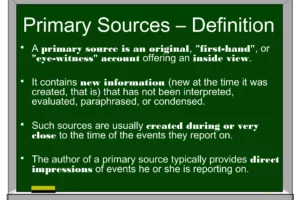
The Nagasaki bombing was experienced in radically different ways. For the American crew and observers, it was a scientific and military achievement — a “man-made meteor” that would end the war. For the Japanese survivors, it was a sudden, violent catastrophe that left physical and emotional scars for the rest of their lives. The primary sources — the official account of the mission and the survivors’ testimonies — together tell a story of a moment that was both a technological milestone and a profound human tragedy.
FAQ
What was the name of the atomic bomb dropped on Nagasaki?
The bomb was code-named 'Fat Man.' It was dropped on August 9, 1945, three days after the first bomb, 'Little Boy,' destroyed Hiroshima. The bomb's explosive energy was reported as equivalent to 20,000 to 40,000 tons of TNT.
Who was William J. Laurence?
William J. Laurence was a science reporter for the New York Times who accompanied the Nagasaki bombing mission. He witnessed the assembly and loading of the bomb and wrote an eyewitness account that was distributed through the War Department's Bureau of Public Relations Press Branch.
How did survivors describe the experience of the Nagasaki bombing?
Survivors described hearing a strange, swooping sound of a B-29 moments before the blast, followed by a blinding flash and catastrophic destruction. Many, like Torao Takemoto, suffered from radiation-related cancers and illnesses for the rest of their lives.






Leave a Reply