Short Answer
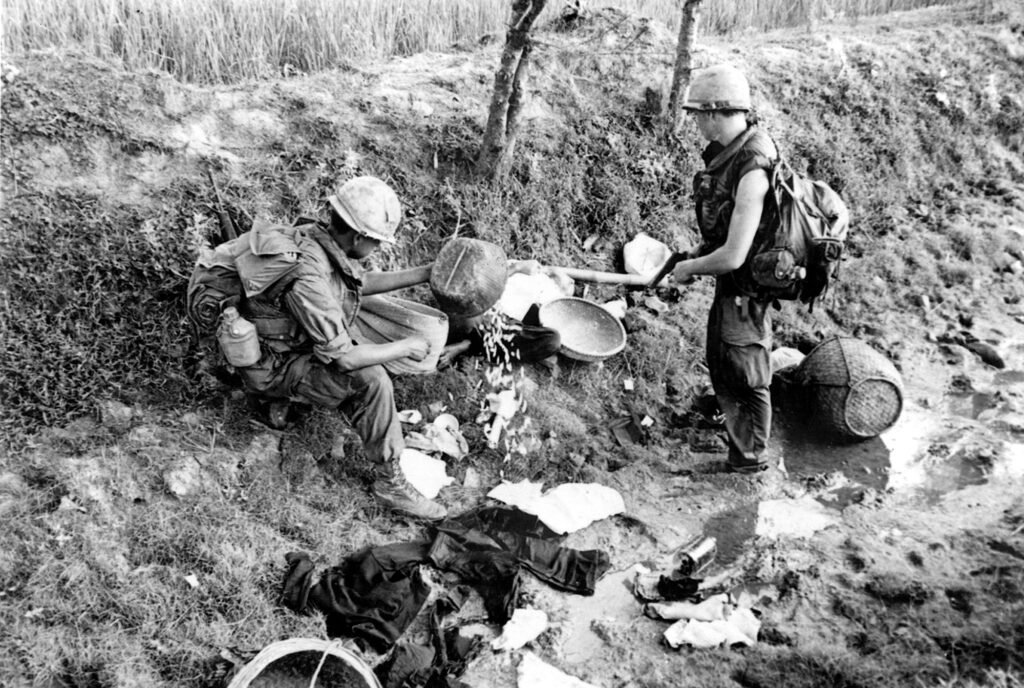
On the morning of March 16, 1968, a helicopter crew lifted off from a U.S. Army base in South Vietnam, bound for a routine reconnaissance mission over the village complex of Son My. The crew—Chief Warrant Officer Hugh Thompson, gunner Larry Colburn, and crew chief Glenn Andreotta—had no idea they were about to become witnesses to one of the most infamous events of the Vietnam War. As Colburn later recalled, the day began like many others, with the helicopter’s crew performing their standard duties. But what they saw on the ground that morning—and what they did in response—would eventually help force the U.S. military to confront a brutal truth it had tried to bury. For years, the massacre at My Lai remained hidden, known only to those who had been there and to a handful of investigators. It would take the courage of witnesses, the persistence of a freelance journalist, and the weight of an official inquiry to bring the full story to light.
What Happened?
On March 16, 1968, soldiers of the U.S. Army’s 23rd Infantry Division entered the hamlet of My Lai, a cluster of villages in the Quang Ngai Province, as part of a search-and-destroy operation. The operation was intended to root out a Viet Cong battalion reported to be in the area. Instead, the soldiers killed a large number of unarmed Vietnamese civilians—men, women, children, and elderly—in what would later be described as a massacre. The exact number of victims was never fully established, but contemporary reports and the subsequent official investigation confirmed that the killing was widespread and systematic.
Among the first to recognize the atrocity was the helicopter crew of Hugh Thompson. As Thompson’s aircraft flew over the hamlet, he saw soldiers shooting at civilians on the ground. Thompson and his crew landed their helicopter and confronted the soldiers, rescuing several Vietnamese civilians and flying them to safety. According to Larry Colburn, the helicopter’s gunner, Thompson was the first to report the killings to headquarters, and his report triggered the start of an investigation. Colburn later testified about these events before the Peers Inquiry, a military commission established to investigate the incident.
The massacre was initially concealed by military authorities, who reported it as a successful battle against a Viet Cong force. It was only in 1969, when the journalist Seymour Hersh began investigating the case of Lieutenant William Calley—who was being court-martialed for his role in the killings—that the story began to emerge publicly. Hersh’s reports, published in newspapers across the United States, brought the massacre to the attention of the American public and forced the Army to confront the full scope of what had happened.
How It Was Seen at the Time
For much of the first year after the massacre, the public had no knowledge of the events at My Lai. The Army treated the incident as a military operation, and the soldiers involved were instructed not to speak of it. When the story finally broke in 1969, it came as a shock to a nation already divided over the Vietnam War. The prevailing mood was one of disbelief and outrage, mixed with a sense of betrayal. Many Americans had believed that the war was being fought to protect Vietnamese civilians, not to kill them.
Seymour Hersh, the journalist who broke the story, described the initial tip he received: a friend with a source in the military told him that a U.S. soldier was being court-martialed for leading a massacre of Vietnamese civilians, and that the Army did not want it reported. Hersh’s investigation led him to Fort Benning, where he learned of the case against Lieutenant Calley. He later wrote that the Army had tried to keep the story quiet, but his reporting forced the issue into the open. The public response was immediate: anti-war activists seized on the massacre as evidence of the war’s brutality, while others defended the soldiers, arguing that they were acting under orders in a dangerous situation.
Historical Snapshot
| Aspect | Detail |
|---|---|
| Date | March 16, 1968 |
| Place | My Lai and surrounding hamlets, Son My Village, Quang Ngai Province, South Vietnam |
| People | U.S. soldiers of the 23rd Infantry Division; Vietnamese civilians; helicopter crew of Hugh Thompson, Larry Colburn, and Glenn Andreotta; later investigator General William R. Peers and journalist Seymour Hersh |
| What Happened | U.S. soldiers killed hundreds of unarmed Vietnamese civilians, including women, children, and the elderly. The massacre was initially covered up, but later exposed through eyewitness testimony and investigation. |
| Why It Mattered | The massacre and its cover-up became a symbol of the Vietnam War’s brutality and led to a major military investigation (the Peers Inquiry) and a public reckoning over U.S. conduct in Vietnam. |
Eyewitness Accounts
Eyewitness testimony formed the core of the Peers Inquiry, which collected the statements of more than 400 witnesses. Among the most powerful accounts was that of Larry Colburn, the helicopter gunner who, along with Hugh Thompson and Glenn Andreotta, tried to rescue Vietnamese civilians during the massacre. In a 2009 interview, Colburn described his role and what he saw:
“My job in a helicopter whether it was a [OH] 23 or a gunship, was to—I had the…”
Colburn went on to explain that the crew’s actions were a direct response to the horrors they witnessed. He testified that Thompson reported the killings to his superiors and urged Colburn to do the same. Two years later, both men appeared before the Peers Inquiry, where their testimony helped establish the scope of the massacre.
Official Reports
The most authoritative official document on the massacre is the report of the Department of the Army’s investigation, known as the Peers Inquiry, after its leader, Lieutenant General William R. Peers. The report, completed in 1970, consisted of multiple volumes, including a large collection of testimony. According to the report’s own description, Volume II comprised 32 books of testimony and summaries from all witnesses who appeared before the inquiry, arranged by military organization and then alphabetically by last name. The report was classified, with portions marked “For Official Use Only,” but its findings were eventually made public. It confirmed that a massacre had occurred and that there had been a systematic cover-up by the Army.
Contemporary Newspaper Coverage
Before the public learned of the massacre, the first mention in the press appeared in a brief article in The New York Times on September 7, 1969, reporting that Lieutenant Calley was being held for murdering an unspecified number of Vietnamese. But it was Seymour Hersh, writing for the Village Voice and later for a syndicated series, who broke the full story. As described in his own account, Hersh received a tip from a friend in the military, then made more than two dozen calls before finding a source who gave him a sketchy account of what had happened. He then traveled to Fort Benning, where he found the accused officer. Hersh’s reporting, which ran in dozens of newspapers, revealed the massacre and the cover-up, prompting a public outcry and a full investigation. The tone of the coverage was sober and damning, with headlines focusing on the murder of civilians and the Army’s attempts to suppress the truth.
What People Knew at the Time
| What People Knew Then | What We Know Now |
|---|---|
| In 1968–1969, the public knew very little. The massacre was covered up, and the official reports described the operation as a military success. Only the soldiers and a few officers were aware of the killings. | Today, thanks to the Peers Inquiry and later research, we know that the massacre was a deliberate and widespread killing of unarmed civilians, and that the military tried to conceal it. The full extent of the cover-up is documented in the inquiry’s testimony. |
| The public first learned of the massacre through Seymour Hersh’s reporting in 1969, which revealed the court-martial of Lieutenant Calley and the existence of a cover-up. | We now have a comprehensive record of the events, including the actions of Hugh Thompson’s crew, the number of witnesses, and the military’s failure to prosecute many of those responsible. |
How Historians See It Today
At the time, the massacre was often framed by the military and some members of the public as a tragic incident in a brutal war, with soldiers acting under pressure and in the chaos of combat. The Peers Inquiry itself was a step toward accountability, but its findings were not fully public until the 1970s. Modern historians, building on the primary sources of the inquiry and the testimony of witnesses, now regard the My Lai massacre as a war crime and a symbol of the Vietnam War’s moral complexity. They emphasize the courage of the helicopter crew who attempted to stop the killings and the importance of whistleblowers like Seymour Hersh in bringing the truth to light. The historical interpretation has shifted from a focus on individual blame to a broader analysis of military culture, the nature of counterinsurgency warfare, and the failure of command responsibility.
The story of the My Lai massacre is a testament to the power of eyewitness testimony and the persistence of investigative reporting. The primary sources—the testimony of soldiers, the official inquiry, and the newspaper accounts—reveal not only what happened on that day in 1968, but also how a nation struggled to come to terms with the truth of its own actions. The massacre remains a dark chapter in American military history, and its legacy is a reminder of the importance of accountability and the pursuit of truth, even in the midst of war.
FAQ
What was the Peers Inquiry?
The Peers Inquiry was a U.S. Army investigation launched in 1968 to investigate the My Lai massacre. It was led by Lieutenant General William R. Peers and produced a multi-volume report containing the testimony of hundreds of witnesses, which confirmed the massacre and exposed the subsequent cover-up.
How did Seymour Hersh uncover the My Lai story?
Seymour Hersh, a freelance journalist, received a tip from a military source in the fall of 1969 that a U.S. soldier was being court-martialed for leading a massacre of Vietnamese civilians. He made dozens of calls, found a sketchy account, and eventually located Lieutenant William Calley at Fort Benning. His reporting broke the story to the public.

Leave a Reply