
Short Answer
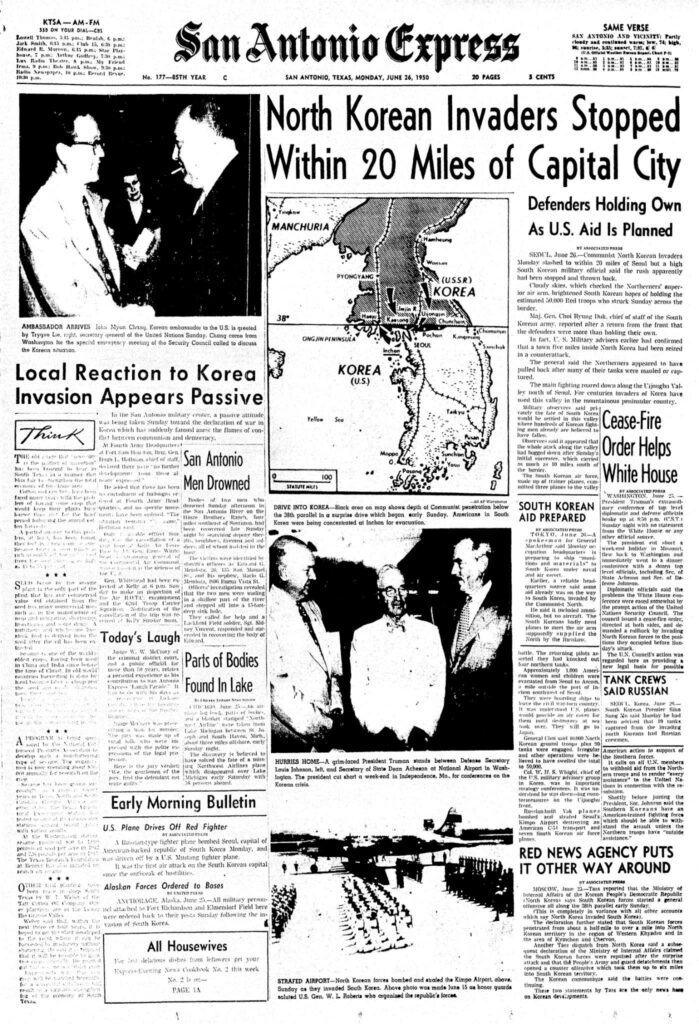
On the morning of June 25, 1950, the world woke to the sound of artillery along the 38th parallel. North Korean forces had crossed the border into South Korea, igniting a conflict that would consume the Korean Peninsula for three years and draw in the United States, China, and the United Nations. For the journalists who rushed to cover it, the war presented unprecedented challenges and dangers. Within days, hundreds of correspondents from nearly two dozen countries descended on the peninsula, many arriving in Tokyo before flying into a combat zone where the front lines shifted by the hour. The newspapers they produced—from the confident pronouncements of Pyongyang’s state press to the confused dispatches of Seoul’s dailies and the sober analyses of American papers—offer a remarkable window into how contemporaries understood a war that would reshape East Asia. This article reconstructs that coverage, drawing on the actual reports published in the first days and weeks of the conflict.
What Happened?
The Korean War began on June 25, 1950, when North Korean forces launched a full-scale invasion across the 38th parallel. The attack came as a surprise to much of the world, though tensions had been building since the peninsula was divided at the end of World War II.
Key events in the first week of the war:
- June 25, 1950: North Korean forces cross the 38th parallel in force, beginning the invasion of South Korea.
- June 26, 1950: South Korean newspapers report the invasion; the Dong-a Ilbo declares a state of emergency along the entire border.
- June 27, 1950: The United Nations Security Council calls on member states to assist South Korea in repelling the attack.
- June 28, 1950: North Korean forces capture Seoul, the South Korean capital, within just three days of the invasion’s start.
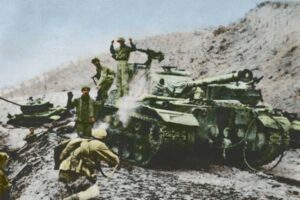
The speed of the North Korean advance stunned observers. By June 28, the Pyongyang radio was asserting that Seoul had fallen to the “Red invaders” at 6:30 p.m. Pacific Daylight Time the previous day, as monitored in Tokyo. American jet fighters and assault bombers had been dispatched on bombing and strafing missions against North Korean positions, and General Douglas MacArthur announced that South Korean troops were holding the invaders—but the reality on the ground was far different.
How It Was Seen at the Time
The contrast between North and South Korean press coverage in the first days of the war is striking. The North Korean press was confident and assertive, framing the invasion as a defensive response to South Korean aggression. The South Korean press, by contrast, was confused and uncertain, struggling to make sense of the sudden collapse of defenses along the border.
The Dong-a Ilbo, one of South Korea’s leading newspapers, reported on June 26 that “the puppet army suddenly made an attempt to launch an offensive to the South” and that “a state of emergency was declared throughout the 38th parallel.” The language reflects the chaos of the moment—the South Korean government itself was unsure of the scale of the attack.
In the United States, the initial reaction was one of cautious optimism. General MacArthur’s announcement that South Korean troops were holding the invaders was widely reported, even as the North Korean advance continued. The San Francisco Chronicle’s front page from June 28, 1950, captured the confusion: the paper reported both the fall of Seoul and MacArthur’s optimistic assessment in the same issue.
Historical Snapshot
| Aspect | Detail |
|---|---|
| Date | June 25, 1950 (war begins); June 28, 1950 (Seoul falls) |
| Place | Korean Peninsula, along the 38th parallel |
| People | North Korean forces, South Korean military, UN forces, American and international correspondents |
| What Happened | North Korea invaded South Korea; Seoul fell within three days |
| Why It Mattered | The war drew in the US, China, and the UN, and shaped the Cold War for decades |
Contemporary Newspaper Coverage
The scale of press coverage was unprecedented. By the end of the first week of the war, there were 271 correspondents from 19 countries reporting the conflict, according to Time magazine. They came from around the world—debonair columnist Joe Alsop arrived in Tokyo with five pieces of luggage before being convinced he needed only a single musette bag, while Randolph Churchill, representing the London Daily Telegraph, caused an uproar at Tokyo’s Press Club by demanding to sign chits for drinks before paying his membership deposit.
The conditions were rough. Correspondents took their chances with the troops, ate and slept where they could, and were soon covered with mosquito and flea bites. One harassed Public Information officer, looking over a group of newly arrived correspondents, muttered: “By the time we start getting back some of the ground we’ve lost, there’ll be a reporter in every rifle squad.”
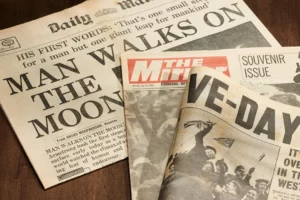
The San Francisco Chronicle’s June 28, 1950 front page is a remarkable artifact of the period. The headline covered the capture of Seoul, with a United Press story reporting that “the North Korean Pyong Yang radio, monitored in Tokyo, asserted Seoul fell to the Red invaders at (6:30 p.m. PDT Tuesday).” The same page reported that American jet fighters and assault bombers had returned from “successful bombing and strafing missions” against North Korean positions.
“The North Korean Pyong Yang radio, monitored in Tokyo, asserted Seoul fell to the Red invaders at (6:30 p.m. PDT Tuesday).” — United Press, reported in the San Francisco Chronicle, June 28, 1950
Different Perspectives
North Korean Press
The North Korean press presented the invasion as a defensive action against South Korean aggression. The language was confident and propagandistic, framing the war as a liberation of the South from American-backed puppet rule. The Pyongyang radio was monitored in Tokyo and its broadcasts were reported in Western newspapers, giving readers a glimpse of the enemy’s perspective. The North’s coverage was marked by certainty and ideological conviction, with no hint of the doubt that characterized South Korean reporting.
South Korean Press
The South Korean press was in a state of confusion and shock. The Dong-a Ilbo’s June 26 report—”The puppet army suddenly made an attempt to launch an offensive to the South”—reflects the uncertainty of the moment. The paper’s use of “puppet army” to describe the North Korean forces was itself a reflection of the propaganda war that accompanied the military conflict. The South Korean press struggled to convey the scale of the disaster unfolding along the border, and its reporting betrayed a government caught off guard.
American Press
American newspapers initially reported the war with cautious optimism, relying on official statements from General MacArthur and the Pentagon. The San Francisco Chronicle’s coverage on June 28, 1950, balanced the news of Seoul’s fall with reports of American air strikes and MacArthur’s assertion that South Korean troops were holding. The tone was one of confidence in American military superiority, a confidence that would be shaken in the weeks to come as the North Korean advance continued and American forces were pushed back to the Pusan Perimeter.
What People Knew at the Time
| What People Knew Then | What We Know Now |
|---|---|
| The North Korean invasion was a surprise attack | The invasion was planned and approved by Stalin and Mao |
| South Korean troops were holding the invaders (MacArthur’s claim) | Seoul fell within days; South Korean forces were in retreat |
| The war would be a quick police action | The war lasted three years and involved China |
| North Korea was a Soviet puppet | North Korea had significant autonomy but relied on Soviet support |
What the Sources Got Wrong
The most significant error in contemporary reporting was the claim, repeated by General MacArthur and widely reported in American newspapers, that South Korean troops were holding the invaders. The San Francisco Chronicle’s June 28 front page reported this assertion alongside the news that Seoul had fallen—a contradiction that reflected the confusion of the moment. The United Press story noted that “only a few hours before the broadcasts, American jet fighter planes and assault bombers returned from what were described as successful bombing and strafing missions of the Red positions and Gen. Douglas MacArthur announced that the South Korean troops were holding the invaders.”
The South Korean press also got the basic facts wrong. The Dong-a Ilbo’s claim that the “puppet army” had “suddenly made an attempt to launch an offensive to the South” framed the invasion as a limited incursion rather than a full-scale war. The paper’s use of “puppet army” to describe the North Korean forces was itself a reflection of the propaganda war that accompanied the military conflict. In reality, the North Korean invasion involved well-coordinated, heavily armed forces that overwhelmed South Korean defenses within hours.
How Historians See It Today
Contemporary reporting of the Korean War’s outbreak was shaped by the Cold War context in which it occurred. American newspapers framed the conflict as a test of the free world against communist aggression, while North Korean and South Korean press organs each presented their own propagandistic versions of events. Modern historians, drawing on declassified Soviet and Chinese archives, have a more nuanced understanding of the war’s origins, including the role of Stalin and Mao in approving the invasion.
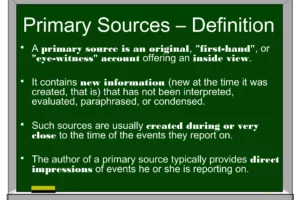
The shift in historical interpretation is significant. At the time, the war was seen as a clear case of communist aggression against a democratic state. Today, historians recognize a more complex picture, involving Korean civil conflict, Cold War geopolitics, and the legacies of Japanese colonialism. The newspaper coverage of the period, however, remains an invaluable primary source for understanding how contemporaries experienced and understood the war. As one US political-opinion journal put it at the time, “History has begun a new chapter”—a phrase that captures both the sense of momentous change and the uncertainty that pervaded the summer of 1950.
The newspaper coverage of the Korean War’s outbreak offers a remarkable window into the confusion, fear, and hope of the moment. From the confident propaganda of Pyongyang to the shocked dispatches of Seoul and the cautious optimism of American papers, the press captured the uncertainty of a world on the brink of a new conflict. The 271 correspondents who descended on Korea in the first weeks of the war—sleeping in ditches, covered in mosquito bites, and filing dispatches from the front lines—produced a record that remains invaluable to historians. Their reports show us not just what happened, but what people believed was happening, and that distinction is the essence of historical understanding.
FAQ
How did South Korean newspapers report the outbreak of the Korean War?
South Korean newspapers like the Dong-a Ilbo reported the invasion with confusion and shock. On June 26, 1950, the paper declared that 'the puppet army suddenly made an attempt to launch an offensive to the South' and that 'a state of emergency was declared throughout the 38th parallel.' The language reflected the chaos of the moment, as the South Korean government itself was unsure of the scale of the attack.
How many journalists covered the Korean War in its early weeks?
According to Time magazine, there were 271 correspondents from 19 countries reporting the Korean War by the end of the first week. They came from around the world, including notable figures like columnist Joe Alsop and Randolph Churchill of the London Daily Telegraph. Conditions were rough—correspondents slept where they could and were covered with mosquito and flea bites.
What did General MacArthur claim about the war's early days that proved wrong?
General Douglas MacArthur announced that South Korean troops were holding the invaders, a claim widely reported in American newspapers. However, the San Francisco Chronicle's June 28, 1950 front page reported this assertion alongside the news that Seoul had fallen—a contradiction that reflected the confusion of the moment. In reality, South Korean forces were in full retreat and Seoul fell within three days of the invasion.





Leave a Reply