
Short Answer
The winter of 1932 found Martha Linsley huddled with her two children in a tiny, uninsulated cabin on a farm near Nevis, Minnesota. There was no running water, no electricity, and the temperature outside often fell far below zero. Her husband James remained in Minneapolis, working to support the family while they pursued a dream of farming that would never be realized. They wrote to each other almost daily, and those letters—hundreds of them—survive as one of the most intimate records of daily life during the Great Depression. Across the country, in cities and rural communities, ordinary Americans turned to pen and paper to document their struggles, fears, and hopes. From the diary of Benjamin Roth, a Youngstown, Ohio lawyer, to the desperate pleas sent to an Atlanta newspaperwoman, to the “Bean Ticket” letters of Nellie Blair Greene, these personal writings offer a ground-level view of the era that statistics and official reports cannot capture. They reveal not only the economic devastation but also the resilience, humor, and simple comforts that sustained people through the darkest years of the twentieth century.
What Happened?
The Great Depression began with the stock market crash of October 1929, but its effects were felt unevenly across the United States. By 1932, when the Linsley family began their correspondence, unemployment had reached nearly 25 percent. The Linsleys, like many families, were separated by economic necessity: James worked in Minneapolis while Martha and the children attempted to farm in northern Minnesota. Their letters, spanning from June 1932 to August 1934, document the daily challenges of rural life without modern conveniences. In the South, the Depression arrived early and lingered. A 1938 letter to an Atlanta newspaperwoman noted that the average annual cash income in one Georgia county was just $38. Meanwhile, in Michigan, Nellie Blair Greene corresponded with her friend Delia from 1930 to 1948, chronicling a middle-class family’s struggle to maintain its footing. Benjamin Roth, a lawyer in Youngstown, Ohio, kept a diary throughout the period, recording the economic collapse and its human toll. These documents, taken together, provide a chronological and geographical cross-section of the Depression experience.
- June 1932: The Linsley family begins their daily correspondence between Minneapolis and Nevis, Minnesota.
- 1930–1948: Nellie Blair Greene writes her “Bean Ticket” letters to her friend Delia in Jackson, Michigan.
- 1938: Letters to an Atlanta newspaperwoman document the South’s prolonged suffering, with one Georgia county reporting an average annual cash income of $38.
- Throughout the 1930s: Benjamin Roth records his observations in a diary, later published as The Great Depression: A Diary.
How It Was Seen at the Time
Contemporaries saw the Depression as an overwhelming, almost natural disaster. The Linsley family, despite their hardships, found “comfort and entertainment in the simplest of things.” Their letters reflect a determination to maintain hope. In the South, the Depression was described as “an anxious visitor… arriving early and staying late.” The letters to the newspaperwoman were urgent pleas for jobs and relief, showing a sense of helplessness. Nellie Blair Greene’s letters provide an “intimate account of a middle-class family’s struggle,” revealing the anxiety of losing status and security. Benjamin Roth’s diary captures the bewilderment of a professional man watching the economy collapse.
“Their dream of farming was never realized, but they were all transformed by the experience.” — The Linsley family letters
“The Great Depression was an anxious visitor to the South, arriving early and staying late.” — Letters to an Atlanta newspaperwoman
Historical Snapshot
| Aspect | Detail |
|---|---|
| Date | 1930–1948 (with focus on 1932–1934) |
| Place | United States: Minnesota, Ohio, Georgia, Michigan |
| People | Martha and James Linsley, Benjamin Roth, Nellie Blair Greene, anonymous letter writers to an Atlanta newspaperwoman |
| What Happened | Economic collapse, unemployment, poverty, and family separation as documented in personal correspondence and diaries |
| Why It Mattered | These primary sources provide an intimate, ground-level view of the Depression that official records lack |
Letters & Diaries
The most powerful evidence of the Depression’s human toll comes from the letters and diaries of ordinary people. Each collection offers a unique perspective.
The Linsley Family Letters
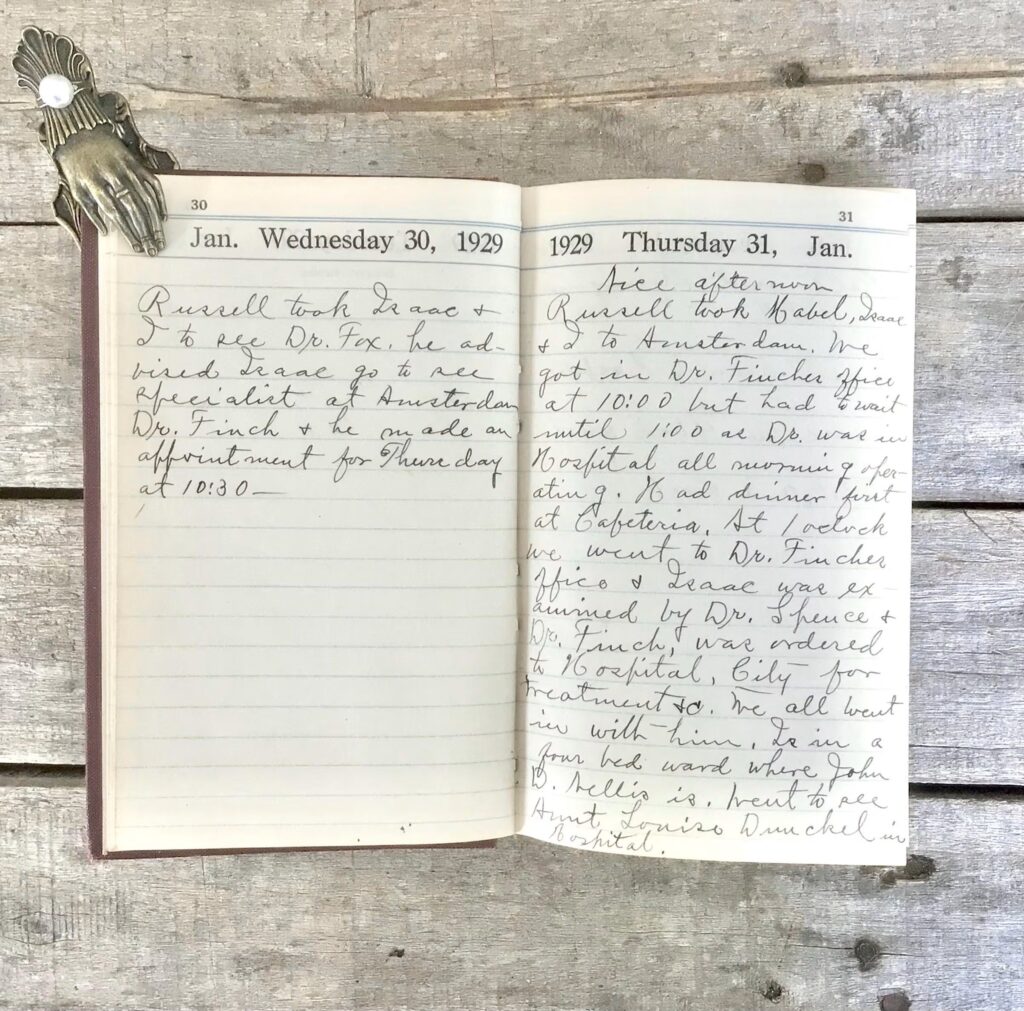
From June 1932 to August 1934, Martha Linsley, her children Ruth and John, and her husband James wrote to each other almost daily. Martha and the children lived in a tiny cabin on a farm near Nevis, Minnesota, while James worked in Minneapolis. Their correspondence, later transcribed by Martha in her 80s, is considered “the most extensive written insight into the day-to-day lives of a family dealing with the challenges of the Great Depression.” The letters reveal the hardships of rural life—no running water, no electricity, and an uninsulated cabin through two Minnesota winters—but also the family’s resilience and ability to find joy in simple things.
“They often found comfort and entertainment in the simplest of things.” — The Linsley family letters
Benjamin Roth’s Diary
Benjamin Roth, a lawyer in Youngstown, Ohio, kept a diary throughout the Depression. Published in 2009 as The Great Depression: A Diary, it offers a professional man’s perspective on the economic collapse, documenting the decline of businesses, the rise of unemployment, and the psychological impact on his community. Roth’s diary is a rare firsthand account from a middle-class professional who watched his world unravel.
The Bean Ticket Letters
Nellie Blair Greene corresponded with her friend Mrs. Marshall Smith (Delia) in Jackson, Michigan, from 1930 to 1948. These letters, saved by Delia and later researched by Beverlee Calvert, provide “an intimate account of a middle-class family’s struggle during the Depression of the 1930s.” The title “Bean Ticket” likely refers to relief vouchers, and the letters detail the family’s efforts to maintain respectability while facing financial ruin.
Letters to an Atlanta Newspaperwoman
In the late 1930s, an Atlanta newspaperwoman received numerous letters from Southerners describing their economic desperation. These letters, preserved in the collection “Letters From the Great Depression,” include pleas for jobs, relief, and even basic necessities. One 1938 letter noted that the average annual cash income in a Georgia county was just $38, illustrating the extreme poverty that persisted in the South.
Daily Life
The material conditions of Depression-era life are vividly documented in these sources. The Linsley family’s cabin had no running water or electricity and remained uninsulated through two brutal Minnesota winters. Martha and the children endured freezing temperatures, while James lived in a rented room in Minneapolis. Their letters describe the daily struggle to grow food, keep warm, and maintain hope. In the South, the letters to the newspaperwoman reveal families with incomes so low that even basic necessities were out of reach. The Bean Ticket letters show a middle-class family cutting back on everything, from food to clothing, and relying on relief. These personal accounts humanize the statistics, showing how ordinary people adapted to scarcity with ingenuity and endurance.
What People Feared
The letters and diaries are filled with anxieties about the future. The Linsley family feared that their dream of farming would never be realized—a fear that proved justified. They also worried about the health of their children in the unheated cabin. The Southern letter writers feared destitution and starvation, pleading for any form of assistance. Nellie Blair Greene’s letters reflect a fear of losing social status and falling into permanent poverty. Benjamin Roth’s diary records his fear that the economic system itself might collapse. These fears were not unfounded; they were grounded in the daily reality of unemployment, hunger, and homelessness that surrounded them.
What People Expected Would Happen Next
Despite the hardships, many contemporaries expected the Depression to end and life to return to normal. The Linsley family continued to plan for their farm, believing that hard work would eventually pay off. The Bean Ticket letters, spanning nearly two decades, show a family that never gave up hope, even as the struggle continued. Benjamin Roth, though pessimistic at times, also recorded moments of optimism when government programs seemed to offer a path forward. The Southern letter writers, while desperate, often expressed faith that the government or charitable individuals would help. These expectations were often disappointed, but they reveal the resilience of the human spirit in the face of prolonged adversity.
How Historians See It Today
Modern historians value these personal documents for their authenticity and depth. The Linsley family letters are considered “the most extensive written insight” into a family’s daily life during the Depression, offering a level of detail that official records cannot match. The Bean Ticket letters, though unpublished, have been researched and recognized for their value in documenting middle-class experiences. Historians use these sources to understand the emotional and psychological dimensions of the Depression—how people coped, what they feared, and how they maintained hope. They also reveal the diversity of experiences across regions and social classes, challenging simplistic narratives. These primary sources remind us that history is not just a collection of statistics, but the sum of countless individual stories.
The letters and diaries of the Great Depression are more than historical artifacts; they are voices from a past that still resonates. They show us that even in the darkest times, people found ways to communicate, to hope, and to endure. The Linsley family’s daily letters, Benjamin Roth’s careful observations, Nellie Blair Greene’s candid confessions, and the desperate pleas from the South all remind us that history is made of human lives. By reading these intimate documents, we come closer to understanding what it truly meant to live through the Great Depression—and we honor the resilience of those who did.
FAQ
What are the most famous collections of Depression-era letters and diaries?
Notable collections include the Linsley family letters (1932–1934), Benjamin Roth's diary (published as 'The Great Depression: A Diary'), the Bean Ticket letters of Nellie Blair Greene (1930–1948), and the letters to an Atlanta newspaperwoman collected in 'Letters From the Great Depression.' These sources provide intimate, firsthand accounts of daily life, struggles, and hopes during the era.
How do historians use personal letters to study the Great Depression?
Historians use personal letters and diaries to understand the emotional and psychological impact of the Depression, as well as the material conditions of daily life. These sources reveal regional and class differences, coping strategies, and the resilience of ordinary people. They complement statistical data and official reports, offering a ground-level perspective that is often missing from macro-level analyses.






Leave a Reply