
Short Answer
On the warm afternoon of June 22, 1969, the Cuyahoga River in Cleveland, Ohio, was a floating, oily soup. Decades of industrial waste, sewage, and oil had turned the waterway into a flammable hazard. That day, a spark from a train ignited debris on the river’s surface, sending flames leaping as high as five stories in some places. The fire lasted only about 25 minutes, but its legacy would stretch far beyond the damaged railroad trestles. At the time, Cleveland residents paid little attention; the river had burned at least twelve times before. Yet the 1969 fire would become one of the most enduring symbols of water pollution and a catalyst for the modern environmental movement.
What Happened?
On June 22, 1969, a train crossing a bridge over the Cuyahoga River in Cleveland tossed a flare or spark onto the water below. The river was heavily polluted, with oil and debris trapped against railroad bridges near Republic Steel. The spark ignited the oil and floating material, and flames quickly spread. According to the National Park Service, the fire lasted less than half an hour and damaged a couple of railroad trestles. The fire was not the first on the river—it was the 13th recorded incident—but it was far from the most destructive. A 1952 fire destroyed three tugs, three buildings, and ship repair yards. The 1969 fire, however, would gain national attention.
- Date: June 22, 1969
- Location: Cuyahoga River, Cleveland, Ohio
- Cause: A flare from a train ignited oil and debris on the water
- Duration: Approximately 25–30 minutes
- Damage: Two railroad trestles damaged; no deaths or injuries reported
How It Was Seen at the Time
Initial coverage in Cleveland newspapers downplayed the event. The Cleveland Plain Press and other local papers on June 23, 1969, reported that a floating oil slick had burned for 25 minutes, damaging a couple of railroad trestles. The fire was not considered a major disaster; the river had burned many times before. However, a month later, Time magazine ran a story that transformed the incident. According to a New York Times retrospective, Time described the river itself as having “burst into flames” and “nearly destroyed” the trestles, a dramatic exaggeration that captured the public’s imagination. The fire became a symbol of water pollution, even though no photographs of the 1969 fire exist—many publications used photos from earlier fires, such as the more destructive 1952 blaze.
“In the first whispers, which appeared in local newspapers on June 23, 1969, Cleveland’s Cuyahoga River didn’t burn. A floating oil slick did, for only 25 minutes, damaging a couple of railroad trestles. In the next telling, which appeared in Time magazine a month later, the heavily polluted river ‘burst into flames’ and ‘nearly destroyed’ the trestles.” — The New York Times, June 22, 2019
Historical Snapshot
| Aspect | Detail |
|---|---|
| Date | June 22, 1969 |
| Place | Cuyahoga River, Cleveland, Ohio |
| People | Mayor Carl Stokes, journalist Betty Klaric, train crews, firefighters |
| What Happened | A spark from a train ignited oil and debris on the river, causing a fire that lasted ~25 minutes |
| Why It Mattered | Became a symbol of water pollution and helped spark the environmental movement |
Contemporary Newspaper Coverage
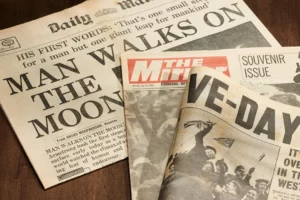
The initial local coverage was factual but muted. The Cleveland Press and other newspapers described a fire on an oil slick that damaged railroad trestles. No photographs of the event were taken, so newspapers used images from earlier fires. The Time magazine article, published in July 1969, was the first to give the fire national prominence. It described the river as “bursting into flames” and used a photograph from the 1952 fire, which was far more destructive. This editorial exaggeration helped turn the fire into a symbol of environmental crisis, despite the fact that it was not the worst fire on the river.
Eyewitness Accounts
One of the most significant eyewitness accounts came from environmental journalist Betty Klaric, who interviewed Cleveland Mayor Carl Stokes the day after the fire on the railroad bridge damaged by the fire. According to the National Park Service, this interview was preserved in the Cleveland State University Library’s Cleveland Press Collection. Klaric’s interview captured Stokes’s immediate reaction and the local government’s response. No other detailed eyewitness accounts have been published, but train crews and firefighters who extinguished the fire would have had direct knowledge. The lack of photographs makes these oral and written accounts the only direct evidence of the fire’s intensity.
What the Sources Got Wrong
- The river itself did not burn. The fire was on an oil slick and floating debris, not the water itself.
- The fire was not the first or the most destructive. The 1952 fire caused far more damage, destroying three boats and a building.
- No photographs of the 1969 fire exist. Publications used images from earlier fires, misleading readers.
- The fire was not the sole cause of the environmental movement. It was a symbol that helped galvanize public opinion, but the movement had already begun.
Aftermath
In the months and years after the fire, the Cuyahoga River became a rallying point for environmental activists. The fire contributed to the passage of the Clean Water Act of 1972 and the creation of the Environmental Protection Agency in 1970. The first Earth Day was held in 1970, and the fire was often cited as a catalyst. The river itself has since recovered, now supporting 70 species of fish, a stark contrast to the “dead” river of 1969. The fire remains a potent symbol of the need for environmental protection.
How Historians See It Today
Modern historians emphasize that the fire’s role as a “spark” is partly a myth. The National Park Service notes that “myth enters the stories when people describe the fire as a primary cause of major milestones in the environmental movement.” Instead, historians view the fire as a powerful symbol that helped focus existing public concern. The fire was one of many pollution events that led to the rise of environmentalism, but its image—a burning river—was uniquely vivid. Today, historians recognize that the 1969 fire was not the worst, but it was the one that captured the national imagination and helped shape environmental policy.
The 1969 Cuyahoga River fire was a brief, local incident that became a lasting emblem. The primary sources—newspapers, interviews, and photographs—reveal how a minor fire was transformed into a national symbol of environmental neglect. They also remind us that the stories we tell about the past can shape the future, for better or worse.
FAQ
Did the Cuyahoga River itself catch fire in 1969?
No. The fire was on a floating oil slick and debris on the river's surface, not the water itself. The river was heavily polluted, making the surface flammable, but the water did not burn. The fire lasted about 25 minutes and damaged two railroad trestles.
How did the 1969 Cuyahoga River fire lead to the creation of the EPA?
The fire, though not the most destructive, became a national symbol of water pollution. It helped galvanize public opinion and political will, contributing to the first Earth Day in 1970, the creation of the Environmental Protection Agency in 1970, and the Clean Water Act of 1972. However, historians note that it was one of several factors, not the sole cause.







Leave a Reply