
Short Answer
At 5:12 on the morning of April 18, 1906, San Francisco was violently shaken awake. The earthquake lasted less than a minute, but it toppled buildings, broke gas mains, and sparked fires that would burn for three days. As the city’s 400,000 residents poured into the streets, they watched in disbelief as flames consumed block after block. Edward I. de Laveaga, a local businessman, wrote in his diary: “But worse than the sight of the wrecked City Hall were the flames which were fast eating their way to Market Street.” The disaster would leave more than half the city’s residents homeless, according to the National Archives, and forever change how Americans understood the power of nature. In the hours and days that followed, survivors struggled to make sense of the chaos, recording their experiences in letters, diaries, and official reports. Their words offer a raw, unfiltered window into one of the worst urban catastrophes in American history.
What Happened?
The earthquake struck at 5:12 a.m. on Wednesday, April 18, 1906, with an estimated magnitude of 7.8. The rupture occurred along the San Andreas Fault, about 300 miles of which slipped. The shaking lasted approximately 45 to 60 seconds, causing widespread damage across the Bay Area. In San Francisco, buildings collapsed, streets buckled, and water mains burst. Almost immediately, fires broke out—ignited by broken gas lines, overturned stoves, and electrical sparks. The fire spread rapidly through the densely built city, fueled by wooden structures and hampered by the lack of water.
Edward I. de Laveaga, who kept a detailed diary, described the early morning scene: “When I got down to Fifth Street, the fire seemed at or about Howard. When I neared 3rd Street the flames were just crossing Mission Street. This was about 7:45 A.M.” The fire would burn for three days, ultimately consuming more than 500 city blocks. The official death toll was initially reported as 478, but modern estimates place it at over 3,000. More than half of the city’s 400,000 residents were left homeless, many fleeing to temporary camps in parks and open fields.
Key events of the disaster include:
- 5:12 a.m. – Earthquake strikes; buildings collapse and gas mains break.
- 6:00 a.m. – Fires break out in multiple locations, including the South of Market district.
- 7:45 a.m. – Fire crosses Mission Street, as noted by de Laveaga.
- April 18–20 – Fire spreads unchecked; dynamite used to create firebreaks, often worsening the blaze.
- April 21 – Fire finally contained; city begins to assess the damage.
How It Was Seen at the Time
For contemporaries, the earthquake was terrifying, but the fire was the true catastrophe. Many initially believed the earthquake had done little damage, as de Laveaga noted: “The damage, however, seemed to me so slight. The buildings down town seemed to have stood it remarkably well.” The fire, however, was unstoppable. Jack London, who rode into the city from his ranch in Glen Ellen, later wrote to his wife, “Why, Mate Woman, I shouldn’t wonder if San Francisco had sunk. That was some earthquake. We don’t know but the Atlantic may be washing up at the feet of the Rocky Mountains!” His hyperbolic reaction captured the sense of utter dislocation. The prevailing mood was one of shock, disbelief, and a desperate determination to save what could be saved. People spoke of the fire as a living thing, “eating” its way through the city, as de Laveaga repeatedly described.
Historical Snapshot
| Aspect | Detail |
|---|---|
| Date | April 18, 1906 |
| Place | San Francisco, California |
| People | 400,000 residents; survivors like Edward I. de Laveaga, Jack London, and Capt. George Musson |
| What Happened | Magnitude 7.8 earthquake followed by a three-day fire that destroyed over 500 blocks |
| Why It Mattered | Left half the city homeless; exposed the fragility of urban infrastructure; led to major rebuilding and seismic awareness |
Eyewitness Accounts
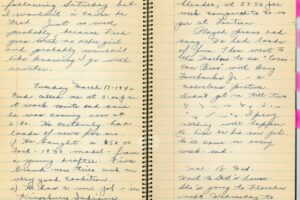
Survivors left vivid, often harrowing accounts of the disaster. Edward I. de Laveaga’s diary, preserved by the California Historical Society, provides a minute-by-minute record of the fire’s advance. He wrote: “The streets were crowded with people. My whole attention was fixed on the fire and so I did not take much note of the damage done by the earthquake.” Another eyewitness, Capt. George Musson, wrote to his mother on April 21, 1906, describing the scene. His letter, excerpted by NPR, captures the chaos and the struggle to find safety. The accounts are consistent in their emphasis on the fire’s relentless spread and the overwhelming smoke and heat.
“But worse than the sight of the wrecked City Hall were the flames which were fast eating their way to Market Street.” — Edward I. de Laveaga, diary, April 18, 1906
Letters & Diaries
Personal correspondence and diaries offer intimate glimpses of the disaster. De Laveaga’s diary is a rare, day-by-day record of the fire’s progress. He noted the frantic efforts to save belongings and the confusion that gripped the city. In a letter to his mother, Capt. George Musson described the earthquake and the fire, though the full text is preserved in the NPR archive. These documents reveal not only the physical destruction but also the emotional toll—fear, grief, and a stubborn hope for recovery. Jack London’s note to a relative, written after he visited the ruins, is another key document, though his wife’s memoir provides the famous quote about the Atlantic washing up at the Rockies.
“Why, Mate Woman, I shouldn’t wonder if San Francisco had sunk. That was some earthquake.” — Jack London, as quoted by his wife Charmian London, 1921
What People Feared
In the immediate aftermath, survivors feared the fire would consume the entire city. Many also worried about looting and lawlessness, though the military was quickly deployed to maintain order. There was widespread fear of aftershocks, and many refused to re-enter buildings. The lack of water for firefighting led to desperate measures, including the use of dynamite to create firebreaks—a tactic that sometimes backfired and spread the flames. People also feared for loved ones, as communication lines were down and the city was in chaos. Rumors of a tsunami or that the city had “sunk” circulated, as Jack London’s comment suggests. These fears, while often exaggerated, reflected the genuine uncertainty of the moment.
Aftermath
The fire was finally contained on April 21, but the city lay in ruins. More than half of the 400,000 residents were homeless, many living in makeshift camps in parks like Jefferson Square, as documented by the National Archives. The city began the slow process of clearing debris and rebuilding. The earthquake and fire prompted major improvements in building codes and firefighting infrastructure. The disaster also led to a re-evaluation of seismic risk in California. In the short term, the city’s economy was devastated, but the resilience of its people was remarkable. Within a few years, San Francisco was rebuilt, though the scars of 1906 remained in the memories of those who lived through it.
How Historians See It Today
Modern historians and seismologists have revised the initial understanding of the disaster. At the time, many believed the earthquake itself was the primary cause of destruction, but later analysis showed that the fire—not the shaking—was responsible for most of the damage. The official death toll of 478 was far too low; modern estimates range from 3,000 to 6,000. Historians also emphasize the role of class and race in the recovery, as poorer neighborhoods and immigrant communities, including Chinatown, were disproportionately affected. The disaster is now seen as a turning point in American urban history, highlighting the need for disaster preparedness and the limits of human control over nature. Contemporary accounts, while vivid, often reflected the shock and confusion of the moment; today’s scholarship provides a more nuanced and accurate picture.
The primary sources from 1906—diaries, letters, and eyewitness reports—remain invaluable. They capture not only the facts of the disaster but the human experience of it: the fear, the courage, and the determination to rebuild. Reading these accounts, we are reminded that history is not just a list of dates and numbers, but a story of people facing the unimaginable. The 1906 earthquake and fire, as seen through the eyes of survivors, teaches us about resilience in the face of catastrophe and the enduring power of the human spirit.
FAQ
What was the most common reaction among survivors immediately after the earthquake?
Many survivors initially believed the earthquake had caused little damage, as Edward I. de Laveaga noted in his diary. The real terror came from the fire, which spread rapidly and consumed the city. People were shocked, confused, and focused on escaping the flames and saving what they could.
How did the 1906 earthquake and fire affect the city's population?
More than half of San Francisco's 400,000 residents were left homeless, according to the National Archives. Many lived in temporary camps in parks like Jefferson Square. The disaster also led to significant changes in building codes and disaster preparedness, and it reshaped the city's social and economic landscape.



Leave a Reply