
Short Answer
Quick Snapshot
This article treats Delhi in 1984 as the history of India’s capital during the year dominated by the assassination of Prime Minister Indira Gandhi on 31 October and the anti-Sikh violence that swept the city in the days that followed. It is not a general history of Punjab, nor a full account of the Sikh diaspora; those subjects enter only as context for events in Delhi.
On the morning of 31 October 1984, Gandhi was shot at her residence at 1 Safdarjung Road by two of her Sikh bodyguards, Satwant Singh and Beant Singh. The news paralysed the capital. Within hours, and then over the next four days, Sikhs and Sikh-owned property were attacked in several Delhi neighbourhoods, most notoriously in Trilokpuri. The army was deployed and curfews imposed, but by then thousands had been killed, injured, or displaced.
The year left a double shock: the violent death of a prime minister who had dominated Indian politics for nearly two decades, and the sudden, public rupture of communal life in the capital. Rajiv Gandhi was sworn in as prime minister, a general election followed in December, and Delhi’s Sikh communities began a long, incomplete search for justice and safety.
Delhi in 1984
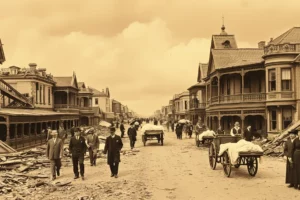
Delhi in 1984 was a capital of contrasts. New Delhi’s broad avenues, government offices, embassies, and bungalows stood beside the dense lanes of Old Delhi, the expanding colonies of south and west Delhi, and the resettlement areas where migrants and displaced families lived. The city sprawled across the Yamuna’s western bank and into the surrounding plains; summers were fierce, the monsoon brought relief and flooding, and October and November usually brought cooler, clearer days.
The atmosphere in 1984 was already tense before 31 October. The Punjab crisis, the demand for Khalistan, and the June army operation at the Golden Temple in Amritsar had deepened fears and polarisation. Delhi, as the national capital and a major media centre, felt every tremor of that crisis. Security around VIPs was tight, political rhetoric was sharp, and Sikh residents—many of them long-established Delhiwalas—were increasingly visible in debates about loyalty, militancy, and the state.
The city was also the stage on which national grief and national violence became inseparable. Within days of the assassination, the same streets that carried mourners to Gandhi’s funeral were patrolled by soldiers and marked by burned shops, abandoned homes, and relief camps.
Population & Economy
Delhi’s population was growing rapidly in the early 1980s. The 1981 census recorded about 6.22 million people in the National Capital Territory; by 1984 the figure was probably around 7 million, swollen by migration from Uttar Pradesh, Bihar, Punjab, Haryana, and beyond. The city’s economy rested less on large factories than on government administration, trade, transport, construction, and a vast small-scale service sector.
Government offices, the courts, embassies, universities, hospitals, and media organisations employed large numbers of white-collar and support workers. Chandni Chowk, Connaught Place, Karol Bagh, and local markets hummed with retail trade. Small factories and workshops produced garments, textiles, auto parts, electrical goods, printing, furniture, and food products. Transport—trucks, taxis, auto-rickshaws, cycle rickshaws, and the Delhi Transport Corporation buses—was another major employer. Sikhs were prominent in transport, repair work, shopkeeping, and small business, which made the destruction of November 1984 an economic as well as a human catastrophe.
Costs of living varied sharply by neighbourhood. A cup of tea or a simple street snack cost a few rupees; rents in planned colonies were far higher than in unauthorised or resettlement areas. For many working families, food, transport, rent, and school fees consumed most of the monthly budget. The violence of November destroyed livelihoods overnight: shops were looted, vehicles burned, and businesses abandoned.
Government & Politics
In 1984 Delhi was a Union Territory administered by the central government through a Lieutenant Governor and the Delhi Administration, with municipal services largely under the Municipal Corporation of Delhi. Delhi did not then have the elected legislative assembly it would regain in 1993. The city’s politics were therefore inseparable from national politics. Indira Gandhi’s Congress government dominated the capital, and the Prime Minister’s residence and office were only minutes from Parliament and the president’s palace.
Indira Gandhi had returned to power in 1980 and was serving her fourth term when she was assassinated. President Zail Singh swore in Rajiv Gandhi as prime minister on 31 October. The political climate was charged by the Punjab crisis, by allegations of Congress involvement in the anti-Sikh violence, and by the general election that followed in December 1984. Congress won a massive mandate under Rajiv Gandhi, but the violence left a moral and political wound that opposition parties, Sikh organisations, and human-rights groups would keep open for decades.
Local governance was overwhelmed in November. Police, magistrates, and municipal authorities faced accusations of failure and, in some cases, complicity. The army’s deployment restored a kind of order, but it could not restore trust.
Industry
Delhi’s industry in 1984 was diverse and largely small-scale. The city was not a single-company town; it was a bazaar economy writ large, with workshops and factories tucked into industrial estates and older neighbourhoods. Garment and textile units, printing presses, electrical and electronic assembly, auto repair, metalwork, food processing, and construction supplied both the local market and wider northern India.
The organised sector included government printing and publishing, public utilities, hospitals, and transport depots. The informal sector was even larger: street vendors, cycle-rickshaw pullers, domestic workers, tailors, mechanics, and small shopkeepers. Sikh entrepreneurs and workers were visible in many of these trades, especially transport and auto repair. In the riots, attackers targeted Sikh-owned shops, factories, and vehicles, damaging not only individual families but also the city’s commercial fabric.
Education
Delhi was a major educational centre. The University of Delhi and its colleges, Jawaharlal Nehru University, the Indian Institute of Technology Delhi, Jamia Millia Islamia, and numerous professional and school institutions drew students from across India. Literacy was higher than in much of the country, though it remained uneven across class and gender. English-medium schools and Hindi-medium schools coexisted, and the city’s colleges were important sites of political debate.
In November 1984, schools and universities in affected areas closed or operated erratically. Students and teachers were among those displaced, and campus discussions became part of the wider argument over responsibility, justice, and communal politics. For many young Delhiites, the year was an education in the fragility of civil order.
Transportation
Delhi moved in 1984 by bus, cycle rickshaw, auto-rickshaw, taxi, scooter, bicycle, and on foot. The Delhi Transport Corporation’s buses were the backbone of public transport; overcrowding was routine. There was no Delhi Metro—the first line would not open until 2002. The city’s railway stations, especially New Delhi, Old Delhi, and Hazrat Nizamuddin, connected it to the rest of India, while Palam airport handled domestic and international flights.
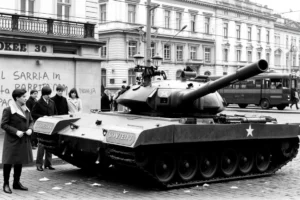
Traffic was lighter than today but still congested around Connaught Place, Chandni Chowk, and the ring roads. During the November violence, buses were stoned or burned, roads were blocked by mobs, and curfews restricted movement. Army patrols became a common sight in affected districts, and many residents relied on neighbours or relatives to move safely between home and relief camps.
Everyday Life
Daily life in Delhi in 1984 mixed old and new. Families lived in government quarters, private flats, planned colonies, unauthorised settlements, and resettlement colonies. Breakfast might be parathas, bread and tea, or leftovers; lunch and dinner centred on roti, rice, dal, vegetables, and seasonal fruit. Clothing ranged from saris and salwar kameez to shirts and trousers, with woollens needed in the brief cold season. Entertainment included cinema, radio, the early years of Doordarshan television, markets, festivals, and visits to relatives.
Neighbourhood life was intensely social. People borrowed food, shared courtyards, celebrated festivals, and argued politics on street corners. That ordinary sociability was precisely what the violence ruptured. Sikh families who had lived for generations in mixed colonies suddenly became targets. Some neighbours sheltered them; others joined or watched the mobs. Attar Kaur, a survivor interviewed by the BBC, recalled that a Muslim neighbour gave her and her children shelter, saying the mob would not touch children—only for her to discover dead Sikh children outside.
The year also brought the ordinary routines of a capital under stress: security checks, rumours, curfews, funeral processions, and the sound of army vehicles. After November, everyday life for many Sikhs meant relief camps, lost documents, temporary shelters, and the search for missing relatives.
Major Events
The year’s events were interlinked. In June 1984, Indian troops carried out Operation Blue Star at the Golden Temple in Amritsar, an action ordered by Indira Gandhi against Sikh separatists sheltering in the complex. The operation killed hundreds, including soldiers and pilgrims, and deeply alienated many Sikhs. It was the background to the assassination.
On 31 October 1984, Indira Gandhi was shot by her Sikh bodyguards at her New Delhi residence. She died shortly afterward. Rajiv Gandhi was sworn in as prime minister that day. As news spread, violence against Sikhs began in Delhi and other cities. Mobs attacked Sikh homes, shops, and places of worship; the worst killings occurred in Trilokpuri and other resettlement colonies. Police responses were widely criticised as slow, inadequate, or complicit. The army was deployed and curfews imposed by early November.
On 3 November, Indira Gandhi’s funeral drew national and international attention. In December, India held a general election; Rajiv Gandhi’s Congress won a huge majority. For Delhi’s Sikhs, however, the year did not end with the election. It ended with funerals, relief camps, and the first steps in a long campaign for justice.
What Newspapers Were Reporting
Delhi’s newspaper readers in 1984 had a dense press to choose from: The Times of India, Hindustan Times, The Indian Express, The Hindu, Navbharat Times, Punjab Kesari, and others. On 31 October and 1 November, front pages were dominated by the assassination, the swearing-in of Rajiv Gandhi, and the security crisis. Reports described the shooting at 1 Safdarjung Road, the rush to the All India Institute of Medical Sciences, and the stunned crowds gathering outside.
As violence spread, newspapers reported attacks on Sikhs, burning shops, curfew orders, and army patrols. Editorials and letters pages debated how a capital could be convulsed by communal killing. The press also recorded the words that would haunt the aftermath. A day before her death, Gandhi had told a rally in Odisha:
“I don’t mind if my life goes in the service of the nation. If I die today, every drop of my blood will invigorate the nation.”
After the violence began, Rajiv Gandhi was quoted as saying:
“When a great tree falls, the earth is bound to shake.”
For many Sikhs and civil-liberties groups, that remark seemed to excuse rather than condemn the killings.
Newspapers also carried official statements, relief-camp notices, and political recriminations. Later retrospective reporting, including the BBC’s 2014 and 2024 coverage, drew on those archives and on survivor testimony to reconstruct how the violence unfolded.
What People Were Talking About
In the streets, homes, and relief camps, people talked about shock, fear, and blame. The assassination itself produced genuine grief among many Congress supporters, but the violence produced another conversation: who had organised the mobs, why the police had not stopped them, and whether Congress leaders had incited or protected the attackers. Sikh survivors spoke of neighbours who hid them and of police who failed them. Human-rights groups collected testimony that electoral rolls had sometimes been used to identify Sikh homes.
Oral histories preserve the intimacy of that terror. Santok Singh, the caretaker of a gurdwara in Trilokpuri, told the BBC:
“People thought they’d be safe inside the gurdwara… But the wall wasn’t very high then and the mob came from all sides. They killed anyone they could lay their hands on—men, women and children. This courtyard was full of bodies.”
Such accounts became central to public debate, along with accusations against figures such as former Delhi MP Jagdish Tytler, who has denied any role in the riots. The talk was not only of the past; it was of justice, compensation, and whether the state could ever be trusted again.
Historical Photographs
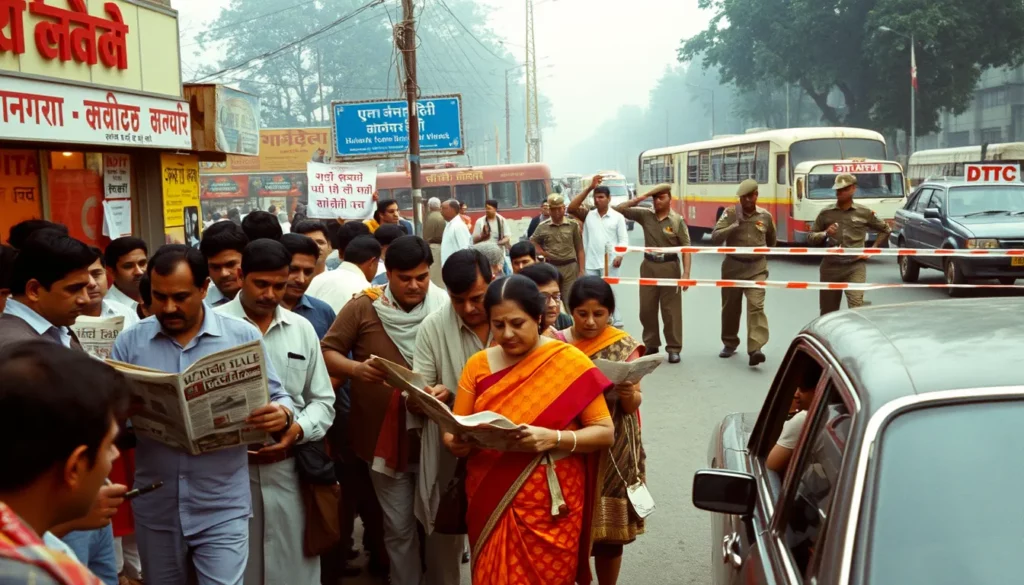
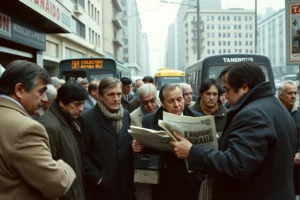
The visual record of Delhi in 1984 is dominated by photographs of the assassination’s aftermath. Getty Images, Alamy, and Associated Press images show Indira Gandhi’s funeral pyre, the damage to the Golden Temple after Operation Blue Star, crowds reading newspapers about the assassination, and rioters targeting Sikh-owned shops. Other photographs show the scarred neighbourhood of Govindpuri, army patrols in shopping districts four days after the riots, and relief camps in Nand Nagri and in Delhi schools where survivors gathered.
These photographs are significant because they document both the public spectacle of national mourning and the intimate destruction of neighbourhood life. They also reveal the presence of the state—soldiers, police, curfews—and the absence of protection that many survivors described. Later portraits and protest images, such as Sikh women holding photographs of riot victims, show how photography became part of the memory and justice movements.
Documents & Primary Sources
Historians studying Delhi in 1984 rely on a range of primary sources:
- Newspaper archives from The Times of India, Hindustan Times, The Indian Express, and other Delhi publications.
- Government records, including Delhi Administration and Municipal Corporation of Delhi files, curfew orders, and police records.
- The Justice Nanavati Commission report (2005), appointed to inquire into the anti-Sikh riots.
- The PUDR–PUCL report Who Are the Guilty? (1984), a contemporary human-rights investigation.
- Oral-history interviews and survivor testimony, including accounts gathered by journalists and NGOs.
- Photographs, television footage, and radio broadcasts from October and November 1984.
- Census and electoral records, which remain controversial because of allegations that they were misused during the violence.
1984 Timeline
| Date | Event |
|---|---|
| 3–8 June 1984 | Operation Blue Star at the Golden Temple, Amritsar; nationwide tensions deepen. |
| 30 October 1984 | Indira Gandhi speaks at a rally in Odisha, saying her life is in the service of the nation. |
| 31 October 1984 | Gandhi is assassinated at 1 Safdarjung Road by Sikh bodyguards; Rajiv Gandhi is sworn in as prime minister. |
| 1–4 November 1984 | Anti-Sikh violence spreads across Delhi; army deployed and curfews imposed; Trilokpuri among worst affected areas. |
| 3 November 1984 | Indira Gandhi’s funeral is held in Delhi. |
| December 1984 | General elections are held; Rajiv Gandhi’s Congress wins a large majority. |
What Changed Next
In the years after 1984, Delhi’s Sikh geography changed. Many survivors left mixed neighbourhoods for areas such as Tilak Nagar, where displaced families rebuilt lives. The violence became a central reference point in Sikh politics and in India’s human-rights discourse. The Rajiv Gandhi government signed the Punjab Accord in 1985, but justice for the Delhi killings moved slowly. The Nanavati Commission reported in 2005; cases were reopened and closed amid protests; and survivors continued to demand accountability.
Delhi itself changed too. The city’s population and economy grew, and in 1993 it regained a legislative assembly. But the memory of 1984 remained embedded in neighbourhoods, gurdwaras, photographs, and family histories. For many Delhiites, the year marked the moment when the capital’s ordinary pluralism was exposed as fragile—and when the state’s obligation to protect all citizens became a question rather than an assumption.
Sources
- BBC News, “In pictures: Forty years of Delhi’s anti-Sikh riots,” 31 October 2024, https://www.bbc.com/news/articles/cdd00dq6154o.
- Andrew North, “Delhi 1984: India’s Congress party still struggling to escape the past,” BBC News, 18 February 2014, https://www.bbc.com/news/world-asia-26235314.
- Justice G. T. Nanavati Commission of Inquiry, Report on the 1984 Anti-Sikh Riots (2005).
- People’s Union for Democratic Rights and People’s Union for Civil Liberties, Who Are the Guilty? (1984).
- Jaskaran Kaur, Twenty Years of Impunity: The November 1984 Pogroms of Sikhs in India (Ensaaf, 2004).
FAQ
What was the population of Delhi in 1984?
Delhi’s population was probably around 7 million in 1984; the 1981 census recorded about 6.22 million for the National Capital Territory, and rapid migration pushed the figure higher.
What major events happened in Delhi in 1984?
The year was dominated by the aftermath of Operation Blue Star, Indira Gandhi’s assassination on 31 October 1984, the anti-Sikh violence in Delhi, army curfews, her funeral, and the December general election.
What primary sources are available for studying Delhi in 1984?
Researchers use newspaper archives, the Nanavati Commission report, the PUDR–PUCL report Who Are the Guilty?, police and municipal records, census data, photographs, and survivor oral histories held by archives and NGOs.
How did daily life in Delhi in 1984 differ from today?
In 1984 Delhi had no Metro, far fewer cars, limited television, and a more local market economy; public transport, cycle rickshaws, and radio played larger roles, while security and communal trust were profoundly shaped by the year’s violence.




Leave a Reply