
Short Answer
In the summer of 1919, a traveler boarding a train from London to Paris could expect a journey of several hours, including a ferry crossing of the English Channel. That same year, a handful of adventurous souls climbed into the cramped, enclosed cabin of an Airco D.H.4a, a modified wartime bomber, and flew the same route in under two hours. The flight was loud, cold, and terrifying, but it was the future. For most people, however, the future was still a distant dream. In the early decades of the twentieth century, long-distance travel meant railroads and ocean liners—slow, reliable, and often luxurious—while the airplane remained a dangerous novelty for the wealthy and the daring.
What Happened?
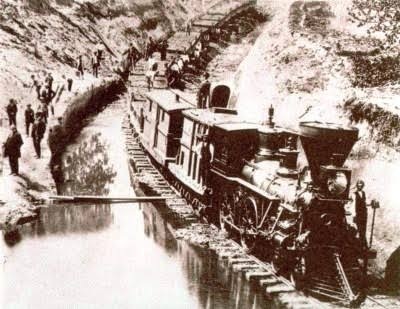
Before commercial aviation became common, the vast majority of long-distance travel relied on two established technologies: the railroad and the steamship. In the United States, transcontinental rail journeys took several days, with passengers sleeping in berths and dining in swaying cars. Across the Atlantic, ocean liners like the Lusitania and the Titanic carried thousands of passengers between Europe and America in about a week. These modes were reliable, comfortable by the standards of the time, and accessible to a broad range of travelers—though first-class accommodations were reserved for the wealthy.
Aviation, by contrast, was in its infancy. The first scheduled passenger airline service in the world began in 1914, when the St. Petersburg–Tampa Airboat Line in Florida carried passengers across Tampa Bay in a flying boat. But such services were rare and short-lived. As the National Air and Space Museum notes, “In the early days of commercial flight, the flying experience was harsh and uncomfortable. To even get the opportunity to fly was considered a luxury.” Early aircraft were often modified military planes, with open cockpits for pilots and cramped, noisy cabins for passengers. The first international airline, Britain’s Air Transport and Travel, Ltd., used Airco D.H.4a planes that had been converted to carry two passengers in an enclosed space, while the pilot sat in an open cockpit above. Its inaugural flight on August 25, 1919, carried a single passenger—an enterprising newspaper reporter—from London to Paris.
Commercial airlines initially struggled to turn a profit. As the Smithsonian’s “Early Commercial Aviation” explains, “Commercial airlines initially struggled to get off the ground, but with help from the government, who awarded airlines contracts to deliver the mail, they soon began to flourish.” The U.S. Post Office began using airplanes to move mail in the 1910s, and this government support helped establish routes and infrastructure. By the late 1920s and 1930s, passenger service had grown, but it remained expensive. “Because air travel was so expensive, only the wealthy and business travelers flew,” the same source notes. The flying experience improved but remained “an often uncomfortable adventure.”
For the average person, then, the airplane was not a practical option. Trains and ships continued to dominate long-distance travel well into the 1930s, and it was only after World War II that commercial aviation became truly common.
How It Was Seen at the Time
Contemporaries viewed air travel with a mixture of excitement and apprehension. The very idea of flying was novel and daring. Early passengers were often described as “adventurous” or “enterprising,” as in the case of the reporter on the first London–Paris flight. The experience itself was far from glamorous. The National Air and Space Museum describes early commercial flight as “harsh and uncomfortable,” with passengers exposed to wind, weather, and deafening noise. Even in Europe, where larger transports carried passengers in comparative luxury, the ride was “harsh, loud, and uncomfortable.”
At the same time, flying was a mark of status. Because tickets were so expensive, only the wealthy and business travelers could afford to fly. The Smithsonian notes that “to even get the opportunity to fly was considered a luxury.” This paradox—luxury and discomfort—shaped public perception. Air travel was a symbol of modernity and progress, but it was also a test of endurance. Newspapers covered early flights as spectacles, and the pilots were celebrated as heroes. The public expected that aviation would grow, but few imagined that it would one day replace the train and the ship for ordinary travel.
Historical Snapshot
| Aspect | Detail |
|---|---|
| Date | August 25, 1919 |
| Place | London to Paris |
| People | Air Transport and Travel, Ltd.; a single passenger (a newspaper reporter); pilot in an open cockpit |
| What Happened | The first international airline flight carried one passenger from London to Paris in a modified Airco D.H.4a. |
| Why It Mattered | Demonstrated the feasibility of commercial air travel, though it remained a rare and expensive luxury for years. |
What People Knew at the Time
| What People Knew Then | What We Know Now |
|---|---|
| Trains and steamships were the only reliable means of long-distance travel. | Air travel would eventually dominate long-distance passenger transport. |
| Flying was dangerous, uncomfortable, and only for the wealthy. | Early aviation was indeed risky, but safety improved rapidly with government regulation and technological advances. |
| Airlines were unprofitable and depended on government mail contracts. | Government subsidies and airmail contracts were crucial to the industry’s early survival. |
| Air travel was a novelty, not a practical alternative. | By the 1950s, commercial aviation became the standard for long-distance travel. |
Eyewitness Accounts
While few detailed first-person accounts of early commercial flights survive, the story of the first London–Paris flight offers a glimpse. The sole passenger was a newspaper reporter, described by the source as “an enterprising newspaper reporter.” He would have experienced the cramped, enclosed cabin of the Airco D.H.4a, which had been modified to include “an enclosed cramped space in the fuselage with room for two adventurous passengers.” The pilot’s cockpit remained open, exposed to the elements. The flight itself was likely noisy, cold, and turbulent. The reporter’s account, published in his newspaper, would have emphasized the novelty and the physical discomfort—a stark contrast to the relative comfort of a train or ship. Such accounts helped shape public perception of flying as an adventure for the daring, not a mode of transport for the ordinary traveler.
What People Expected Would Happen Next
Contemporaries expected that air travel would grow, but they did not foresee its eventual ubiquity. In the 1920s, many believed that airplanes would remain a tool for mail delivery and military use, with passenger service limited to a wealthy few. The Smithsonian notes that “air transportation experienced phenomenal growth and change from the late 1920s through the 1930s,” but this growth was still constrained by cost and comfort. The public anticipated faster and more comfortable planes, but the idea that flying would become as common as taking a train seemed far-fetched. Even as late as the 1930s, most people had never flown and had no immediate plans to do so. The future, as they saw it, was one of improved trains and faster ships, with aviation as a thrilling but marginal addition.
The primary sources from the era—newspaper reports, government records, and the accounts of early passengers—reveal a world where the airplane was a symbol of progress but not yet a practical tool. The transition to common commercial aviation took decades, driven by government support, technological innovation, and the demands of war. The story of how people traveled before that transition is a story of patience, endurance, and the slow march of innovation.
FAQ
What was the first scheduled passenger airline service?
The first scheduled passenger airline service was the St. Petersburg–Tampa Airboat Line in Florida, which began in 1914. It carried passengers across Tampa Bay in a flying boat, but it was a short-lived operation. The first international airline flight was made by Air Transport and Travel, Ltd., on August 25, 1919, from London to Paris.
Why was early air travel so expensive?
Early air travel was expensive because aircraft were costly to build and operate, and passenger numbers were small. Airlines had no economies of scale, and they often relied on government airmail contracts to stay afloat. As a result, only the wealthy and business travelers could afford tickets, making flying a luxury experience.









Leave a Reply