Short Answer
Imagine a historian of the American Civil War opens a box of letters from a Union soldier to his wife. The soldier writes faithfully every week, but the wife’s replies are missing. Are they lost, or were they never kept? This is a classic example of an archival silence—the unintentional or purposeful absence of documentation that shapes what we can know about the past. For centuries, historians treated such gaps as inevitable accidents of time. But a growing body of scholarship, including the 2026 publication of an “omission studies framework” and a major study on the censorship of history, has revealed that silences are often systematic, even deliberate. This article explains how historians detect what is missing from the historical record, why it is missing, and what those absences tell us about the past.
What Happened?
The formal recognition of archival silences as a subject of study has developed over the past two decades. The Society of American Archivists now defines archival silence as “the unintentional or purposeful absence or distortion of documentation of enduring value, resulting in gaps and inabilities to represent the past accurately.” This definition, from the Society’s Dictionary of Archival Terminology, reflects a consensus that absence is not a neutral void but a phenomenon with causes and consequences.
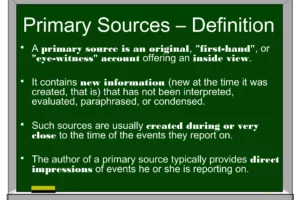
In April 2026, historian Srđan M. Jovanović of Nankai University published “Toward an omission studies framework in historical research” in the European Review of History. Jovanović proposed a systematic methodology for defining, detecting, and deploying absence as analytical evidence. He argued that historians should treat missing records as primary sources themselves—evidence of what was deemed unimportant, dangerous, or unworthy of preservation.
That same year, Antoon De Baets of the University of Groningen released Censorship of History, a study of post-1945 censorship of historical writing. De Baets noted that censorship is “the dark side of historical writing” and that much of it is “shrouded in secrecy,” which has kept it outside mainstream histories. He called for historians to recognize that archives are not neutral repositories but are shaped by power and freedom.
These works built on earlier practical guidance. Archival research guides, such as those from the University of Colorado Boulder and the University of the District of Columbia, now routinely instruct researchers to ask, “What evidence is missing?” and to consider that gaps may be due to “historical biases and unequal access to power.”
How It Was Seen at the Time
Before the 21st century, most historians treated missing records as accidental losses—fires, floods, or simple decay. They rarely considered that a record might have been deliberately excluded. As the University of Colorado Boulder’s guide notes, “Many gaps in our historical record are due to broader and more complex issues.” The guide gives the example of “a collection of personal letters that represents one side of a conversation,” which may reflect that the other side was never written or was destroyed.
At the time, historians often assumed that archives contained everything that had survived, and they did not ask why certain voices were absent. The idea of an “archival silence” as a distinct concept was not widely used until the 21st century. Instead, historians might speak of “missing records” or “gaps” without analyzing their causes. This is why Jovanović’s framework was a turning point: it gave historians a language to name and study absence.
Historical Snapshot
| Aspect | Detail |
|---|---|
| Date | 2026 (formalization of omission studies) |
| Place | International academic community |
| People | Srđan M. Jovanović, Antoon De Baets, archivists and historians |
| What Happened | Publication of omission studies framework and censorship of history |
| Why It Mattered | Provided systematic tools for detecting and analyzing missing records |
What People Knew at the Time
| What People Knew Then | What We Know Now |
|---|---|
| Archives are incomplete, but gaps are often accidental | Gaps are often systematic and reflect deliberate censorship |
| Historians should work with what is present | Historians must also analyze what is absent |
| Missing records are a problem to be avoided | Missing records are themselves evidence of power and exclusion |
Contemporary Terminology
Understanding the language of censorship and omission is essential. The term archival silence was defined by the Society of American Archivists as “the unintentional or purposeful absence or distortion of documentation of enduring value.” Omission studies is a new term proposed by Jovanović for the systematic study of such absences. Censorship of history refers to the deliberate suppression or alteration of historical records and narratives, often by governments or other authorities. These terms are now common in historiographical literature, but they were not used by earlier historians, who might have spoken of “gaps” or “losses” without distinguishing between accident and intention.
How Historians See It Today
Modern historians have embraced the idea that absence is a form of evidence. Jovanović’s omission studies framework provides a three-step process: first, define the type of absence (e.g., lost, destroyed, never created); second, detect it through careful reading of sources and archival practices; third, deploy it as evidence to explain why certain voices are missing. De Baets’s Censorship of History shows that censorship can be overt, such as book burning, or subtle, such as the removal of names from official records. He argues that the study of censorship is essential to writing an accurate history of the past.
Today, historians also recognize that archives are not neutral. The University of the District of Columbia’s guide notes that “historical biases and unequal access to power have influenced whose stories were documented and preserved.” This view is a major shift from earlier assumptions that archives were complete and impartial.
Common Misconceptions
Related Primary Sources
- The Society of American Archivists’ Dictionary of Archival Terminology – defines archival silence.
- University of Colorado Boulder’s Introduction to Archival Research – provides practical guidance on identifying silences.
- University of the District of Columbia’s Primary Source and Archival Research – explains how to recognize and address silences.
- Jovanović’s “Toward an omission studies framework in historical research” – the foundational article.
- De Baets’s Censorship of History – a comprehensive study of post-1945 censorship.
These sources demonstrate that detecting censorship is not a simple matter of looking for a missing page. It requires a critical eye, an understanding of power dynamics, and a willingness to ask why certain records are absent. The primary sources teach us that the past is not only what was recorded, but also what was not—and that the silences can be as revealing as the words.
FAQ
How can I detect censorship in a historical source?
Look for gaps in the record, such as missing letters, unrepresented voices, or sudden discontinuities. Ask whether the absence is accidental (fire, flood) or systematic (government suppression, institutional bias). Consult archival guides and compare multiple sources to see what is missing.
What is the difference between archival silence and censorship?
Archival silence is a broader term that includes both unintentional and deliberate absences. Censorship is a specific form of deliberate suppression, often by an authority, to control the historical narrative. All censorship creates archival silences, but not all silences are censorship.







Leave a Reply