
Short Answer
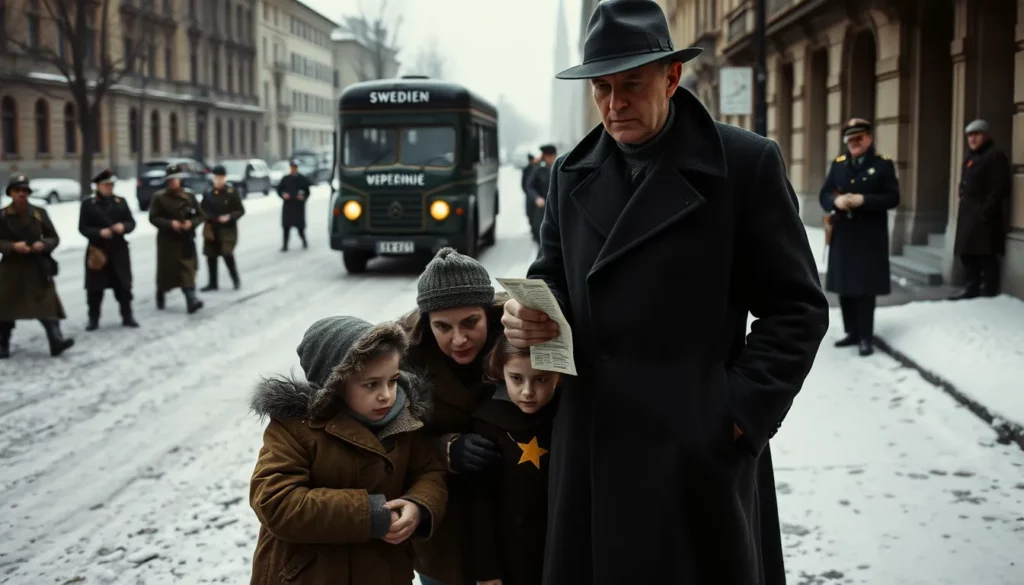
Budapest, July 1944. The city is a cauldron of fear and uncertainty. German forces occupied Hungary in March, and since May, nearly 440,000 Jews have been deported to Auschwitz, most to their immediate death. The remaining 200,000 Jews of Budapest live under the constant threat of deportation, forced into crowded yellow-star houses, their movements restricted, their property seized. On July 9, a young Swedish diplomat named Raoul Wallenberg arrives at the Swedish legation. He is 32 years old, with no diplomatic experience, sent by the US War Refugee Board with a simple mandate: save as many Jews as possible. Within days, he begins issuing Schutzpässe—protective passes bearing the Swedish crown—and establishes a network of safe houses, hospitals, and soup kitchens. The streets are patrolled by Arrow Cross fascists, who seize power on October 15 and unleash a reign of terror, shooting Jews on the banks of the Danube and forcing tens of thousands on death marches toward Austria. In this maelstrom, Wallenberg moves fearlessly, pulling people from trains, confronting German and Hungarian officers, and using bribes, bluff, and sheer audacity. His colleagues—Carl Lutz of Switzerland, Giorgio Perlasca posing as a Spanish diplomat—join the effort. The documents and testimonies from this period capture a desperate, chaotic struggle for survival, where a piece of paper with a foreign seal could mean the difference between life and death.
What Happened?
Raoul Wallenberg arrived in Budapest on July 9, 1944, assigned as first secretary to the Swedish legation. His mission, funded by the US War Refugee Board, was to rescue Hungarian Jews. By then, the Hungarian authorities, with German assistance, had already deported nearly 440,000 Jews to Auschwitz-Birkenau, where approximately 320,000 were murdered upon arrival. The remaining Jewish population of Budapest, about 200,000, faced imminent deportation. Wallenberg quickly established a rescue infrastructure: he rented buildings and declared them extraterritorial safe houses under Swedish protection, creating an ‘international ghetto’ for holders of protective passes. He issued thousands of Schutzpässe, certificates of protection that placed bearers under Swedish diplomatic immunity. He also distributed forged papers and bribed officials. After the Arrow Cross coup on October 15, 1944, deportations resumed, but with rail routes to Auschwitz cut by Soviet advances, the Arrow Cross forced Jews on death marches toward Austria. Wallenberg repeatedly intervened, often personally, to remove bearers of protective passes from these columns. He established hospitals, nurseries, and a soup kitchen, using WRB and Swedish funds. Other neutral diplomats, including Carl Lutz (Switzerland) and Giorgio Perlasca (posing as Spain), participated in similar efforts. When Soviet forces liberated Budapest in February 1945, about 120,000 Jews survived in the city, largely due to these rescue operations. Wallenberg himself was detained by Soviet authorities on January 17, 1945, and disappeared into the Soviet prison system; his fate remains unresolved.
- March 19, 1944: German forces occupy Hungary.
- May–July 1944: Mass deportations of Hungarian Jews to Auschwitz-Birkenau.
- July 9, 1944: Raoul Wallenberg arrives in Budapest and begins issuing protective passes.
- October 15, 1944: Arrow Cross coup; deportations and death marches resume.
- November 1944: Wallenberg intervenes repeatedly to save Jews from death marches.
- January 17, 1945: Wallenberg is detained by Soviet authorities.
- February 1945: Soviet forces liberate Budapest; about 120,000 Jews survive.
How It Was Seen at the Time
Contemporary reactions to Wallenberg’s work varied. Within the Swedish legation, some diplomats viewed his methods—bribery, forgery, confrontation—as dangerously unconventional. Others, like his colleague Per Anger, admired his courage. The Jews of Budapest saw him as a protector. In the ghetto, rumors spread of a Swedish diplomat who stood up to the Arrow Cross. ‘Wallenberg is our only hope,’ wrote one diarist in the Budapest ghetto in November 1944. The Arrow Cross and German authorities regarded him with suspicion and irritation, but his diplomatic status and the chaotic end of the war limited their ability to stop him. The American press, learning of his efforts, hailed him. In April 1945, the New York Times reported: ‘20,000 Hungarian Jews Saved by Swedish Diplomat.’ Yet even as his legend grew, Wallenberg’s own reports were measured. In a December 1944 report, he wrote: ‘The situation is desperate, but we are doing everything possible to save the remaining Jews.’
‘20,000 Hungarian Jews Saved by Swedish Diplomat’ — The New York Times, April 1945.
‘The situation is desperate, but we are doing everything possible to save the remaining Jews.’ — Raoul Wallenberg, report to the Swedish Legation, December 1944.
Historical Snapshot
| Aspect | Detail |
|---|---|
| Date | July 1944 – February 1945 (main rescue period) |
| Place | Budapest, Hungary |
| People | Raoul Wallenberg, Carl Lutz, Giorgio Perlasca, Per Anger, Adolf Eichmann, Ferenc Szálasi |
| What Happened | Wallenberg and neutral diplomats issued protective passes, established safe houses, and intervened to save Jews from deportation and death marches. |
| Why It Mattered | Saved tens of thousands of Jews; demonstrated the power of individual action during the Holocaust. |
Eyewitness Accounts
Survivors’ testimonies provide vivid glimpses of Wallenberg’s actions. Agnes Mandl Adachi, a Hungarian Jewish woman who worked in Wallenberg’s office, described in her oral history for the US Holocaust Memorial Museum how he distributed protective passes and personally intervened to pull people from deportation trains. She recalled that he was ‘always on the move, always trying to save someone.’ Another survivor, a woman who escaped from a transport on May 17, 1944, testified that Wallenberg’s passes stopped the Arrow Cross from removing her from a column. These accounts, collected by Yad Vashem and the USHMM, consistently portray Wallenberg as a fearless and resourceful presence in a city descending into chaos.
‘He was always on the move, always trying to save someone.’ — Agnes Mandl Adachi, oral history, US Holocaust Memorial Museum.
Letters & Diaries
Personal correspondence from the period reveals both desperation and hope. In July 1944, a group of Hungarian Jews wrote to the King of Sweden, pleading: ‘We appeal to Your Majesty to save the remnant of Hungarian Jewry.’ Wallenberg himself wrote to his family: ‘I have taken upon myself the task of saving the Jews of Budapest.’ A letter of gratitude from the Jewish Refugees Organization in Washington, dated December 6, 1944, thanked Wallenberg for his ‘heroic efforts on behalf of the Jews of Budapest.’ These letters, preserved in Swedish and Israeli archives, show how Wallenberg’s mission was understood by those he saved and by the international organizations that supported him.
‘I have taken upon myself the task of saving the Jews of Budapest.’ — Raoul Wallenberg, letter to his family, 1944.
Official Reports
Official documents from the Swedish legation and the War Refugee Board provide a detailed record of the rescue operation. A report dated December 7, 1944, summarizes Wallenberg’s activities: he had issued thousands of protective passes, established more than 30 safe houses, and organized hospitals, nurseries, and a soup kitchen. The report notes that his efforts were funded by the WRB and the Swedish government. Discrepancies exist between Swedish and American accounts regarding the exact number of passes issued—estimates range from 4,500 to 20,000—but all sources agree on the scale and impact of the operation. A telegram from the Swedish Foreign Ministry on July 21, 1944, confirms that the government had authorized Wallenberg to issue protective documents.
Different Perspectives
Swedish Legation
Some Swedish diplomats were wary of Wallenberg’s aggressive tactics, fearing they would compromise Sweden’s neutrality. His colleague Per Anger later wrote that Wallenberg ‘acted without regard for his own safety.’ The legation provided essential cover and resources, but Wallenberg often acted on his own initiative.
Hungarian Jews
For the Jews of Budapest, Wallenberg was a symbol of hope. Diaries and testimonies describe him as a protector who appeared when all seemed lost. Many survivors credit him with saving their lives.
Arrow Cross and German Authorities
Documents from the Arrow Cross regime show frustration with Wallenberg’s interventions. German officials, including Adolf Eichmann, viewed him as a nuisance but were constrained by his diplomatic status. The chaos of the final months limited their ability to stop him.
What the Sources Got Wrong
Contemporary accounts contain errors and exaggerations. Some early reports claimed Wallenberg saved 100,000 Jews, a figure that modern research has revised downward to perhaps 20,000–30,000 directly, though his broader impact was greater. The New York Times‘s April 1945 headline ‘20,000 Hungarian Jews Saved’ was based on incomplete information. Another misconception is that Wallenberg acted alone; in fact, he worked closely with Carl Lutz, Giorgio Perlasca, and others. Additionally, Soviet sources initially claimed Wallenberg died of a heart attack in 1947, a claim now widely disputed.
- Myth: Wallenberg saved 100,000 Jews single-handedly. Correction: He directly saved perhaps 20,000–30,000, but his efforts, combined with those of others, helped protect about 120,000 survivors.
- Myth: Wallenberg was a naive idealist. Correction: He was pragmatic, using bribery, forgery, and bluff to achieve his goals.
- Myth: His fate is known. Correction: His disappearance in Soviet custody remains unresolved.
Aftermath
After the Soviet liberation of Budapest in February 1945, Wallenberg’s fate became a mystery. He was detained by Soviet authorities on January 17, 1945, and taken to Moscow. Despite repeated Swedish inquiries, the Soviets claimed he had died in 1947. Survivors and historians continue to seek the truth. In the decades since, Wallenberg has been honored as a Righteous Among the Nations by Yad Vashem (1963) and as an honorary US citizen (1981). His legacy endures in the many testimonies and documents that record his courage.
How Historians See It Today
Modern scholarship has moved beyond the heroic narrative to a more nuanced understanding of Wallenberg’s methods and the context of rescue in Budapest. Historians emphasize the role of other diplomats and Jewish organizations, and they examine the ethical complexities of forgery and bribery. The opening of Soviet archives has shed light on Wallenberg’s imprisonment, though his ultimate fate remains unknown. The primary sources—letters, reports, testimonies—continue to be essential for understanding both the rescue and the man.
The documents and testimonies from Budapest in 1944–45 reveal a story of extraordinary courage in the face of overwhelming evil. Raoul Wallenberg’s protective passes were more than paper; they were lifelines. His relentless interventions, often at great personal risk, saved thousands from the gas chambers and the death marches. The eyewitness accounts—those of survivors like Agnes Mandl Adachi and the grateful letters from Jewish organizations—attest to the impact of his work. Yet the sources also remind us of the limits of individual action: Wallenberg could not save everyone, and his own fate remains a tragedy. What the primary sources teach us is that even in the darkest hours, human agency matters. The choices of a single diplomat, armed with nothing but a Swedish seal and a determination to act, can alter the course of history for thousands. The study of Wallenberg’s rescue is a testament to the power of documented testimony and the enduring quest for truth.
FAQ
How many Jews did Raoul Wallenberg save?
Estimates vary, but Wallenberg directly saved perhaps 20,000–30,000 Jews through protective passes and interventions. His broader efforts, combined with those of other diplomats, helped protect about 120,000 survivors in Budapest.
What were Schutzpässe?
Schutzpässe were protective passes issued by the Swedish legation, bearing the Swedish crown. They placed the bearer under Swedish diplomatic protection and were often respected by Hungarian and German authorities, though not always.
What happened to Wallenberg after the war?
Wallenberg was detained by Soviet authorities on January 17, 1945, and taken to Moscow. The Soviets claimed he died of a heart attack in 1947, but his fate remains unresolved. He was posthumously honored by many nations.













Leave a Reply