
Short Answer
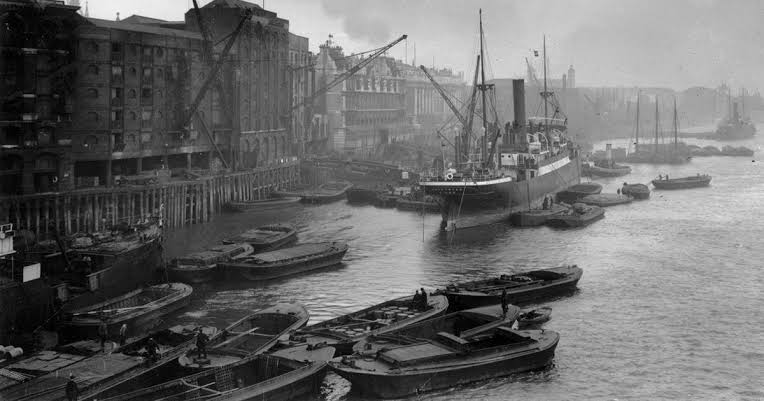
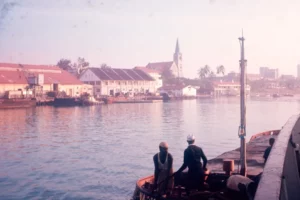
In the grey light of an 1888 morning, the River Thames below London Bridge was a forest of masts and funnels. The air carried the scent of coal smoke, tar, and the brackish mud of the river. The Port of London was not merely a harbour; it was the great artery of the British Empire, the place where the world’s goods—tea from India, wool from Australia, sugar from the West Indies—entered the imperial heart. The docks were a cacophony of steam winches, shouting stevedores, and the deep whistles of tugboats. As the London Museum Docklands describes, London’s docks had become “the centre of world trade, as British power spread in the 19th century.” In 1888, that centre was at its zenith, and the river was the busiest thoroughfare on earth.
What Happened?
The Port of London in 1888 was the product of a half-century of explosive growth. The early 19th-century docks—West India, London, East India, and the Surrey Commercial Docks—had been built for sailing ships, with narrow locks and limited space. But as the History of London article notes, “Their developers could not foresee that within a few decades steam-powered, iron-hulled vessels would be built so large they were unable to enter those docks.” By the 1880s, the port was moving eastward to accommodate the new ships. The opening of Tilbury Docks in 1886—just two years before—was the most dramatic step in this expansion. The History of London records that “The opening of Tilbury in 1886 moved the Port of London further downriver.” Although Tilbury initially struggled to attract traffic, it soon became the only dock capable of handling the largest vessels.
The trade itself was staggering. London was the financial heart of the empire, and the docks brought in goods from every continent. The London Museum Docklands notes that “London benefited enormously from its industry and docks. As the financial heart of the British empire, London’s docks had the money to expand and bring even more trade into the city—and quickly.” Wooden ships were being replaced by iron and steel; shipyards, engineering works, potteries, gasworks, and candleworks lined the riverside, providing jobs and wealth. The port was not just a point of exchange; it was a factory of global commerce.
How It Was Seen at the Time
Contemporaries saw the Port of London as the symbol of British supremacy. The historian Leonard Schwarz, writing of the long view, notes that “Since Roman times London has been Britain’s largest town, its largest manufacturing city and its largest port.” In 1888, this was taken for granted. The port was the engine of the empire, and its wealth was visible in the magnificent new warehouses and the constant stream of ships. The London Museum Docklands captures the prevailing mood: “London’s docks became the centre of world trade, as British power spread in the 19th century.” The press and public celebrated the port’s growth, seeing it as proof of the nation’s industrial and imperial genius. There was pride in the sheer scale of the operation—the miles of quays, the thousands of dockers, the ever-larger steamships.
Historical Snapshot
| Aspect | Detail |
|---|---|
| Date | 1888 |
| Place | The River Thames, London, from the City to Tilbury |
| People | London dockers, stevedores, merchants, shipowners, and sailors from around the world |
| What Happened | The Port of London operated as the world’s largest harbour, handling a vast volume of colonial and global trade, with new iron-hulled steamships and expanding docks. |
| Why It Mattered | It was the financial and logistical heart of the British Empire, enabling the flow of goods and wealth that underpinned Britain’s global power. |
What People Knew at the Time
| What People Knew Then | What We Know Now |
|---|---|
| The port was expanding eastward, and Tilbury was the newest dock, built to handle the largest ships. | The eastward shift continued, but Tilbury’s initial failure was a sign of the port’s eventual decline in the 20th century as containerisation and deep-water ports elsewhere took over. |
| The port was the centre of world trade, a fact of pride and imperial confidence. | Historians now see the port as a site of enormous wealth but also of severe labour exploitation, with thousands of casual dockers living in poverty. |
| Iron and steel ships were rapidly replacing wooden sailing ships. | This transition was a sign of the Second Industrial Revolution, but also of the growing dependence on coal and the beginning of the end of the age of sail. |
Daily Life
The daily life of the Port of London in 1888 was dominated by the work of the dockers. These men (and a few women) were employed on a casual basis, often hired by the day or the half-day. The work was dangerous and back-breaking. A particularly vivid account from the Past & Present article, although from a slightly later period, describes the typical work of a “deal porter” at the Surrey Commercial Docks—the men who unloaded wooden boards, or ‘deals,’ from ships. The article recounts the fate of William Gillard, a deal porter who in 1908 “had been waiting to carry when a squabble between two other men made him step backwards, strike his head, and fall down a hole.” He later died. The description of the work—”balanced them on his shoulder, and stacked them in towering piles”—was equally true in 1888. These porters were among the most skilled, but the pay was low and the work was dangerous. The daily rhythm of the port was set by the tides and the arrival of ships. At the start of the day, the dock gates would open to a crowd of hundreds of men hoping for a day’s work. The lucky ones would be given a ticket and set to work under the eye of a ganger. The unlucky would return home, often to no work at all. The work was hard, the hours long, and the accidents were frequent.
Numbers at the Time
| Statistic | Value (c. 1888) |
|---|---|
| Population of London | Over 5 million |
| Number of major dock systems | At least 6 (West India, East India, London, St. Katharine, Surrey, and Tilbury) |
| Newest dock | Tilbury, opened 1886 |
| Dominant ship type | Iron-hulled steamships, replacing wooden sailing ships |
| Employment | Thousands of casual dockers, including deal porters, stevedores, and lightermen |
What People Expected Would Happen Next
Contemporaries in 1888 expected the Port of London to continue its relentless expansion. The move eastward was seen as the natural response to the growth of shipping. The History of London notes that “as ships grew ever larger Tilbury found itself as the only docks in the port capable of handling the largest vessels.” Many believed that the port would remain the world’s premier harbour for the foreseeable future. There was talk of further docks and more trade. The imperial project was at its height, and the port was its symbol. The idea that the port would ever decline was unthinkable to most. The only anxiety was about competition from other ports, such as Liverpool or the continental ports, but the general expectation was that London’s financial and commercial power would keep it supreme.
How Historians See It Today
Modern historians have a more complex view. While they acknowledge the port’s centrality to the British Empire, they also emphasise the human cost. The Past & Present article, for example, uses the death of William Gillard to illustrate the dangerous and exploitative conditions of the dockers. Historians also note the technological shift from sail to steam was not just a triumph but also a source of instability, as the larger ships required deeper water and larger docks, leading to the eventual decline of the older, upstream docks. The port’s history is now seen as a story of globalisation, but also of inequality. The port was a place where the wealth of the empire was concentrated, but also where the poverty of the casual labourers was hidden. The current scholarship emphasizes the global networks that the port connected, as well as the local, human experiences of the people who worked there.
In the end, the Port of London in 1888 was a paradox: a magnificent engine of imperial wealth and a site of brutal human toil. The primary sources of the time—the reports of the dock companies, the descriptions of the docks, the accounts of the workers—reveal a world of both progress and suffering. The port was the heart of the empire, but it was also a place where the empire’s power was built on the backs of thousands of anonymous men and women. The study of that port reminds us that the history of trade is always also a history of people.
FAQ
What was the Port of London in 1888?
The Port of London in 1888 was the largest port in the world, the main entry point for goods from the British Empire and the world. It consisted of a series of docks along the River Thames, including the older West India, London, and East India docks, and the newly opened Tilbury Docks. It was the centre of the empire's trade, with iron-hulled steamships and thousands of dockers working daily.
Why did the port move eastward?
The port moved eastward because the new iron-hulled steamships were much larger than the sailing ships of the early 19th century. The older docks, built for sailing ships, had narrow locks and shallow water. The opening of Tilbury Docks in 1886 was a response to this, providing a dock that could handle the largest vessels. The port continued to move east as ships grew even larger.









Leave a Reply