
Short Answer
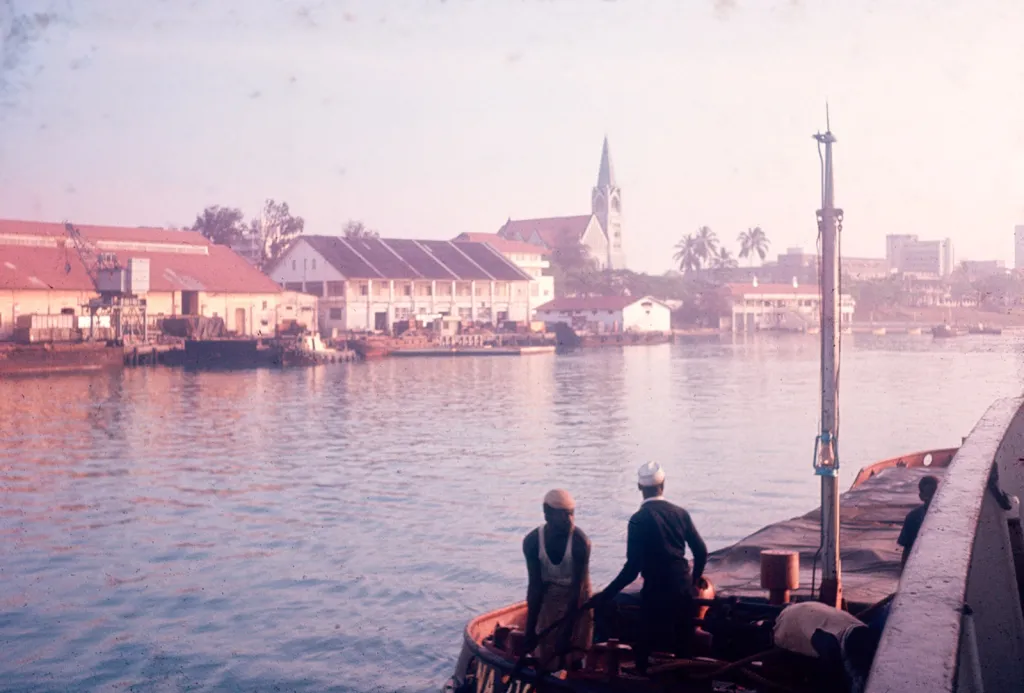
In the mid-1960s, Dar es Salaam was a city in motion. The dusty streets of the Tanzanian capital, still bearing the architectural marks of German and British colonial rule, were filling with new sounds, new fashions, and new faces. Young men and women from across the continent and the world passed through its port, its university, and its bustling markets. The city was a hub for southern African liberation movements, a magnet for left-wing intellectuals, and a stage for a dramatic contest between the state’s vision of “decency” and the global ambitions of its youth. As one observer later wrote, the city was “a vibrant hub for multiple networks of transnational political activists”—FRELIMO fighters, Black Power supporters, and exiled leftists all rubbed shoulders with local students and workers (Ivaska, 2013). Yet this cosmopolitan energy collided with a state determined to police culture and gender, launching “decency campaigns” that banned soul music, miniskirts, wigs, and bell-bottoms (Ivaska, 2011). To walk the streets of Dar es Salaam in 1967 was to step into a living argument about what it meant to be modern, African, and free.
What Happened?
The 1960s were a decade of profound transformation for Dar es Salaam, a city that had been the capital of Tanganyika and, after 1964, of the United Republic of Tanzania. The city’s population swelled with rural migrants and international exiles. The independence of Tanganyika in December 1961 set the stage for a new national identity, but the city itself was already a melting pot. By the early 1960s, Dar es Salaam had become the headquarters for several southern African liberation movements, including FRELIMO (the Mozambique Liberation Front), which set up its Mozambique Institute in the city (Ivaska, 2013). The University of Dar es Salaam, founded in 1961, became a hotbed of leftist activism and intellectual debate, attracting students from across the continent and beyond.
At the same time, the state, led by President Julius Nyerere, began to articulate a vision of “African socialism” (Ujamaa) that sought to create a modern, self-reliant nation. This vision clashed with the cultural expressions of the city’s youth, who embraced global styles—soul music from the United States, miniskirts from London, wigs and bell-bottoms that signaled cosmopolitan modernity. In response, the government launched a series of “decency campaigns” aimed at banning these cultural forms, which were seen as corrupting and un-African. These campaigns were promoted by the political elite as a radical break from the colonial order, but they carried echoes of colonial assumptions about culture and the proper place of African engagement with the modern city (Ivaska, 2011).
The decade also saw significant legal and social changes. Debates over marriage law reform, university education, and the role of women in public life were central. The government’s attempts to regulate gender and sexuality were part of a broader effort to define a distinct postcolonial identity. By the early 1970s, the city had become a site of both intense hope and considerable anxiety, as the promises of independence confronted the realities of economic difficulty and political repression.
How It Was Seen at the Time
Contemporaries understood the city through the lens of struggle. For many young Tanzanians, Dar es Salaam was a place of opportunity, where the modern global culture they saw in films and records could be accessed. As Andrew Ivaska puts it, “If young Tanzanians saw themselves as full-fledged participants in modern global culture, their understandings of the modern conflicted with that of a state launching ‘decency campaigns’ banning cultural forms such as soul music, miniskirts, wigs, and bell-bottoms” (Ivaska, 2011). The state, for its part, framed its actions as a defense of African dignity and a rejection of colonial-era moral decay. In the eyes of the political elite, the city was a dangerous place where tradition was being eroded by foreign influences, and the decency campaigns were a necessary corrective.
Yet the campaigns themselves were contested. Students at the University of Dar es Salaam, many of whom were influenced by leftist ideologies, saw the state’s actions as authoritarian and out of touch. Liberation movement members, who had experienced the brutality of colonial rule, often sided with the youth, seeing the state’s moralism as a distraction from the real struggles for independence across the border. The prevailing mood in the city was one of both optimism and tension—optimism about the future of a free Africa, tension over the meaning of that freedom.
Historical Snapshot
| Aspect | Detail |
|---|---|
| Date | 1960s (especially 1961-1971) |
| Place | Dar es Salaam, Tanzania (capital of Tanganyika, later Tanzania) |
| People | Youth, state officials, liberation movement members, university students, leftist intellectuals |
| What Happened | Rapid urbanization, cultural conflict over fashions and music, decency campaigns, establishment of liberation movement hubs |
| Why It Mattered | Shaped postcolonial Tanzanian identity and the city’s role as a center of African liberation politics |
Daily Life
Daily life in 1960s Dar es Salaam was marked by a mix of the familiar and the new. The city’s streets were crowded with people wearing a range of clothing—some in traditional khanga and kanga, others in the latest global fashions. Young women often wore miniskirts, which were a symbol of modern urbanity, but also a target of the decency campaigns. The campaigns led to police and government officials confiscating clothing deemed indecent, and women were sometimes harassed. The music scene was vibrant: soul music from the United States and the Caribbean filled bars and clubs, while local bands blended these influences with African rhythms. The city’s markets, like the famous Kariakoo market, sold a variety of goods, including wigs, which were popular among both men and women.
The University of Dar es Salaam was a center of intellectual life. Students debated socialism, liberation, and the future of the continent. They organized seminars, participated in protests, and engaged with the international left. The city also hosted a number of political offices and safe houses for liberation movements. The Mozambique Institute, for example, was a place where FRELIMO fighters trained and rested. The Africa-America Institute also served as a gathering point for Black Power activists and others. These sites were not just political; they were social spaces where people shared meals, exchanged news, and formed friendships across national lines.
Everyday routines were shaped by the city’s infrastructure. Dar es Salaam had a port, a railway, and a growing network of roads. The city was relatively small, and most people walked or used bicycles. The climate was hot and humid, and the afternoons often brought rain. People worked in offices, in the port, in the markets, and in the growing service sector. The evenings were for socializing, with the city’s clubs and bars offering a mix of music, dance, and political discussion. The city’s newspapers, such as The Nationalist and Uhuru, reported on local and international events, and they were read aloud in many public spaces.
Different Perspectives
The State
The Tanzanian government, under President Nyerere, viewed the city as a site of moral decay that needed to be disciplined. The decency campaigns were part of a broader effort to create a “national culture” that was distinctly African and socialist. Officials argued that miniskirts and wigs were symbols of Western imperialism and that their presence undermined the dignity of the nation. The state also saw the university as a hotbed of subversive ideas, and it attempted to control the curriculum and political activities.
The Youth and the Cosmopolitan
Young Tanzanians, particularly in Dar es Salaam, saw themselves as part of a global generation. They embraced soul music, danced to American and British hits, and wore the latest fashions. For them, these styles were not just about appearances—they represented participation in a modern world that was not limited by colonial or national boundaries. They resented the state’s interference, viewing it as a restriction on their freedom and their identity as modern Africans.
Liberation Movement Activists
Freedom fighters from southern Africa, who lived in Dar es Salaam as exiles, had a different perspective. They were focused on the armed struggle against colonial rule in their home countries. For them, the decency campaigns were a distraction from the real issues. They saw the city as a base for solidarity and a place where they could find support. They often worked alongside the Tanzanian government, but they also maintained their own social networks and cultural practices, which sometimes conflicted with the state’s moral agenda.
Contemporary Terminology
The 1960s in Dar es Salaam generated a specific vocabulary. “Decency campaigns” (or “decency” as a noun) referred to the government’s efforts to ban what it considered immoral or foreign dress and music. “Soul music” was the American music genre that became a symbol of youth culture. “Miniskirts” and “wigs” were the clothing and hair accessories that were banned. “Bell-bottoms” were the flared trousers worn by young men. “Comrade life” was a term used by the international leftists and liberation activists to describe the everyday practices of solidarity and shared struggle in the city’s gathering points. “Modern style” was a phrase used to describe the cosmopolitan fashions and behaviors that were seen as the opposite of “traditional” or “tribal” identity.
How Historians See It Today
Modern historians, such as Andrew Ivaska, have reinterpreted the decency campaigns and the cultural politics of Dar es Salaam in the 1960s as a central site of postcolonial contestation. They argue that the campaigns were not simply about dress but were about the meaning of citizenship, gender, and the nation. Ivaska’s work shows that the state’s attempts to regulate youth culture were deeply intertwined with anxieties about gender relations, sexual politics, and the competition for material resources in the city. The city’s role as a hub for liberation movements has also been reinterpreted as a crucial element of the transnational political history of the African continent. Historians now emphasize that Dar es Salaam was not merely a passive recipient of global influences, but a place where African and global ideas were actively shaped and transformed. The 1960s in Dar es Salaam is seen as a period that set the stage for later debates about African identity, modernity, and the legacies of colonialism.
In sum, the everyday life of Dar es Salaam in the 1960s was a dynamic and often contradictory experience. The city was a place where the future was being negotiated—through the clothes people wore, the music they listened to, and the political struggles they joined. The primary sources from the period, including newspapers, photographs, and the accounts of the participants, reveal a city that was both a crossroads and a battleground. They remind us that the history of a city is not just about the big events, but about the small, ordinary actions that defined what it meant to live in a moment of transition.
FAQ
What was the 'decency campaign' in 1960s Dar es Salaam?
The decency campaign was a government initiative that banned certain fashions and music, including soul music, miniskirts, wigs, and bell-bottoms. It was intended to promote African cultural dignity and reject foreign influences, but it was highly contested by the youth.
Why was Dar es Salaam a hub for liberation movements?
Dar es Salaam served as a base for several southern African liberation movements, including FRELIMO. The city provided a safe haven, political support, and a international network for these movements, making it a central node in the continent's decolonization struggles.





Leave a Reply