
Short Answer
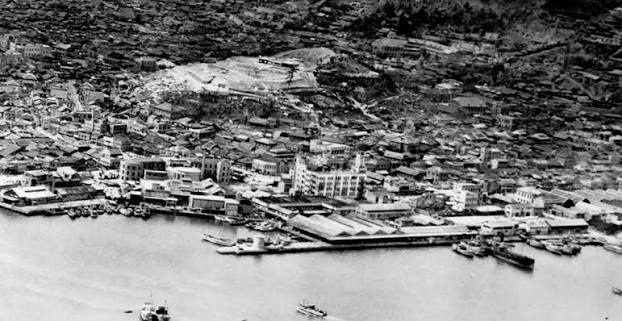
In the summer of 1950, Busan (then spelled Pusan) was a city transformed overnight. The outbreak of the Korean War on June 25 had sent the South Korean government and military fleeing southward, and by August 18, Busan had become the temporary capital of the Republic of Korea. The city, already a major port, now teemed with refugees, government officials, and foreign troops. The first wave of evacuees—some 200,000 people—arrived within weeks of the war’s start, many of them relatives of political and military families and the Seoul elite. A second, far larger wave followed after the Chinese People’s Volunteer Force occupied Seoul on January 4, 1951, bringing over half a million displaced people, including more than 100,000 refugees from North Korea. The city’s population swelled, its resources strained, and its streets filled with the displaced and the desperate. Yet Busan remained the symbol of resistance—a city that refused to fall, a temporary capital that held the line.
What Happened?
The Korean War began on June 25, 1950, when North Korean forces crossed the 38th parallel. Within days, more than half of the country fell into enemy hands, and the South Korean government and military retreated southward. The government made brief stops in Daejeon (June 27 to July 16) and Daegu (July 16 to August 17) before finally designating Busan as the wartime capital on August 18, 1950.
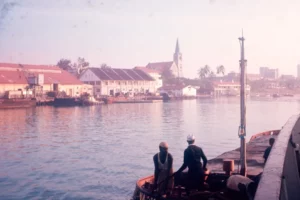
Busan was chosen for strategic and practical reasons. As a port city, it was the last major urban center still under South Korean control and offered a gateway for international aid and military reinforcement. The United Nations Commission on Korea (UNCOK) was already established in the city, facilitating international cooperation and refugee relief efforts.
The influx of evacuees came in two waves:
- First wave (June–August 1950): About 200,000 evacuees arrived in the immediate aftermath of the war’s outbreak, mostly relatives of political and military families and the Seoul elite.
- Second wave (January–March 1951): After the Chinese People’s Volunteer occupied Seoul on January 4, 1951, an overwhelming half million displaced people poured into Busan, including over 100,000 refugees from North Korea.
The rapid influx of a transient population exhausted public services and resources that the war had already diminished. The simultaneous development of a U.S. military complex in southeast Korea gave rise to rampant illegal trade and prostitution. Although some schemes to continue wartime education testified to the agency of evacuees to enact continuity in liminal spaces, only the elite could go to school without interruption (Source 1).
How It Was Seen at the Time
To contemporaries, Busan was both a refuge and a pressure cooker. The term “wartime capital” itself carried a sense of urgency and impermanence—the government was not in Seoul, but it was still alive. The city was often described as the “last bastion” of the Republic of Korea, a place where the war could be fought and won from the rear. Refugees spoke of the city as a place of safety, but also of scarcity. The official narrative emphasized Busan’s role in facilitating international cooperation, as the United Nations Commission on Korea operated from the city, and its port became the gateway for foreign troops and supplies.
“Busan was the only place where the South Korean government could function, and it became the symbol of resistance against the North.”
Yet the mood was also marked by fear and uncertainty. The influx of refugees created enormous strain. Public services were overwhelmed, and the city’s infrastructure, already weakened by the war, could barely cope. The presence of the U.S. military brought both security and new social problems—illegal trade and prostitution flourished, and the local population struggled to maintain order. The sense of being a temporary capital, a stopgap, colored every aspect of daily life.
Historical Snapshot
| Aspect | Detail |
|---|---|
| Date | June 25, 1950 – Korean War begins; August 18, 1950 – Busan designated wartime capital; January 4, 1951 – second refugee wave after Chinese entry into Seoul |
| Place | Busan (Pusan), Republic of Korea |
| People | South Korean government, military, refugees (including North Korean civilians), U.S. military forces, UN personnel |
| What Happened | Busan became the temporary capital after Seoul fell; hundreds of thousands of refugees fled south; the city served as the last stronghold of the Republic of Korea |
| Why It Mattered | Busan allowed the South Korean government to survive and coordinate resistance; it became the center of international aid and military operations during the war |
Numbers at the Time
| Statistic | Figure | Source / Year |
|---|---|---|
| First-wave evacuees (June–August 1950) | ~200,000 | Source 1 (2017) |
| Second-wave evacuees (January 1951 onward) | ~500,000 total, including 100,000+ North Korean refugees | Source 1 (2017) |
| Period of government stay in Daejeon | June 27 – July 16, 1950 | Source 2 (Busan.go.kr) |
| Period of government stay in Daegu | July 16 – August 17, 1950 | Source 2 |
| Date Busan designated wartime capital | August 18, 1950 | Source 2 |
What People Feared
Contemporaries feared that Busan would be next to fall. The rapid advances of North Korean forces in the summer of 1950 made it seem possible that the entire peninsula would be overrun. The city’s infrastructure was already collapsing under the weight of refugees, and there were widespread fears of disease, starvation, and social chaos. The U.S. military presence was a source of security but also a source of anxiety—the illegal trade and prostitution that accompanied the military complex were seen as signs of moral decay and social breakdown. Many feared that the government itself would have to flee the peninsula entirely if Busan fell.
Daily Life
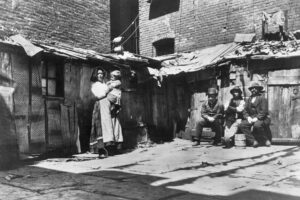
Daily life in Busan during the wartime capital period was a study in improvisation. The city’s population swelled far beyond its normal capacity. Housing was scarce; many refugees lived in makeshift shelters, in schools, in tents, or on the streets. Food and clean water were rationed. The government’s attempts to continue wartime education were limited—only the elite could attend school without interruption (Source 1). The port became the lifeline, with ships delivering supplies, troops, and aid from the United Nations and the United States. The streets were crowded with soldiers, refugees, and merchants, and the city’s social fabric was stretched to the breaking point. Yet there were also moments of resilience—refugees organized informal markets, religious groups provided charity, and the government functioned in makeshift offices. The city was a place of both despair and determination.
How Historians See It Today
Modern scholarship has examined Busan’s wartime role through the lens of refugee studies, urban history, and the Korean War. The journal article “Pusan at War: Refuge, Relief, and Resettlement in the Temporary Capital, 1950–1953” (2017) analyzes the two waves of in-migration and the social consequences of the refugee influx. It emphasizes the agency of evacuees in maintaining education and social continuity, while also documenting the rise of illegal trade and prostitution (Source 1). The official heritage designation of “Sites of the Busan Wartime Capital” was submitted to UNESCO in 2023, highlighting the historical and cultural significance of the city’s wartime role (Source 4). The city government of Busan maintains an official heritage page that explains the reasons for choosing Busan as the wartime capital, emphasizing its port and its role in international cooperation (Source 2). Historians today view Busan as a crucial site of survival and resistance, where the Republic of Korea was able to maintain a legitimate government during the darkest days of the war.
Common Misconceptions
Conclusion
Busan in 1950 was more than a city; it was a lifeline. The primary sources of the era—official government records, refugee accounts, and press reports—reveal a community under extraordinary pressure, yet one that refused to collapse. The wartime capital functioned as the political and moral heart of the Republic of Korea, and its survival allowed the war to be fought from a position of legitimacy. The experience of Busan reminds us that in the midst of war, the ordinary acts of daily life—finding food, shelter, and a place to sleep—are inseparable from the larger narrative of national survival.
FAQ
Why was Busan chosen as the wartime capital?
Busan was chosen because it was a major port city that remained under South Korean control, allowing for international cooperation and refugee relief. The United Nations Commission on Korea was already stationed there, and its port could receive military and humanitarian supplies.
How many refugees came to Busan during the Korean War?
According to the 2017 study, the first wave brought about 200,000 evacuees after the outbreak of war, and the second wave, following the Chinese entry into Seoul in January 1951, brought about 500,000 displaced people, including over 100,000 North Korean refugees.
What was daily life like for refugees in Busan?
Daily life was extremely difficult. Housing was scarce, food and water were limited, and public services were overwhelmed. Only the elite could attend school without interruption. The presence of the U.S. military brought both security and social problems like illegal trade and prostitution.



Leave a Reply