Short Answer
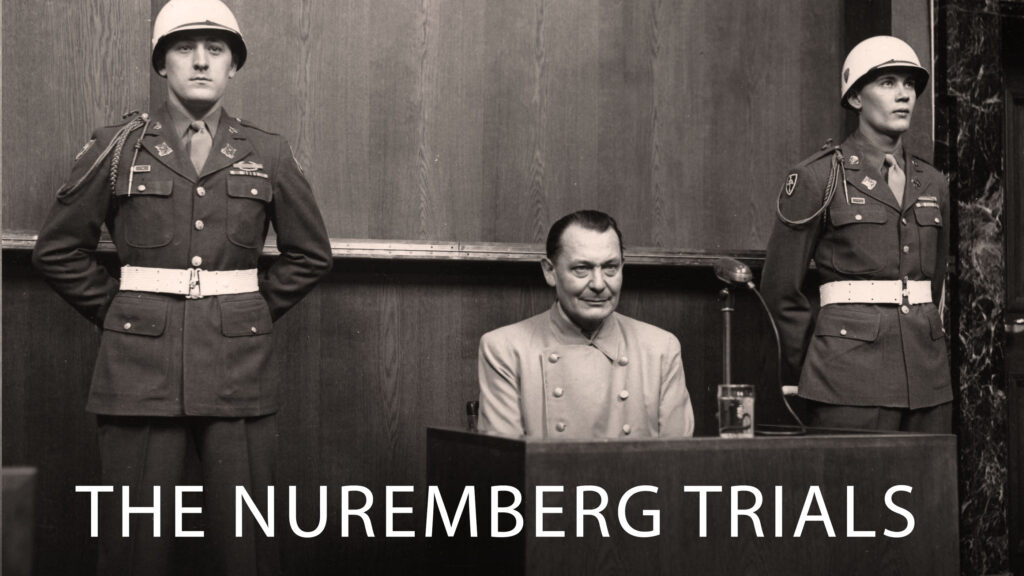
In the winter of 1945, the ancient city of Nuremberg, Germany, lay in ruins. The Palace of Justice, one of the few structures still standing, became the stage for a historic reckoning. Inside its courtroom, the world’s press gathered to witness the first international war crimes trial. The men in the dock—Hermann Göring, Rudolf Hess, Joachim von Ribbentrop, and twenty-one other Nazi leaders—were the architects of a war that had killed millions. As the court convened on November 20, 1945, the world listened. The proceedings were not only a legal event; they were a public spectacle, broadcast through newspapers, radio, and newsreels. The trial would last for nearly a year, and the world would follow every word.
What Happened?
On August 8, 1945, the Governments of the United Kingdom, the United States, the French Republic, and the Soviet Union signed the London Agreement, establishing the International Military Tribunal (IMT) for the trial of war criminals whose offenses had no particular geographical location. The trial began on November 20, 1945, in the Palace of Justice in Nuremberg, Germany.
The indictment contained four counts:
- Count One: Crimes against peace—planning, preparing, initiating, and waging wars of aggression.
- Count Two: War crimes—violations of the laws and customs of war, including murder, ill-treatment, and deportation of civilians.
- Count Three: Crimes against humanity—murder, extermination, enslavement, and persecution on political, racial, or religious grounds.
- Count Four: Conspiracy to commit any of the foregoing crimes.
Twenty-four men were indicted; one, Martin Bormann, was tried in absentia. The trial lasted until October 1, 1946. The judgment, read on September 30 and October 1, 1946, found 22 defendants guilty or not guilty. Twelve were sentenced to death, three to life imprisonment, four to prison terms ranging from 10 to 20 years, and three were acquitted. The Tribunal also declared three organizations—the SS, the Gestapo, and the Leadership Corps of the Nazi Party—criminal.
How It Was Seen at the Time
For contemporaries, the Nuremberg Trials were a landmark of international justice. The judgment itself declared that “the crimes against international law are committed by men, not by abstract entities,” and that “only by punishing the men who commit such crimes can the provisions of international law be enforced.” The tone was solemn and deliberate, with the President of the Tribunal stating, “The judgment of the International Military Tribunal will now be read.”
The prevailing mood among the Allied nations was one of cautious hope. The trials were seen as a rejection of victor’s vengeance and a promise that law, not force, would govern the post-war world. As the judgment noted, the London Agreement was “the first time in history that the leaders of a state were brought before an international court to answer for their actions.”
“The defendants are not to be punished because they lost the war, but because they committed crimes against the laws of nations.” — The judgment of the International Military Tribunal, 1946
Historical Snapshot
| Aspect | Detail |
|---|---|
| Date | November 20, 1945 – October 1, 1946 |
| Place | Palace of Justice, Nuremberg, Germany |
| People | 22 defendants, 4 judges (US, UK, France, USSR), and a large international press corps |
| What Happened | First international war crimes trial; verdicts included 12 death sentences and 3 acquittals |
| Why It Mattered | Established that individuals could be held accountable under international law for crimes against peace, war crimes, and crimes against humanity |
Official Reports
The official record of the trial is the “Blue Series”—the forty-two volumes of the Trial of the Major War Criminals before the International Military Tribunal, published by the Allied authorities. These volumes contain the full transcript of the proceedings, the evidence, and the judgment. The Harvard Law School Library’s Nuremberg Trials Project has digitized these documents, making them freely accessible. The Library of Congress holds the Blue Series in its collections, with each volume available for public inspection.
The judgment itself, as preserved in the Avalon Project at Yale, is the most authoritative official report. It outlines the legal reasoning, the evidence, and the verdicts. The Tribunal rejected the defense that the acts were legal under German law, holding that “the law of the Charter is decisive.”
Different Perspectives
The Prosecution’s View
Robert H. Jackson, the chief U.S. prosecutor, framed the trial as a “great trial of the twentieth century.” In his opening statement, he declared that the prosecution would not merely seek punishment but would establish the record of Nazi crimes. The prosecution saw the trial as a moral and legal precedent for a new world order.
The Defense’s View
The defense argued that the Tribunal was a victor’s court and that the crimes charged were not crimes at the time they were committed—that the trial violated the principle of nullum crimen sine lege (no crime without law). The judgment itself addresses this, noting that the defendants “were not to be punished for actions which were not crimes under international law at the time they were committed.”
The Tribunal’s View
The Tribunal, in its judgment, emphasized its own impartiality and the universal nature of the law. It declared that the defendants were not being tried “because they lost the war,” but because they committed crimes that had been recognized as such by the international community.
What People Expected Would Happen Next
At the time, many expected the trial to be a swift show trial. The world was skeptical that the Allies would deliver impartial justice. But the Tribunal’s lengthy proceedings—which included the testimony of dozens of witnesses and the introduction of hundreds of documents—surprised many. The judgment was followed by the execution of the condemned men on October 16, 1946. The Tribunal also recommended that subsequent trials be held for lesser offenders, and indeed, twelve further trials under Control Council Law No. 10 followed in Nuremberg.
Many expected that the Nuremberg Trials would establish a permanent international criminal court, but the Cold War delayed such a development. The Tribunal’s legacy, however, would be cited in the 1990s with the creation of the International Criminal Court.
Aftermath
The immediate aftermath of the Nuremberg Trials was the execution of the twelve sentenced to death, including Joachim von Ribbentrop and Hermann von Göring (who committed suicide before his execution). The subsequent trials, known as the Subsequent Nuremberg Trials, continued until 1949 and tried doctors, judges, and industrialists. The Blue Series, published in the following years, became the definitive record. The Harvard Law School Library’s Nuremberg Trials Project now provides digital access to these documents, allowing contemporary readers to examine the very evidence that was presented in 1945.
How Historians See It Today
At the time, the Nuremberg Trials were seen as a triumph of international law. Today, historians view them as a complex moment of justice, but also as a product of the political realities of 1945. The trials were not a complete reckoning—many Nazi crimes were not covered, and the Soviet Union, one of the prosecuting powers, was itself guilty of crimes. Yet the primary sources—the trial transcripts, the judgment, the Blue Series—remain invaluable. They show how the world sought to deal with the greatest crimes in history, and they continue to shape the language and law of international justice. The Harvard project and the Avalon Project have made these sources accessible, allowing us to hear the voices of the courtroom as they were heard in 1946.
The Nuremberg Trials were a watershed moment in history. The contemporary courtroom reports—the transcripts, the judgment, the official records—reveal a world struggling to define justice. They show us that the trial was not merely a legal event but a human one, filled with the hope and fear of a generation that had witnessed the abyss. The primary sources teach us that justice, however imperfect, is a necessary human endeavor.
FAQ
Who were the judges at the Nuremberg Trials?
The Tribunal was composed of eight judges, two from each of the four Allied powers: the United States, the United Kingdom, France, and the Soviet Union. The chief judges were Francis Biddle (US), Sir Geoffrey Lawrence (UK), Henri Donnedieu de Vabres (France), and Iona Nikitchenko (Soviet Union).
What is the 'Blue Series'?
The Blue Series is the official published record of the Nuremberg Trials, containing the full trial transcripts, documents, and judgments. It is available at the Library of Congress and in digital form via the Harvard Law School Library's Nuremberg Trials Project.





Leave a Reply