
Short Answer
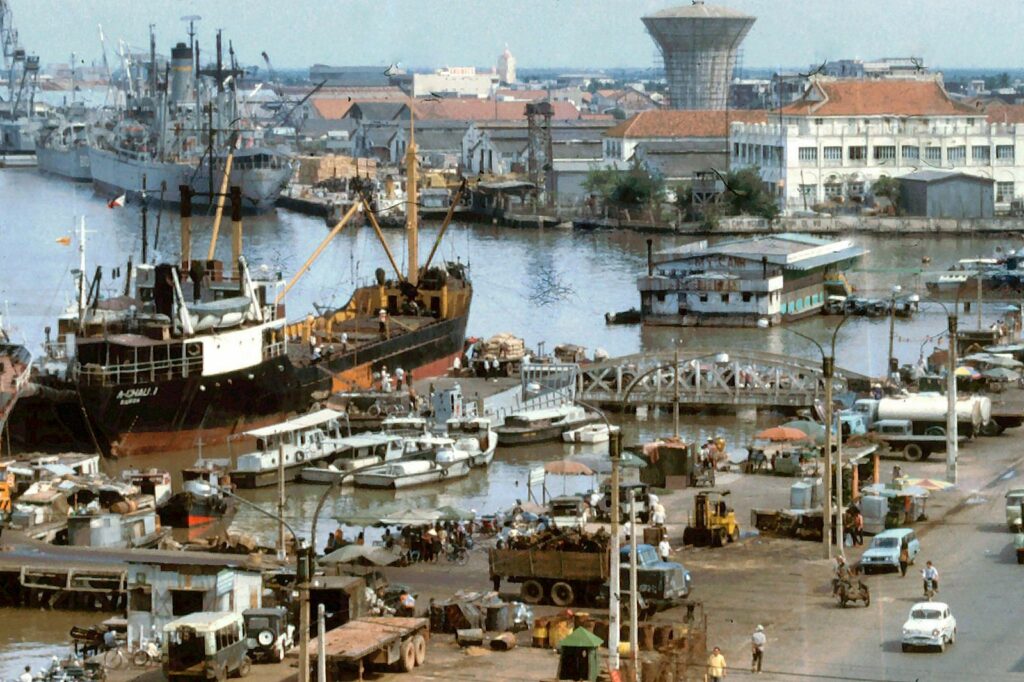
In 1965, Saigon was a city of contradictions. The rainy season had just begun, and afternoon storms gave way to breezy evenings that beckoned people outdoors, as the historian Heather Marie Stur later noted. Yet the streets were also filled with American military vehicles, and the air carried the tension of a war that seemed endless. Foreign correspondents, including the New Yorker’s Robert Shaplen, walked these streets, filing dispatches that captured both the surface calm and the underlying fracture. They saw a city that was booming but broken, where inflation and corruption threatened to undo the military gains on the battlefield. This article reconstructs Saigon in 1965 through the eyes of those correspondents—what they saw, what they feared, and what they expected to come.
What Happened?
The year 1965 was a turning point in the Vietnam War. In February, the United States began Operation Rolling Thunder, a sustained bombing campaign against North Vietnam, and in March the first American combat troops landed at Da Nang. By mid-year, the American military presence had grown to more than 180,000 troops. On the ground, American advisers worked alongside South Vietnamese forces, but the political situation in Saigon remained chaotic. In April, Shaplen reported on the military gains and the political chaos, noting a “faltering bid to win villagers’ loyalties.” The government of the Republic of Vietnam, led by a series of generals, was unstable; coups and counter-coups were frequent.
By November, the situation had not improved. Shaplen wrote of a “booming, fractured Saigon,” where inflation was rampant and corruption was endemic. The American and Vietnamese agendas clashed, threatening to turn battlefield gains into political defeat. The city itself was crowded with soldiers, refugees, and entrepreneurs, and the streets were clogged with vehicles. The war was not only a military conflict but also a political and economic one, and Saigon was its epicenter.
How It Was Seen at the Time
Contemporary observers saw Saigon as a city living in a state of paradox. The New Yorker’s Robert Shaplen, writing in April 1965, described the situation as one of “military gains, political chaos, and a faltering bid to win villagers’ loyalties.” His November letter painted a darker picture: “In a booming, fractured Saigon, inflation, corruption, and clashing American and Vietnamese agendas threaten to turn battlefield gains into political defeat.” The mood among correspondents was one of cautious optimism mixed with deep anxiety. They saw the war as winnable militarily but feared that the political and economic instability in Saigon could undermine the entire effort.
“In a booming, fractured Saigon, inflation, corruption, and clashing American and Vietnamese agendas threaten to turn battlefield gains into political defeat.” — Robert Shaplen, The New Yorker, November 13, 1965
Historical Snapshot
| Aspect | Detail |
|---|---|
| Date | 1965 (April and November) |
| Place | Saigon, South Vietnam |
| People | Foreign correspondents (e.g., Robert Shaplen), American advisers, South Vietnamese troops and civilians |
| What Happened | Military gains against the Viet Cong, but political chaos and economic instability in Saigon |
| Why It Mattered | The war was not only on the battlefield; the political and economic situation in Saigon threatened the American and South Vietnamese cause |
Eyewitness Accounts
Robert Shaplen, a correspondent for The New Yorker, provided some of the most detailed eyewitness accounts of Saigon in 1965. In his April 1965 letter, he wrote from the ground with American advisers and South Vietnamese troops, describing the military situation and the political turmoil. He noted that despite tactical gains, the government’s effort to win over villagers was failing. In his November 1965 letter, Shaplen returned to Saigon to find a city transformed by inflation and corruption. He described the clashing agendas of the Americans and the Vietnamese, and the threat this posed to the war effort.
“On the ground with American advisers and South Vietnamese troops, amid military gains, political chaos, and a faltering bid to win villagers’ loyalties.” — Robert Shaplen, The New Yorker, April 24, 1965
Different Perspectives
American Correspondents
American correspondents like Shaplen tended to view the war through the lens of American policy. They were concerned with the military progress and the political stability of the South Vietnamese government. They often wrote in terms of “gains” and “defeats,” and they saw the corruption and inflation as obstacles to victory.
South Vietnamese Civilians
For the people of Saigon, the war was a daily reality. The city was crowded with soldiers and refugees, and the economy was in turmoil. The Cambridge University historian Heather Marie Stur notes that during the rainy season, people sought relief in the cool of the evening, but the war was never far away. The South Vietnamese government was seen as unstable, and the American presence was both a help and a source of resentment.
What People Feared
At the time, many feared that the political instability and economic corruption in Saigon could lead to a military defeat. Shaplen’s November 1965 letter explicitly warned that “battlefield gains” could be “turned into political defeat.” The fear was that the United States and its South Vietnamese allies were winning the battles but losing the war, because the Saigon government was so weak. There was also a fear of a communist takeover, and the city itself seemed to be in a state of schizophrenia, as later TIME would describe it, with residents trying to maintain normal life while the enemy was at the gates.
Daily Life
Daily life in Saigon in 1965 was shaped by the war and the tropical climate. As Heather Marie Stur wrote, “During the rainy season in southern Vietnam, afternoon storms give way to breezy evenings that beckon people outdoors to enjoy a touch of cool in the thick heat.” The streets were filled with bicycles, pedicabs, Hondas, and military vehicles. Sidewalk cafés were popular, but the air was often thick with exhaust smoke. Inflation meant that prices rose rapidly, and corruption was a fact of life. For the correspondents, daily life meant moving between the front lines and the city, between the optimism of military briefings and the reality of a city that was both thriving and decaying.
What People Expected Would Happen Next
Many contemporary observers expected that the war would continue to escalate. In 1965, the United States had already committed large numbers of troops, and there was no end in sight. Shaplen’s articles suggested that the outcome would depend on whether the South Vietnamese government could stabilize itself and address the corruption and inflation. Some hoped that the military gains would lead to a negotiated settlement, but others feared a prolonged conflict. The correspondents were not sure what would happen, but they knew that the situation in Saigon was critical.
In the end, the fears of the correspondents proved to be prophetic. The political instability and corruption that they documented in 1965 continued to plague South Vietnam, and the war dragged on for another decade. The primary sources from 1965 offer a stark reminder of how the war was experienced and understood at the time, and how the city of Saigon was both a symbol of hope and a symbol of failure.
FAQ
What did foreign correspondents focus on in Saigon in 1965?
They focused on the military situation, the political instability of the South Vietnamese government, inflation and corruption, and the clash between American and Vietnamese agendas.
How did Saigon appear to correspondents in 1965?
Saigon appeared as a booming but fractured city, with a lively street life but also a pervasive sense of crisis. The rainy season and the war created a surreal atmosphere.











Leave a Reply