
Short Answer
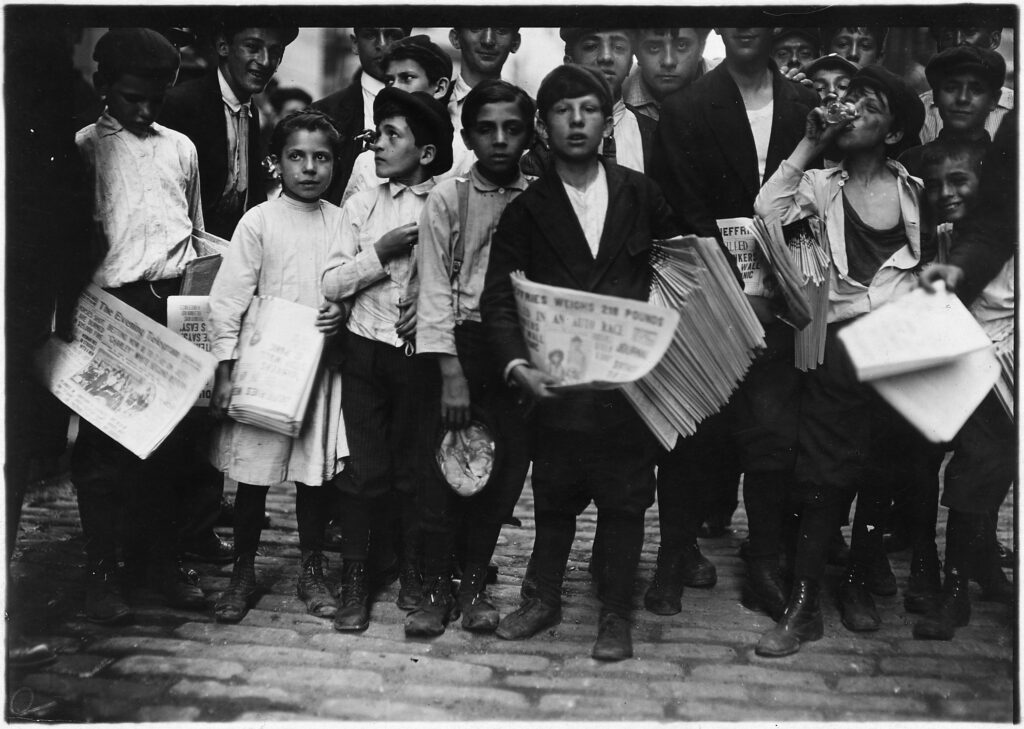
The morning of July 20, 1899, on New York City’s Park Row, the air was thick with the smell of ink and horse sweat. Hundreds of boys—some as young as seven—clutched stacks of the World and the Journal, shouting the day’s headlines in a cacophony that drowned out the streetcars. Their faces were smudged with ink, their shoes worn thin, their voices hoarse from dawn calls. For these children, the street was both a battlefield and a workplace, and the newspapers they sold were their only currency. They were the newsboys—a fixture of American urban life for over a century, immortalized in photographs and stories, but rarely understood in their own words. This article draws on the historical record—newspaper reports, letters, and the foundational scholarship of Vincent DiGirolamo’s Crying the News—to reconstruct their world.
What Happened?
The story of the American newsboy begins in 1721, when a young Benjamin Franklin helped deliver his brother’s New England Courant in Boston, earning him the title of “the first American newsboy.” But the trade as a distinct occupation emerged on October 12, 1833, when the New York Sun began hiring street vendors to sell its penny paper. The Sun’s model—cheap, lively, and available on every corner—required a network of boys who could cry the news and chase down customers. The practice spread rapidly to other cities, and by the 1850s, newsboys were a familiar sight from New York to San Francisco.
The newsboy’s work was simple: buy papers from the publisher at a wholesale price, then sell them at a retail price, keeping the difference. The margins were thin—often only a penny per paper—and the hours were long. Boys worked from before dawn until the evening, often standing in the same spot for ten hours. They were not employees but independent merchants, which meant they bore the risk of unsold papers. In 1899, when the World and the Journal raised their wholesale price from 60 to 70 cents per hundred, the boys of New York City fought back. On July 20, 1899, thousands of newsboys went on strike, refusing to sell the papers. The strike lasted two weeks and forced the publishers to roll back the price increase—a rare victory for child workers.
The newsboy trade peaked in the late 19th and early 20th centuries, with estimates of 10,000 to 20,000 boys working in New York alone. The practice declined after the 1930s, as home delivery became more common and the evening editions faded. By the 1960s, the street newsboy was a rarity, and by the 2020s, the profession has nearly vanished due to the rise of online news.
How It Was Seen at the Time
Contemporaries viewed newsboys with a mix of admiration and pity. They were celebrated as symbols of rugged individualism and entrepreneurial pluck—the “Ragged Dick” of Horatio Alger’s novels, who through hard work and honesty could rise to respectability. In 1872, a writer for Harper’s Weekly described them as “the most enterprising and self-reliant of the street children,” while others saw them as potential delinquents, prone to gambling and crime. The New York Times in 1899 called the striking newsboys “the most independent class of the city’s children.”
“They are the hardest workers in the city, and the most cheerful,” observed a reporter in the New York Sun in 1890. “They are up early, they work late, and they never beg—they sell.”
But this romanticized view often masked the harsh reality. Many newsboys were orphans or runaways, living in tenements or on the street. They were frequently subjected to violence from older boys and police, and they were often the sole breadwinners for their families. The public’s perception oscillated between seeing them as adorable entrepreneurs and as a public nuisance, but rarely as exploited children.
Historical Snapshot
| Aspect | Detail |
|---|---|
| Date | 1833–1930s (peak) |
| Place | Major U.S. cities, especially New York, Chicago, and Philadelphia |
| People | Boys (and some girls) aged 6–16, often immigrants or poor natives |
| What Happened | Children sold newspapers on streets, at newsstands, and on trains; they faced long hours, low pay, and dangerous conditions |
| Why It Mattered | Newsboys were the distribution backbone of the penny press and later mass-circulation papers; they also became a cultural icon of youthful independence |
What People Knew at the Time
| What People Knew Then | What We Know Now |
|---|---|
| Newsboys were seen as self-reliant entrepreneurs who chose the street for adventure and profit. | Many newsboys were pushed into work by poverty, not choice; they often had to work to support their families, and the job was dangerous. |
| The public believed newsboys were overwhelmingly boys, and that they were a natural part of city life. | DiGirolamo’s research shows that girls and adults also worked as news vendors, and that the trade was a means of survival for many immigrant families. |
| Newsboys were often depicted in literature as happy, plucky characters (e.g., Ragged Dick). | Contemporary sources from the boys themselves, such as letters and diaries, reveal a more grim reality: hunger, abuse, and constant fear of the police. |
Contemporary Newspaper Coverage
Newspapers were both the product the newsboys sold and the medium that reported on them. The 1899 strike was covered extensively by the press, with the New York World and the New York Journal—the very papers being boycotted—offering conflicting accounts. The World downplayed the strike, calling it a “minor disturbance” and claiming that the boys were “the tools of older men.” The Journal, which was also a target, admitted that the boys were “fighting for their bread.” The strike made headlines across the country, with the Chicago Tribune reporting on July 21, 1899: “Newsboys Win the Fight—They Have the Publishers at Their Mercy.”
“The boys are not fighting for the sake of a penny, but for the principle of their independence. They are the only workers in the city who are not organized, and they are showing that they can stand up for their rights.” — New York Sun, July 21, 1899
However, the coverage was often biased, reflecting the publishers’ interests. The newspapers that employed the newsboys also owned the presses that printed the news, and they were reluctant to admit the severity of the conditions. Only the socialist press, such as the New York Call, gave voice to the boys’ own grievances, quoting a striker: “We want to eat, and we can’t eat on three cents a paper.”
Different Perspectives
The Newsboys’ Perspective
From the boys’ own accounts, the work was a daily grind. In a letter to the New York Times in 1902, a former newsboy wrote: “I was nine years old when I started. My mother was sick, and we had no money. I would get up at 4 in the morning, and I would sell papers until 9 at night. I never had a day off. I was always hungry, but I was proud that I could bring home the money.”
The Publishers’ Perspective
Publishers viewed the newsboys as a cost-effective distribution network. They argued that the boys were independent contractors who were free to work as they pleased, and that the price increase was a business necessity. In a statement to the New York Journal in 1899, a publisher said, “The boys are free to sell or not to sell. They are not employees. They are little merchants who buy our papers at a fair price and resell them at a profit. They have no reason to complain.”
The Reformers’ Perspective
Progressive-era reformers saw the newsboys as victims of child labor. In 1910, the National Child Labor Committee published a report documenting that many newsboys were under 12, worked 12-hour days, and often slept in alleys. They argued that the street was a dangerous place for children, and they pushed for regulations to restrict their hours and ages.
What the Sources Got Wrong
Contemporary sources often romanticized the newsboy as a self-made man in miniature, ignoring the harsh realities of his life. The popular fiction of Horatio Alger, for example, presented newsboys as boys who could rise to fortune through honesty and hard work. But the actual records show that most newsboys remained poor, and many fell into crime or vagrancy. The New York Times in 1888 reported that “the newsboy is a boy who has no home, and who lives by his wits, and he is the most dangerous class of the city.” That contradictory view—hero and villain—persisted.
Another error was the assumption that all newsboys were boys. DiGirolamo’s research reveals that girls and women also worked in the trade, though they were often called “newsgirls” or “news women.” They faced even greater hardship, as they were often harassed and paid less. The public’s perception of newsboys as exclusively male was reinforced by photographs and illustrations, which almost never showed the girls.
How Historians See It Today
Modern scholarship, led by Vincent DiGirolamo’s Crying the News: A History of America’s Newsboys (2019), has transformed our understanding. DiGirolamo uses a vast array of primary sources—letters, diaries, court records, and photographs—to show that newsboys were not just symbols but complex actors in the economic and social life of the city. He argues that the newsboy trade was a vital part of the working-class family economy, and that the boys themselves were not passive victims but active agents who negotiated their own conditions. The book also challenges the myth of the newsboy as a solely male enterprise, and it highlights the role of girls, immigrants, and African American children. Today, historians view the newsboy as a window into the history of childhood, labor, and the press, and they emphasize that the boys’ strike of 1899 was a landmark moment in the history of child labor activism.
Common Misconceptions
Aftermath
The 1899 strike had a lasting impact. It inspired the formation of other child labor movements, and it brought attention to the plight of street children. The strike also led to a short-term victory for the boys, but the underlying conditions did not change. The newsboy trade continued to be a harsh occupation, and it was not until the 1930s and the New Deal that child labor laws began to restrict the hours and ages of newsboys. By the 1960s, the trade had largely disappeared, replaced by the adult paperboy who delivered papers to homes, and then by the internet.
The story of the newsboy is not just a story of the past; it is a reminder that children have always worked, and that the street has always been a place of both opportunity and danger. The primary sources—the letters, the newspapers, and the photographs—allow us to see these children not as symbols, but as real people, with their own voices, struggles, and hopes. They are a testament to the resilience of youth, and a warning of the cost of economic necessity.
FAQ
What was the 1899 newsboys strike?
In July 1899, thousands of newsboys in New York City went on strike to protest a price increase for newspapers. They refused to sell the World and Journal, and after three days, the publishers rolled back the price. The strike was a rare victory for child workers and was widely covered by the press.
Were there any female newsboys?
Yes, girls and women also sold newspapers, though they were often called 'newsgirls' and faced more discrimination. They were less visible in public spaces and were often confined to shops or stands, but they existed and worked in the trade.
What was the typical income of a newsboy?
Newsboys earned a few pennies per paper, and their daily income varied. A boy could make anywhere from 10 to 50 cents a day, depending on the weather and the circulation. In the 1890s, that was enough to buy a meal, but not much more.
How did the newsboy trade decline?
The trade declined due to the rise of home delivery by adult paperboys, the increasing use of automobiles for distribution, and the eventual shift to online news. By the 1960s, the street newsboy was rare, and by the 21st century, the profession had largely disappeared.











Leave a Reply