
Short Answer
In the early 1930s, the American South was a land of poverty, but also a land of cotton. From the red clay fields of Alabama to the flatlands of Mississippi, sharecroppers and tenant farmers—both Black and white—worked plots they did not own, bound to the soil and to the landlords who supplied them with seed, tools, and a shack to live in. The Great Depression, which began in 1929, had already crushed the prices of cotton and tobacco, the region’s lifeblood. Then, in 1933, the federal government launched the Agricultural Adjustment Act (AAA), designed to rescue the farm economy by paying landowners to reduce acreage and destroy crops. But for the landless farmers, the AAA would become a sentence of displacement. As the cotton fields were plowed under, the men and women who had worked them were told to leave. This article reconstructs their experience through the records, reports, and contemporary accounts that survive, showing what it meant to live and lose on the land in the Depression-era South.
What Happened?
The Great Depression struck the American South at a moment when the region was already reeling from the collapse of cotton prices in the 1920s. By the early 1930s, more than 60 percent of Alabama’s farming population was engaged in tenancy, according to the Encyclopedia of Alabama (source: Encyclopedia of Alabama). The Agricultural Adjustment Act, signed into law on May 12, 1933, sought to raise agricultural prices by paying farmers to reduce their planted acreage and destroy surplus crops. The AAA cotton reduction program was central to this effort, and landlords who participated were required to keep their tenants and sharecroppers on the land. However, as a 2013 study by Depew, Fishback, and Rhode demonstrates, the program significantly contributed to the displacement of sharecroppers and tenants, particularly Black sharecroppers and managing tenants, despite the contractual obligation to protect them (source [1]: Depew, Fishback, and Rhode, 2013).
In the first years of the AAA, landlords took land out of production, often without sharing the government payments with their tenants. The tenants, who were already living at subsistence level, lost their livelihood and often their homes. According to the American Archive, the AAA “resulted in further hardships for tenant farmers and, especially, Black sharecroppers, when land they worked on was taken out of production and their landlords did not share government payments with them” (source [3]: American Archive). The displacement accelerated throughout the 1930s, as millions of rural Southerners left the land, some to seek work in Northern cities, others to wander the roads in search of any employment.
How It Was Seen at the Time
At the time, the AAA was promoted as a necessary measure to restore the agricultural economy. Landowners and federal officials argued that reducing cotton production would raise prices and ultimately benefit everyone. However, sharecroppers and tenant farmers saw the program as a direct attack on their already precarious existence. The American Archive notes that the AAA’s design to raise agricultural prices by paying farmers to destroy crops and reduce supply “resulted in further hardships” for the tenants, who were often the first to be cut (source [3]). The language of the day reflected this tension. Landowners spoke of “reduction” and “efficiency,” while tenants spoke of “betrayal” and “being thrown off the land.” A contemporary observer, quoted in the Encyclopedia of Alabama, described the tenancy system as leaving “a legacy of poverty and illiteracy” (source [2]). The prevailing mood among the tenants was one of desperation and anger, as they saw the government’s money going to the landlords, not to those who worked the fields.
Historical Snapshot
| Aspect | Detail |
|---|---|
| Date | 1930s, particularly 1933–1936 |
| Place | Cotton South (Alabama, Mississippi, Georgia, etc.) |
| People | Sharecroppers, tenant farmers, landlords, federal officials |
| What Happened | The Agricultural Adjustment Act paid landowners to reduce cotton acreage, leading to the displacement of sharecroppers and tenants. |
| Why It Mattered | It destroyed the livelihoods of millions of agricultural workers and accelerated the migration of the rural South. |
Contemporary Terminology
The language of the era distinguished between different forms of landless labor. The Encyclopedia of Alabama explains that the terms “sharecropping” and “tenant farming” were often grouped under “tenancy,” but they had different meanings. A sharecropper worked the land in exchange for a share of the crop, but the landlord provided the seed, tools, and often the house, and the sharecropper was usually supervised. A tenant farmer rented the land and owned his own tools and mule, and paid the landlord in cash or a share of the crop. The term sharecropper became particularly associated with the poorest and most exploited workers, especially African Americans. The word cropper was also used. These terms were not just economic categories but carried social and racial meanings. The AAA’s contracts used terms like “share tenants” and “managing tenants” to denote different levels of autonomy, but the reality was that all these workers were vulnerable to displacement.
Daily Life
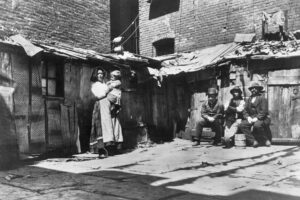
Life for a sharecropper in the Depression-era South was a cycle of debt and toil. The landlord advanced the sharecropper supplies at the local store, which was often owned by the landlord, and the sharecropper’s share of the crop was used to pay off the debt. The daily routine began before dawn, with the family working in the fields until dusk, hoeing cotton, picking bolls, and fighting the boll weevil. The sharecropper’s family lived in a small, often dilapidated shack with no running water or electricity. The food was limited: cornbread, molasses, salt pork, and vegetables from a garden. The work was unending, and the income was almost always insufficient. The Encyclopedia of Alabama describes the system as “a legacy of poverty and illiteracy” that “began to be overcome only in the late twentieth and early twenty-first centuries” (source [2]). The daily routine was dictated by the cotton calendar: planting in the spring, chopping in the summer, picking in the fall, and then settling accounts with the landlord. The landlord’s ledger determined whether the family had a surplus or fell further into debt.
Numbers at the Time
| Statistic | Value | Source/Year |
|---|---|---|
| Percentage of Alabama farming population in tenancy | Over 60% | Encyclopedia of Alabama (source [2]) |
| Cotton acreage reduction payments (AAA) | Millions of acres taken out of production | Depew et al. (2013) (source [1]) |
| Displacement of sharecroppers and tenants | Significant numbers, particularly Black sharecroppers | Depew et al. (2013) (source [1]) |
Aftermath
The immediate aftermath of the AAA’s displacement was a massive exodus from the rural South. Many sharecroppers and tenants moved to Southern cities, while others joined the stream of migrants to the North and West. The migration, which had begun earlier, accelerated during the 1930s and continued through the Second World War. The land itself was increasingly consolidated into larger farms, and the sharecropping system began to die out. The AAA’s policies were later declared unconstitutional in 1936, but the damage was done. The New Deal’s later programs, such as the Soil Conservation Service and the Farm Security Administration, attempted to address some of the problems, but the sharecroppers had already been uprooted. The legacy of this displacement is still felt in the South’s economic and social structure.
How Historians See It Today
Modern historians have used empirical methods to understand the AAA’s impact. The 2013 study by Depew, Fishback, and Rhode explicitly tested the role of the AAA cotton reduction program on the displacement of share tenants and sharecroppers. They concluded that the AAA played a significant role in the displacement of black and white sharecroppers and black managing tenants, even though it was a violation of AAA contracts for landlords to displace these workers (source [1]). This contradicts earlier assumptions that the AAA was neutral or even helpful. The study uses quantitative data to show that the displacement was not simply a result of the Depression but was directly linked to the AAA’s acreage reduction. Historians now view the AAA as a turning point in the decline of Southern tenancy, and they highlight the racial and economic disparities that the program exacerbated.
Common Misconceptions
The AAA was designed to help all farmers, including sharecroppers.
The AAA paid landowners to reduce acreage, and the payments often went directly to the landowners, not to the tenants. The displacement of sharecroppers was a direct consequence, as documented by Depew et al. (2013).
Sharecroppers and tenant farmers were the same thing.
They were distinct categories with different levels of control over their work and tools, as explained in the Encyclopedia of Alabama.
The Great Depression caused the collapse of sharecropping.
While the Depression worsened conditions, the AAA’s policies directly accelerated the displacement of tenants and sharecroppers, as shown by historical research.
Timeline
- 1929: The Great Depression begins with the stock market crash; cotton prices fall further.
- 1933: The Agricultural Adjustment Act is signed into law on May 12. The cotton reduction program begins, paying farmers to take land out of production.
- 1934: Tenant farmers and sharecroppers organize protests, but displacement continues.
- 1936: The AAA is declared unconstitutional by the Supreme Court, but the damage to the tenant system has been done.
- 1937–1940: The migration of the rural South continues, as many sharecroppers move to cities or to the West.
Key Documents
- The Agricultural Adjustment Act (1933): The federal law that paid farmers to reduce acreage, leading to the displacement of sharecroppers and tenants.
- AAA Cotton Reduction Contracts: Contracts between the government and landowners that often prohibited the displacement of tenants, but were violated in practice.
- Records of the Farm Security Administration (1937–1943): Photographs and reports that documented the living conditions of sharecroppers and tenant farmers.
Related Primary Sources
- Encyclopedia of Alabama – Sharecropping and Tenant Farming
- American Archive – The Great Depression and Southern Sharecroppers
- Depew, Fishback, and Rhode, “New deal or no deal in the Cotton South” (2013)
FAQ
What was the Agricultural Adjustment Act and how did it affect sharecroppers?
The Agricultural Adjustment Act of 1933 was a New Deal policy that paid farmers to reduce crop production in order to raise prices. In the Cotton South, this meant taking land out of cotton production. The payments went to the landlords, but they were supposed to keep their sharecroppers and tenants on the land. However, in practice, many landlords used the reduction as an excuse to displace their tenants and sharecroppers, leaving them without work or housing. This displacement was a direct violation of the AAA contracts but was common.
What was the difference between a sharecropper and a tenant farmer?
A sharecropper typically worked the land and received a share of the crop, while the landlord provided the land, tools, and often the house. A tenant farmer rented the land and owned the tools and tools, and paid the landlord a fixed rent or a share of the crop. Tenant farmers had more autonomy than sharecroppers, but both were vulnerable to displacement.












Leave a Reply