
Short Answer
In January 1968, the United States stood at a crossroads. The year began with a naval crisis and a military surprise that would redefine the Vietnam War. On January 23, the North Korean navy seized the USS Pueblo and its eighty-three crew members, an act that many Americans saw as a direct challenge to their nation’s power. Within days, the North Vietnamese Army launched the Tet Offensive, a coordinated assault across South Vietnam that struck the U.S. embassy in Saigon and dozens of cities. The images of communist forces inside the embassy compound, broadcast on television, contradicted official assurances that the war was being won. As the year unfolded, the nation faced the assassination of Martin Luther King Jr. in April, the murder of Robert F. Kennedy in June, riots in American cities, and a violent clash between police and protesters at the Democratic National Convention in Chicago. By November, Richard Nixon had won the presidency, promising to restore law and order. The fragile consensus that had defined American politics and culture since World War II lay in ruins. This article reconstructs 1968 as it was experienced by contemporaries, using the reports, recordings, and documents of the time to show what people knew, feared, and hoped for.
What Happened?
The year 1968 unfolded in a series of shocks. The following timeline, drawn from contemporary accounts and official records, captures the sequence of events that defined the year.
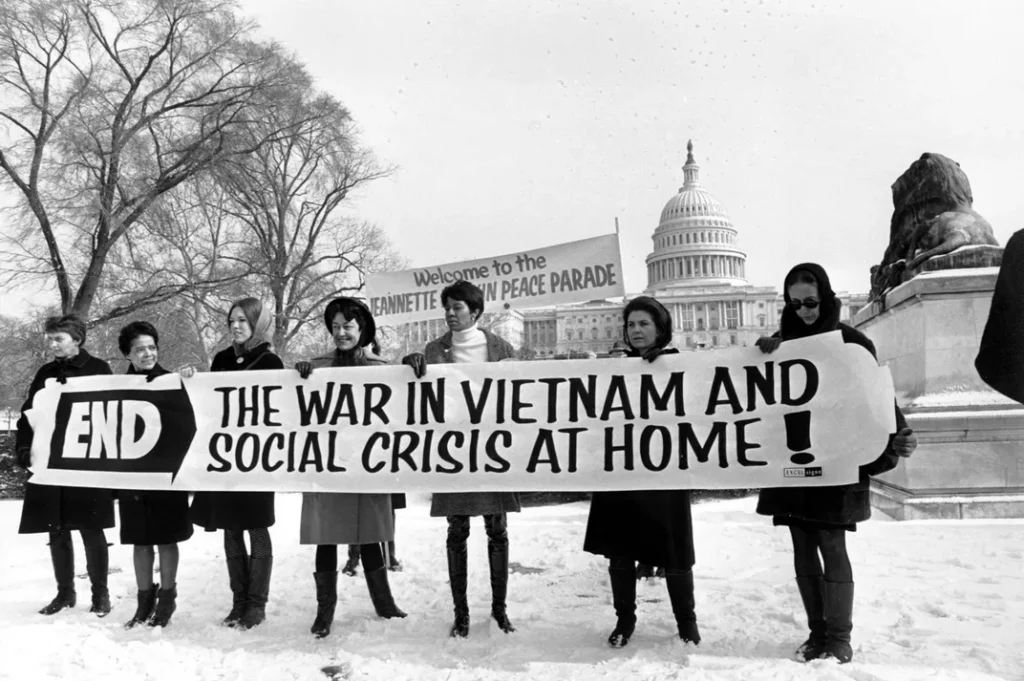
- January 15: Jeannette Rankin, the first woman elected to Congress, led a march of some 5,000 women in Washington, D.C., to protest the Vietnam War. The march, organized by the Women’s Strike for Peace, gave the growing women’s movement its rallying cry: “Sisterhood Is Powerful.”
- January 21: The North Vietnamese Army attacked the U.S. Marine base at Khe Sanh, beginning a siege that would last for months and dominate American military planning.
- January 23: North Korean forces seized the USS Pueblo in the Sea of Japan, capturing the ship and its crew. The crew was held for eleven months.
- January 30: The Tet Offensive began. North Vietnamese and Viet Cong forces launched coordinated attacks on more than 100 cities and towns across South Vietnam, including the U.S. Embassy in Saigon. The assault was ultimately repelled, but it was a psychological shock to the American public and military command.
- March 31: President Lyndon B. Johnson announced in a televised address that he would not seek re-election. He also announced a partial halt to the bombing of North Vietnam.
- April 4: Martin Luther King Jr. was assassinated in Memphis, Tennessee. The killing sparked riots in more than 100 American cities, including Washington, D.C., Chicago, and Baltimore.
- June 5: Robert F. Kennedy, a U.S. senator and presidential candidate, was shot in Los Angeles after winning the California primary; he died the next day.
- August 26–29: The Democratic National Convention in Chicago descended into chaos. Thousands of anti-war protesters clashed with police, and the convention nominated Hubert Humphrey, who had not won a primary.
- November 5: Richard Nixon narrowly defeated Hubert Humphrey and George Wallace, winning the presidency with a pledge to restore “law and order.”
These events were not isolated; they were part of a broader transformation that included the rise of the counterculture, the women’s movement, and a deepening crisis of trust in government.
How It Was Seen at the Time
Contemporaries described 1968 as a year of unrelenting crisis. The Miller Center, in its review of President Johnson’s secret White House recordings, called it an “annus horribilis” (a horrible year). The public mood was one of anxiety and division. The Tet Offensive, in particular, was a turning point in public opinion. Before Tet, the administration had claimed that the war was being won; after Tet, many Americans believed they had been lied to. The influential television journalist Walter Cronkite, after a trip to Vietnam, declared that the war was “mired in stalemate.” President Johnson reportedly said, “If I’ve lost Cronkite, I’ve lost the American people.”
The assassinations of King and Kennedy deepened the sense of national trauma. The urban riots that followed King’s death led many to fear a racial civil war. The Chicago convention, broadcast live on television, showed police beating protesters, and the contrast between the convention floor and the streets intensified the public’s disgust. The slogan “Sisterhood Is Powerful,” from the January women’s march, captured the growing strength of the feminist movement, but the mood of the year was dominated by grief and anger.
“The year 1968 began with the capture of the USS Pueblo and the Tet offensive in Vietnam. It continued with President Johnson’s decision not to run for reelection, the assassinations of Martin Luther King Jr. and Robert Kennedy, riots at the 1968 Democratic National Convention, and the election of Richard Nixon.” — Miller Center, 1968: A Cataclysmic Year
Historical Snapshot
| Aspect | Detail |
|---|---|
| Date | January 1 – December 31, 1968 |
| Place | United States (and Vietnam, Southeast Asia) |
| People | Lyndon B. Johnson, Richard Nixon, Hubert Humphrey, Martin Luther King Jr., Robert F. Kennedy, Eugene McCarthy, and millions of Americans |
| What Happened | The Tet Offensive, the Pueblo incident, the assassination of MLK and RFK, the Democratic Convention riots, and the election of Nixon |
| Why It Mattered | The year shattered postwar consensus, accelerated the Vietnam War’s end, and gave rise to new political and social movements. |
What People Knew at the Time
| What People Knew Then | What We Know Now |
|---|---|
| Officials claimed the Tet Offensive was a military failure for the enemy and that the war was being won. | The Tet Offensive was a military defeat for the Viet Cong, but it was a strategic and political victory for the North Vietnamese because it turned American public opinion against the war. |
| The assassination of Martin Luther King Jr. was seen as a random act of violence. | James Earl Ray was convicted, but conspiracy theories persist; the full circumstances remain disputed. |
| Robert F. Kennedy’s assassination was blamed on a lone gunman, Sirhan Sirhan. | Sirhan Sirhan was convicted, but some evidence suggests a second gunman, though this is not established. |
| The Democratic convention was seen as a “police riot” by many. | The Walker Report (the official investigation) called it a “police riot,” confirming the public’s perception. |
| Nixon’s election was seen as a return to stability. | Historians now view it as the beginning of a new conservative era, but also the start of a period of political polarization. |
What People Feared
Contemporaries feared many things. The seizure of the Pueblo raised the specter of a broader conflict with North Korea or even a nuclear war. The Tet Offensive suggested that the Vietnam War might be unwinnable, and that the United States might be forced to withdraw in humiliation. The assassinations of King and Kennedy led to fears that the nation was being torn apart by political violence. Many Americans worried that the civil rights movement would turn to armed revolution, and that the cities would burn in the summer. The Chicago convention, with its violent clashes, reinforced the fear that the nation was sliding into anarchy. The anti-war movement, the counterculture, and the “generation gap” all contributed to a widespread anxiety about the future of the country.
What People Expected Would Happen Next
At the beginning of 1968, many Americans expected the war to continue for years. The Johnson administration had been promising a “light at the end of the tunnel” since 1967. After Tet, the public’s expectations shifted: many believed the war would have to be ended through negotiation. After Johnson’s withdrawal, the Democratic primary was contested by Eugene McCarthy and Robert F. Kennedy, and many expected a liberal takeover of the party. The assassination of Kennedy changed that. At the Chicago convention, the nomination of Hubert Humphrey, who had not won a single primary, led many to expect a Democratic defeat in November. In the fall, the presidential election was expected to be close, but Nixon’s “law and order” message appealed to a majority. Most observers expected Nixon to win, but not by the landslide margin that actually occurred. The war was expected to continue, but Nixon promised “peace with honor.” In the short term, the country expected continued turmoil, and that is what it got.
Aftermath
The immediate aftermath of 1968 was a period of continued crisis. The Vietnam War did not end until 1975. Nixon’s “Vietnamization” policy brought the troops home gradually, but the war expanded into Cambodia and Laos. The civil rights movement continued, but it lost many of its leaders. The women’s movement gained momentum, leading to the feminist “second wave” of the 1970s. The 1968 election also realigned American politics: the “New Deal” coalition of the Democratic Party fractured, and the “Southern Strategy” of Nixon began a long-term shift of white Southerners to the Republican Party. The year also spawned a series of social movements—the counterculture, the anti-war movement, and the environmental movement—that would shape the 1970s. The sense of trauma and division persisted, as did the debate over the war and the legacy of the assassinations.
How Historians See It Today
Historians generally agree that 1968 was a watershed year in American history. The Miller Center’s presentation of the year as a “cataclysmic year” is echoed in the scholarly literature. The Tet Offensive is now seen as the turning point in American public opinion about the war. The assassinations are seen as a blow to the nonviolent civil rights movement and to the liberal political movement. The Chicago convention is often cited as a symbol of the failure of the Democratic Party to address the deep divisions in the country. The election of Nixon is seen as the beginning of a conservative era. Modern historians also stress the importance of the global context: 1968 was a year of worldwide upheaval, with protests in Paris, Mexico City, Prague, and elsewhere. The United States was part of a global wave of dissent and change. While contemporary observers saw the year as a series of catastrophes, historians now see it as a period of transformation that gave birth to the political and cultural conflicts that still shape the United States.
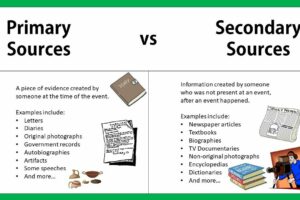
In the end, the primary sources of 1968—the news reports, the letters, the recordings, the photographs—reveal a nation struggling to make sense of a world that seemed to be falling apart. The year was not just a series of events, but a turning point in American self-understanding. The sense of loss and the determination to rebuild would define the decade that followed.
FAQ
What was the Tet Offensive and why was it important?
The Tet Offensive was a coordinated attack by North Vietnamese and Viet Cong forces on South Vietnam in January 1968. It was a military defeat for the attackers but a political and psychological victory, as it convinced many Americans that the war was not being won, leading to a shift in public opinion and eventually the U.S. withdrawal from Vietnam.
Why did President Johnson decide not to run for re-election in 1968?
Johnson announced on March 31, 1968, that he would not seek re-election. The decision was influenced by the growing unpopularity of the Vietnam War, the challenge from Eugene McCarthy in the New Hampshire primary, and the assassination of Robert Kennedy, among other factors.
What were the causes of the riots at the 1968 Democratic National Convention?
The convention in Chicago was marked by a clash between anti-war protesters and the police, who used violence to disperse them. The protestors were demanding an end to the war, while the Democratic Party was divided. The police response, which was later called a 'police riot,' was broadcast on television, shocking the nation.


Leave a Reply