
Short Answer
Quick Snapshot
1945 was a year of unprecedented change for the United Kingdom. The Second World War, which had consumed the nation for nearly six years, finally came to an end. Victory in Europe was celebrated on 8 May, followed by victory over Japan in August, after the use of atomic bombs. The country emerged from the conflict physically battered but politically resolute. In July, a general election produced a landslide victory for the Labour Party under Clement Attlee, sweeping Winston Churchill and the Conservatives from power. This was a clear signal that the British public desired a new social order, one that promised welfare, housing, and employment for all.
The year also saw the beginning of a painful transition from wartime to peacetime. Rationing continued, housing was scarce, and the economy struggled to reconvert to civilian production. Yet there was a palpable sense of hope and determination. As the Imperial War Museums notes, the events of 1945 laid the foundation for the modern world. The country that had endured the Blitz and years of austerity now looked forward to rebuilding itself, both physically and socially.
United Kingdom in 1945
Geographically, the United Kingdom in 1945 was an island nation still bearing the scars of war. Bombed-out buildings were common in major cities like London, Coventry, and Plymouth. The coastline, once fortified with barbed wire and mines, was being cleared, and the Home Guard had been stood down at the end of 1944. The climate in 1945 was typical of Britain—mild and damp—but the atmosphere was electric with anticipation and anxiety. The country was exhausted, yet the prospect of peace brought a cautious optimism. The final months of the war in Europe saw fierce fighting in North-West Europe and the liberation of concentration camps, images that would haunt the national consciousness.
Population & Economy
In 1945, the population of the United Kingdom was approximately 48 million. The war had caused significant demographic shifts, with many men and women serving overseas and a large number of evacuees and war workers moving to industrial centres. The economy was still heavily directed by the state. War production dominated, but as the year progressed, factories began to switch to civilian goods. The cost of living was controlled by rationing and price controls. A loaf of bread cost about 4d (old pence), and a pint of milk around 3d. Wages had risen during the war, but shortages meant that money could not always buy goods. The establishment of the Industrial and Commercial Finance Corporation in January 1945, as noted in the Wikipedia article on 1945 in the UK, signalled a move to support small businesses in the post-war economy.
Government & Politics
The political landscape of the United Kingdom in 1945 was dominated by the general election held on 5 July, with results announced on 26 July. Winston Churchill, the wartime Prime Minister, led the Conservative Party, while Clement Attlee led Labour. Despite Churchill’s immense popularity as a war leader, the public turned to Labour, which won a landslide majority of 146 seats. The election campaign focused on post-war reconstruction, with Labour promising social security, full employment, and the creation of the National Health Service. The Wikipedia article on the 1945 general election notes that voters were concerned about the Conservatives’ actions in the 1930s and Churchill’s ability to handle domestic issues. The result reflected a desire for change. The new government, under Attlee, began implementing its programme, including the nationalisation of key industries and the establishment of the welfare state.
Industry
British industry in 1945 was still geared towards war. Aircraft production, shipbuilding, and munitions were the largest sectors. Companies like Vickers-Armstrong, Rolls-Royce, and de Havilland were at full capacity. As the war ended, these industries faced the challenge of converting to peacetime production. The motor industry, for example, began to produce cars again, while textile and consumer goods manufacturers resumed civilian output. The coal mining and steel industries were also crucial, and the new Labour government would later nationalise them. The Imperial War Museums’ article on 1945 mentions the Burma Campaign, which relied on British and Commonwealth troops, highlighting the global reach of British industry and military effort.
Education
Education in 1945 was undergoing significant change. The Butler Education Act of 1944 had introduced free secondary education for all, and its provisions were being implemented. The school leaving age was raised to 15, and a new tripartite system of grammar, secondary modern, and technical schools was being established. Literacy rates were high, but many children had missed schooling due to evacuation and wartime disruption. Universities were also affected; many had been used for military purposes. Oxford and Cambridge were slowly returning to normal academic life, with demobilised servicemen beginning to take up places under the government’s Further Education and Training Scheme. The emphasis was on rebuilding an educated workforce for the post-war world.
Transportation
Transportation in 1945 was still recovering from the strains of war. The railway network, run by the ‘Big Four’ companies, had carried vast amounts of military traffic and was in need of repair. Passenger services were crowded, and many carriages were old. Buses and trams were common in cities, but petrol rationing limited private car use. The road network was in poor condition due to lack of maintenance. Shipping remained vital for trade and passenger travel, with transatlantic liners like the Queen Mary and Queen Elizabeth serving as troop carriers. Air travel was still in its infancy for civilians, but the wartime development of aviation would soon open up new possibilities. The government was planning a major expansion of airports and the creation of a nationalised civil aviation industry.
Everyday Life
Daily life in 1945 was shaped by austerity and rationing. Food rationing continued, with items like meat, butter, sugar, and eggs strictly limited. The ‘Dig for Victory’ campaign had encouraged people to grow their own vegetables, and allotments remained popular. Clothing was rationed, and ‘make do and mend’ was a common motto. Housing was a major problem; many homes had been destroyed or damaged by bombing, and there was a severe shortage. Families often lived with relatives or in temporary prefabricated houses. Entertainment was simple: the cinema was hugely popular, with films like ‘Brief Encounter’ (released later in 1945) drawing crowds. Radio, especially the BBC, was a staple of home life. Pubs, dance halls, and football matches provided social outlets. The end of the war brought celebrations, but also a sense of loss for those who had lost loved ones. As the HistoryExtra article notes, the British people peered into the future with as much trepidation as joy.
Major Events
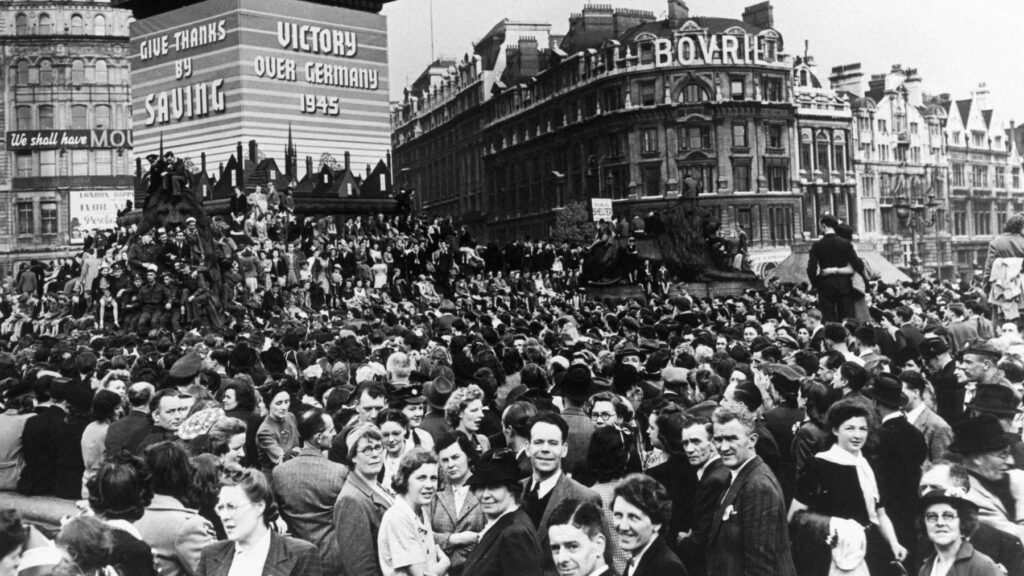
Several major events defined 1945 in the United Kingdom. In February, Churchill attended the Yalta Conference with Roosevelt and Stalin, shaping the post-war world order. On 13 February, RAF Bomber Command began the bombing of Dresden, a controversial attack that killed tens of thousands of civilians. In March, sixty-seven German prisoners of war escaped from Island Farm Camp in Bridgend, the largest escape attempt in Britain during the war. The war in Europe ended on 8 May, celebrated as VE Day. In July, the general election took place, and on 26 July, Clement Attlee became Prime Minister. In August, the atomic bombs were dropped on Hiroshima and Nagasaki, leading to Japan’s surrender and the end of World War II. The year also saw the liberation of concentration camps by British forces, bringing the horrors of the Holocaust to public attention.
What Newspapers Were Reporting
British newspapers in 1945 were dominated by war news and the election. The Times, the Daily Telegraph, and the Manchester Guardian reported on the advance of Allied troops, the Yalta Conference, and the fall of Berlin. The election campaign was covered extensively, with the Daily Express and the Daily Mirror taking opposing sides. Headlines in May proclaimed ‘Victory in Europe’ and ‘Peace at Last’. The Manchester Guardian reported on 8 May: ‘The war in Europe is over. The German High Command has surrendered unconditionally.’ Later in the year, the focus shifted to the new Labour government’s plans, with headlines like ‘Attlee’s New Deal’ and ‘Nationalisation Bill’. Local newspapers also covered the return of servicemen, the reopening of factories, and the ongoing rationing.
What People Were Talking About
In letters, diaries, and conversations, Britons in 1945 talked about the end of the war and what it meant for their families. Many were anxious about the return of loved ones from overseas. There was also debate about the future of the country. The election campaign sparked discussions about socialism, nationalisation, and the welfare state. People talked about the need for housing, jobs, and a better health service. The horror of the concentration camps, revealed as they were liberated, was a topic of shock and disbelief. Some expressed guilt about the bombing of Dresden, while others defended it as necessary. The atomic bombings of Japan raised ethical questions. As the HistoryExtra article points out, there was a sense of trepidation about the future, despite the joy of victory. The phrase ‘Never again’ was often heard, reflecting a desire to avoid the mistakes of the past.
Historical Photographs
The visual record of the United Kingdom in 1945 is rich and varied. Photographs from the Imperial War Museums show soldiers from the Nyasaland Regiment in Burma displaying captured Japanese flags, illustrating the global reach of the British Empire. Images of VE Day celebrations in London show crowds cheering, waving flags, and climbing on statues. The famous photograph of Winston Churchill giving his ‘V’ sign is from this period. Other photographs capture the destruction of cities, the return of prisoners of war, and the first post-war elections. The work of photographers like Bill Brandt and George Rodger documented everyday life, from ration queues to children playing in bomb sites. These photographs are invaluable primary sources that bring the era to life.
Documents & Primary Sources
Historians studying the United Kingdom in 1945 have a wealth of primary sources. The census of 1931 and the National Registration Act of 1939 provide demographic data, though the 1941 census was not taken due to war. The official records of the Cabinet, the Prime Minister’s papers, and parliamentary debates are held at the National Archives. Personal letters and diaries, such as those collected by the Mass Observation project, offer intimate insights into public opinion. Newspapers and magazines are widely available. The Imperial War Museums holds oral histories, photographs, and artefacts. The election manifestos of the Conservative and Labour parties are key documents. Additionally, the records of the Ministry of Food and the Board of Trade detail rationing and economic controls. These sources allow historians to reconstruct the experiences of both leaders and ordinary citizens.
1945 Timeline
| Date | Event |
|---|---|
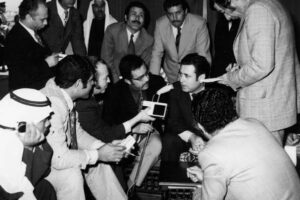
| 2 January | General Bernard Montgomery holds a press conference at Zonhoven about the Battle of the Bulge. |
| 23 January | Establishment of the Industrial and Commercial Finance Corporation (ICFC) announced. |
| 4–11 February | Winston Churchill attends the Yalta Conference. |
| 13 February | RAF Bomber Command begins the bombing of Dresden. |
| 10 March | Sixty-seven German POWs escape from Island Farm Camp in Bridgend. |
| 8 May | Victory in Europe (VE Day) celebrated. |
| 5 July | General election held; results announced on 26 July. |
| 26 July | Clement Attlee becomes Prime Minister. |
| August | Atomic bombs dropped on Hiroshima and Nagasaki; Japan surrenders. |
| 2 September | Japan formally surrenders, ending World War II. |
What Changed Next
The years following 1945 saw the United Kingdom undergo a profound transformation. The Labour government implemented the welfare state, including the National Health Service in 1948. Key industries were nationalised, including coal, steel, and the railways. The country also began to decolonise, with India gaining independence in 1947. The post-war period was marked by austerity, but also by a sense of social solidarity. The Marshall Plan and the beginning of the Cold War shaped foreign policy. The housing shortage led to a massive building programme, including ‘New Towns’. The 1945 election proved to be a watershed, setting the political agenda for decades. The legacy of 1945—both the victory and the social changes—defined the United Kingdom for the rest of the century.
FAQ
What was the population of the United Kingdom in 1945?
The population was approximately 48 million, according to estimates based on wartime registration and census data.
What major events happened in the United Kingdom in 1945?
Key events included the Yalta Conference (February), the bombing of Dresden (February), VE Day (8 May), the general election (5 July) won by Labour, and the end of World War II in August.
What primary sources are available for studying the United Kingdom in 1945?
Primary sources include government records at the National Archives, Mass Observation diaries and reports, newspapers, photographs from the Imperial War Museums, and personal letters and memoirs.
How did daily life in the United Kingdom in 1945 differ from today?
Daily life was shaped by rationing, austerity, and the aftermath of war. Housing was scarce, many goods were unavailable, and there was a strong sense of community and shared sacrifice. The welfare state and NHS did not yet exist.











Leave a Reply