
Short Answer
At one minute to midnight on 3 May 1926, Britain stopped. In London, trams and buses failed to appear; at railway stations, porters and signalmen left their posts; in printing works, the presses fell silent. More than 1.5 million workers in transport, docks, printing, gas, electricity, iron and steel had answered the Trades Union Congress call to support the miners, who had been locked out by the coal owners. This article concerns the nine-day General Strike of 3–12 May 1926, the largest industrial dispute in British history. It asks what everyday life was like for people who walked to work, queued for food, read government and union bulletins, watched volunteers learn to drive trains, and wondered whether the dispute would end in compromise or collapse. The strike was short, but for those living through it, each day was filled with rumour, improvisation and anxiety.
What Happened?
The General Strike grew out of a long-running dispute in the coal industry. After the First World War, the mines were returned to private ownership. In 1925 a Royal Commission under Sir Herbert Samuel examined the industry, and in March 1926 it recommended wage reductions but rejected nationalisation. The mine owners demanded sharper cuts and an eight-hour day from 1 May 1926. When negotiations failed, more than a million miners were locked out. The Trades Union Congress, under pressure from affiliated unions, called a general strike in support of the miners.
- 1 May 1926: The coal owners’ lockout begins; miners refuse the new terms.
- 2 May 1926: Printers at the Daily Mail refuse to print a leading article attacking the general strike. The Cabinet meets in Downing Street and declares that negotiations cannot continue without a repudiation of the strike.
- 3 May 1926: At one minute to midnight, the General Strike begins. Over 1.5 million workers stop work in transport, printing, docks, gas, electricity, iron and steel.
- 3–12 May 1926: Trains, buses and trams are disrupted. Food deliveries are delayed. The government calls in troops and recruits thousands of volunteers. Newspapers stop circulating; the government issues The British Gazette and the TUC issues The British Worker.
- 10 May 1926: Miners near Cramlington in Northumberland remove a section of track, intending to derail a strike-breaking coal train. They inadvertently derail a Flying Scotsman passenger train; because it is travelling slowly, there are no fatalities.
- 12 May 1926: The TUC General Council calls off the strike without securing a settlement for the miners. The miners remain locked out for months and eventually return on worse terms.
The strike was not a revolution, but it felt to many contemporaries like a test of the state itself. The government used emergency powers, organised volunteer labour and presented the strike as a challenge to parliamentary government. The TUC insisted it was an industrial dispute, not a constitutional conspiracy. For ordinary people, the strike meant disrupted routines, improvised arrangements and a sudden dependence on official bulletins, local rumour and the kindness of neighbours.

How It Was Seen at the Time
Contemporaries did not agree on what the strike meant. Ministers saw it as a direct challenge to the authority of Parliament. The Cabinet minutes of 2 May 1926 recorded that the Daily Mail printers’ refusal, combined with instructions for a general strike in vital industries, introduced “a new factor in the situation” and that negotiations could not continue without “an immediate and unconditional withdrawal” of the strike instructions. For many strikers, by contrast, the stoppage was a matter of solidarity with the miners and a defence of wages and conditions.
“Authentic information was received to the effect that certain employees in the office of the Daily Mail had declined to print a leading article … it was agreed that negotiations could not be continued without a repudiation by the Trades Union Council Committee … and an immediate and unconditional withdrawal of the instructions of a general strike.” — Cabinet meeting minutes, 2 May 1926, CAB 23/52/23, The National Archives
The language of loyalty and duty was everywhere. Railway companies appealed to their staff not to break contracts; unions appealed to solidarity. A notice in the Great Western Railway Magazine asked the stark question “Whom do you serve?” and printed both the general manager’s warning against the strike and the National Union of Railwaymen’s statement in support of it. The prevailing mood was a mixture of determination, improvisation, suspicion and fear. Many people expected the dispute to be settled within days; others feared disorder, food shortages or a permanent rupture in industrial relations.
Historical Snapshot
| Aspect | Detail |
|---|---|
| Date | 3–12 May 1926 |
| Place | Great Britain, especially London, the coalfields, railway centres, docks and industrial towns |
| People | Miners, railwaymen, transport workers, printers, dockers, gas and electricity workers, TUC leaders, government ministers, volunteers, police and troops |
| What Happened | More than 1.5 million workers struck in support of locked-out miners; transport and newspapers were disrupted; the government used volunteers and emergency powers; the TUC called off the strike on 12 May. |
| Why It Mattered | It was the largest industrial dispute in British history and exposed the fragility of everyday life when transport, fuel, food distribution and the press were interrupted. |
Daily Life
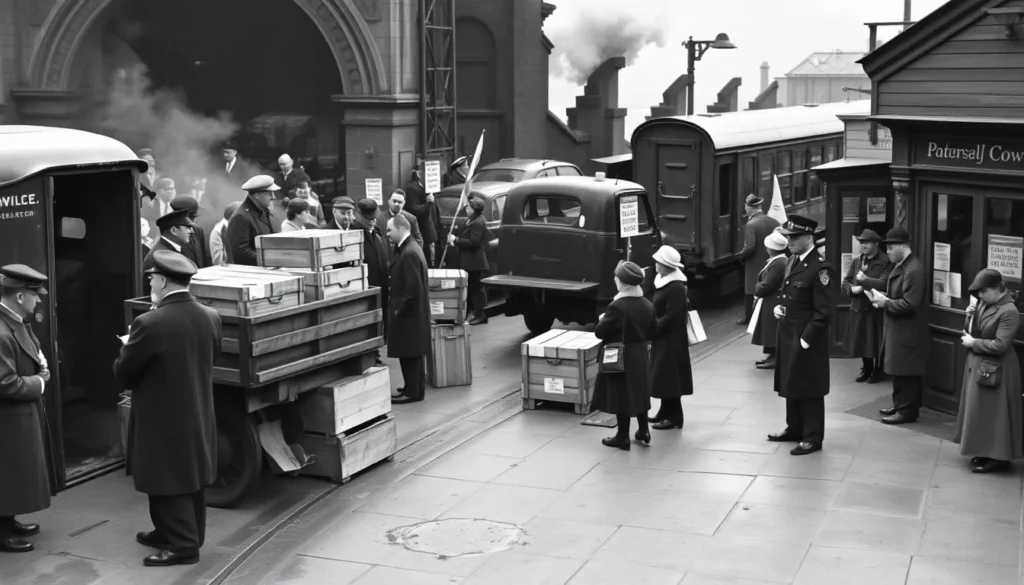
For most people, daily life contracted to the walk to work, the queue at the shop and the search for news. With buses, trams and trains halted or reduced, many walked or cycled. Volunteers were recruited to load goods, drive lorries, staff stations and keep essential services running. A photograph in The National Archives shows volunteer workers loading boxes on to a truck at Paddington Station, a scene repeated at depots and docks across the country. Food deliveries were delayed, and households depended more heavily on local shops, markets and neighbours.
The silencing of the newspapers changed the rhythm of the day. In ordinary times, people read the morning paper on the train or discussed the evening edition at home. During the strike, printers were out, and the familiar papers disappeared. In their place came official bulletins, union statements, handbills and word of mouth. The government’s British Gazette and the TUC’s British Worker became the main printed voices of the dispute. Staff magazines for some industries continued to appear: the Great Western Railway Magazine for May 1926 carried the general manager’s appeal and the union’s reply side by side, a reminder that even within one workplace, loyalties were divided.
“Whom do you serve?” — notice in the Great Western Railway Magazine, May 1926, ZSPC 11/496, The National Archives
Clothing, food and fuel were not immediately scarce, but uncertainty made people cautious. Middle-class households worried about coal and milk; working-class families worried about wages lost during the stoppage. Children experienced the strike as a holiday from school routines or as a time of tension at home. Crowds gathered at railway stations and newspaper offices, not always to protest but to see what was happening. The strike turned the ordinary street into a place of rumour, waiting and improvised sociability.
Contemporary Newspaper Coverage
The strike began with the presses themselves as a battleground. Printers refused to print the Daily Mail leading article denouncing the general strike, and this refusal helped trigger the government’s decision to break off negotiations. Once the strike began, ordinary newspapers stopped circulating. The government responded with The British Gazette, which presented the official view that the strike was unconstitutional and that volunteers were keeping essential services going. The TUC replied with The British Worker, which carried the General Council’s statements, denials of government claims and appeals to trade unionists to remain steady.
“Strike terminated today.” — The British Worker, 12 May 1926, PRO 30/69/1830, The National Archives
Readers had to choose between rival accounts. The British Gazette emphasised order, volunteer effort and the authority of the government. The British Worker emphasised solidarity, the justice of the miners’ cause and the discipline of strikers. Neither was a neutral newspaper, and contemporaries knew it. In the absence of independent daily papers, rumours spread quickly: that troops had fired on crowds, that food was running out, that the strike would be called off tomorrow, that it would spread to new industries. Official publications fought not only over facts but over morale.
Eyewitness Accounts
The most vivid eyewitness records of the strike are often official and telegraphic rather than literary. On 10 May 1926, after miners near Cramlington in Northumberland removed a section of track, a passenger train was derailed. The Chief Constable of Morpeth sent a brief report to his superiors. His words capture the confusion and relief of the moment.
“Passenger train London and NER from north derailed about one mile south of Cramlington Station this afternoon engine upset first portion of train badly damaged oneperson injured no fatalities otherwise no serious disturbances.” — telegram from Chief Constable Morpeth, 10 May 1926
The incident showed how quickly industrial dispute could become a matter of public safety. The miners had intended to derail a strike-breaking coal train, but they hit a passenger service instead. Because the train was travelling slowly, no one was killed. Reports like this circulated alongside rumours of sabotage and disorder, feeding fears that the strike could turn violent. In most places, however, the strike remained orderly, sustained by meetings, processions and the daily work of keeping households and voluntary services going.
What People Feared
Fears during the strike were both rational and exaggerated. The government and many middle-class observers feared that a general strike would paralyse the country and overturn constitutional government. Ministers spoke of a challenge to Parliament; loyalists feared that food, fuel and transport would collapse. Volunteers were organised precisely because the authorities feared that essential services could not be maintained. Strikers and their families feared victimisation, lost wages and defeat. Miners’ wives worried about rent, food and coal as the lockout dragged on beyond the nine days of the general strike.
- Fear of disorder: rumours of riots, sabotage and clashes with police circulated widely, though most strike activity was peaceful.
- Fear of shortages: delayed food deliveries and disrupted transport raised anxieties about milk, coal and perishable goods.
- Fear of constitutional crisis: ministers and their supporters believed the strike was an attempt to coerce Parliament.
- Fear of betrayal: strikers feared that the TUC would compromise or call off the strike without a settlement.
Some fears were well founded. The Cramlington derailment showed that accidents could happen. The miners’ eventual defeat showed that the fear of betrayal was not imaginary. Other fears, such as widespread revolutionary violence, proved exaggerated. The strike was disruptive, but it did not become an insurrection.
Different Perspectives
Government and Loyalist Volunteers
Ministers and their supporters saw the strike as a test of authority. The Cabinet minutes of 2 May 1926 insisted that negotiations could not continue until the TUC repudiated the strike. The government’s British Gazette praised volunteers and presented the strike as an attack on the Constitution. Loyalists believed they were keeping the country fed, moving and governed.
TUC and Strikers
The TUC presented the strike as an industrial action in support of the miners, not a political revolution. The British Worker urged discipline and solidarity, denying government claims and insisting that the miners’ case was just. Many strikers experienced the stoppage as a test of union loyalty and working-class neighbourhood.
Railway Companies and Railwaymen
Railway companies appealed to contracts and company loyalty. The Great Western Railway’s general manager, Felix J. C. Pole, warned staff against breaking their agreements and asked “Whom do you serve?” The National Union of Railwaymen put its own case in the same staff magazine, urging members to support the strike. Individual railwaymen had to choose between employer, union and household.
Miners and Their Families
For miners, the General Strike was only the most visible part of a longer struggle. They had been locked out from 1 May and remained so after the TUC called off the general strike on 12 May. Their families faced months of reduced income and uncertain food. The general strike ended, but the coal dispute continued into the autumn and winter.
The General Strike of 1926 lasted only nine days, but it left a vivid memory of what happens when the ordinary machinery of daily life stops. Primary sources show a country of improvised arrangements: volunteers at station loading bays, silent newspaper offices, rival bulletins, crowded streets and anxious households. They also show how quickly rumour fills the gap left by ordinary news. The strike did not achieve its immediate aim of protecting the miners, but it revealed the interdependence of transport, fuel, food and information in modern Britain.
FAQ
Did the General Strike of 1926 achieve its aims?
No. The TUC called off the strike on 12 May 1926 without securing a settlement for the miners. The miners remained locked out and eventually returned to work on worse terms. The strike demonstrated solidarity but ended in defeat for the miners and a setback for the TUC.
How did people get news during the General Strike?
Because printers were on strike, ordinary newspapers stopped circulating. The government published The British Gazette and the TUC published The British Worker. People also relied on handbills, official notices, union meetings and word of mouth. Rival publications often gave sharply different accounts of the same events.
Was the General Strike violent?
Most of the strike was orderly, but there were incidents. On 10 May 1926 miners near Cramlington in Northumberland removed track intending to derail a strike-breaking coal train; they accidentally derailed a passenger train. It was travelling slowly and no one was killed. Fears of widespread violence proved exaggerated.










Leave a Reply