
Short Answer
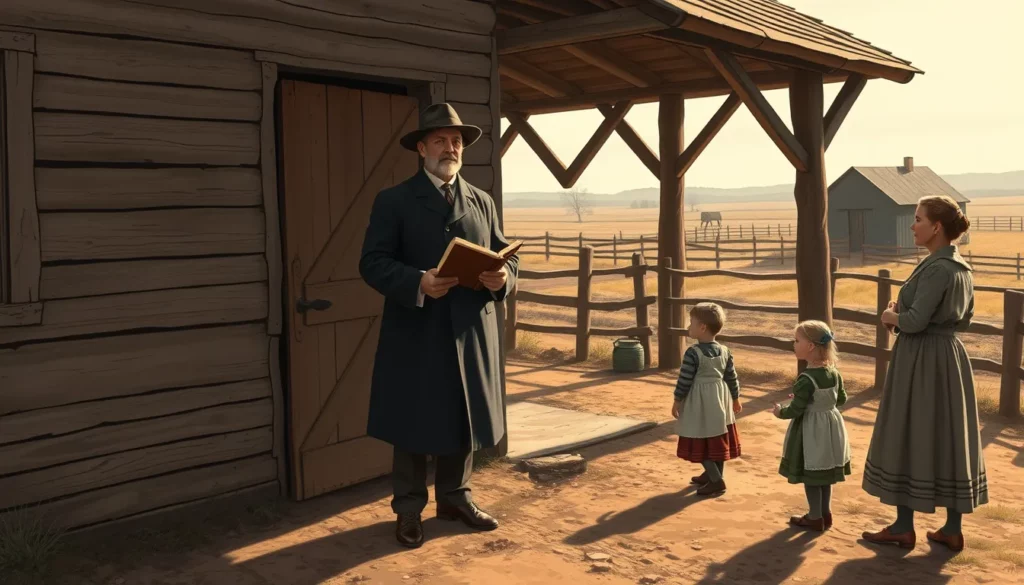
On August 2, 1790, federal marshals set out through the new United States to count inhabitants for the first federal census. In 1850, an enumerator might sit at a farmhouse table and ask not only for names and ages but for birthplace, occupation, and whether a person had married within the year. In 1940, a small X in a circle on the schedule would reveal which household member had supplied the information. These manuscript pages are among the most democratic and most bureaucratic of historical sources: they record ordinary people in their own households, yet they do so through the categories, instructions, and assumptions of the state. Using them well requires more than finding a name. It means establishing the official census day, reading the schedule in light of the instructions for that year, identifying the informant, comparing households across decades, and corroborating details in newspapers, diaries, tax lists, and other records. This article treats census records neither as flawless databases nor as mere genealogical finding aids, but as historical documents that reveal both the ambitions and the limits of the government that made them.
What Happened?
The federal census is a creation of the U.S. Constitution. Article I, Section 2, required an enumeration every ten years to apportion representation and direct taxes. The first census, taken in 1790 under the direction of Secretary of State Thomas Jefferson, was conducted by federal marshals and their assistants. Early schedules were limited: they usually named only the head of household and counted other free persons by age and sex, while enslaved people were counted under the owner’s name. From these narrow beginnings, the census expanded into a vast series of population and special schedules.
- 1790–1840: Federal marshals enumerated households, but most schedules named only heads of families and recorded counts by age, sex, and color. These records are valuable for household structure and neighborhood reconstruction, not for full biographical detail.
- 1850: The census began listing every free person by name, age, sex, color, occupation, and birthplace. This change made the population schedule a far richer source for family and community history.
- 1870–1880: Post–Civil War schedules recorded relationships to the head of household and expanded questions about health, education, and parentage. These years are crucial for tracing formerly enslaved families and immigrant communities.
- 1900–1940: New questions covered marriage, number of children born, immigration year, naturalization, home ownership, and military service. The 1940 census marked the informant with an X in a circle.
- 1890 fire: Most population schedules from the 1890 census were badly damaged in a fire at the Commerce Department Building in January 1921. Surviving fragments are microfilmed as National Archives Microfilm Publication M407.
- 72-year rule: Under the 72-year rule, the National Archives and Records Administration releases census records after 72 years. The 1950 census was released on April 1, 2022; the 1960 census is scheduled for release in April 2032.
Using a census record begins with precise identification: census year, state, county, town, enumeration district, page or sheet, and line number. The next step is to read the instructions given to enumerators for that census, because definitions of occupation, relationship, race, and birthplace changed repeatedly. Finally, the researcher must compare the entry with other sources rather than treating any single schedule as final truth.
How It Was Seen at the Time
Contemporaries did not see the census as a neutral data set. The 1790 statute used the language of enumeration and public order, but it also touched sensitive matters of representation, taxation, and local standing. Federal marshals were familiar officers, yet the questions they asked could seem intrusive. Newspapers and official notices reported aggregate returns, while communities debated what the counts meant for political power. Immigrants, the poor, and people with reason to distrust government sometimes gave incomplete or guarded answers. For many households, the census was a brief encounter at the door, remembered only if the enumerator was a neighbor, a local official, or a stranger asking inconvenient questions.
“to cause the number of the inhabitants within their respective districts to be taken” — An Act providing for the enumeration of the Inhabitants of the United States, March 1, 1790.
The phrase is bureaucratic, but it carries the central tension of census research: people were counted as inhabitants, categories, and households, not as fully self-described individuals. The 1940 informant mark is a rare admission of how the record was made. It reminds us that a schedule is not a transparent window but a conversation—sometimes rushed, sometimes misunderstood—between an enumerator and a household member.
Historical Snapshot
| Aspect | Detail |
|---|---|
| Date | 1790 to present; public releases through 1950 as of 2022 |
| Place | United States, including territories and federal districts |
| People | Federal marshals and enumerators; household informants; Census Bureau and National Archives staff; researchers |
| What Happened | Decennial population schedules and special schedules were created, closed for 72 years, and released for historical research |
| Why It Mattered | They provide household-level evidence for apportionment, immigration, occupation, family structure, and community history |
What People Knew at the Time
| What People Knew Then | What We Know Now |
|---|---|
| Households knew an enumerator would ask questions as of a fixed census day; answers might come from one household member. | Researchers know accuracy varied with the informant; the 1940 census marks the informant with an X in a circle. |
| Communities knew the census served government apportionment and taxation debates; some people were suspicious of it. | Researchers know records are closed for 72 years and that most 1890 schedules were lost in a 1921 fire. |
| Enumerators recorded race by observation and used categories of the day. | Researchers know race categories changed over time and should be read as historical labels, not stable identities. |
| People often did not know their answers would become historical sources. | Researchers know schedules must be read with enumerator instructions, enumeration districts, page and line numbers, and other records. |
Contemporary Terminology
Official Terms
- Enumerator: The official who visited households and recorded answers on schedules; in early censuses, called an assistant marshal.
- Population schedule: The main census form listing individuals and households.
- Census day: The official reference date. Answers were supposed to be accurate as of that date, not the day the enumerator visited.
- Enumeration district: A geographic area assigned to an enumerator; it is essential for locating a record in large cities and rural counties.
- Mortality schedule: Special schedules for 1850, 1860, 1870, and 1880 listing persons who died in the year before the census.
- Agricultural and manufacturing schedules: Special schedules for 1850–1880 recording farm production, livestock, and small-scale manufacturing.
Terms That Require Care
Census schedules use words that are now outdated, offensive, or misleading. Categories such as “mulatto,” “insane,” “idiotic,” and “defective” reflect the assumptions and medical language of their era, not neutral descriptions. Researchers should quote such terms accurately when analyzing the record, explain their historical context, and avoid treating them as fixed identities. Similarly, “head of household” and “relationship to head” reflect household conventions that may not match modern family structures.
Key Documents
- U.S. Constitution, Article I, Section 2 (1787): Established the decennial census for apportionment and direct taxation.
- An Act providing for the enumeration of the Inhabitants of the United States (March 1, 1790): Created the first federal census and assigned marshals to count inhabitants.
- Decennial enumerator instructions (1790–present): Define who was counted, how questions were asked, and how categories were to be applied; they are essential for interpreting any schedule.
- Population schedules and special schedules: The manuscript records themselves, including population, mortality, agricultural, manufacturing, social statistics, and veteran schedules.
- 1940 census informant mark: The X in a circle identifies the household member who supplied the information, a rare clue to the reliability and perspective of the entry.
- The 72-year rule: The policy governing public release of census records; it shapes what researchers can consult and when.
Common Misconceptions
Related Primary Sources
- National Archives census records: Population schedules from 1790 to 1950, including microfilm and digital access through NARA.
- Census Bureau, Measuring America: The Decennial Censuses From 1790 to 2000: Reproduces questionnaires, enumerator instructions, and histories of each census.
- Decennial Census Questionnaires and Instructions: Year-by-year forms and instructions that reveal how categories were defined.
- Special schedules: Mortality, agricultural, manufacturing, social statistics, and Union veteran schedules for the years in which they were taken.
- Local records: City directories, tax lists, church registers, newspapers, diaries, letters, photographs, and military records that can corroborate or challenge census entries.
- National Archives Microfilm Publication M407: The surviving fragments of the 1890 census population schedules.
Census records endure because they sit at the intersection of individual lives and state power. They tell us who lived where, how households were formed, what work people did, where they were born, and how communities changed. But they also teach caution. A schedule is a record of a conversation, shaped by instructions, assumptions, and memory. Used patiently—alongside enumerator instructions, diaries, newspapers, and local records—it becomes one of the most revealing primary sources available to historians. The census does not give us the past whole; it gives us a detailed, imperfect, and deeply human ledger of how people were counted, and how they counted themselves.
FAQ
Are all U.S. census records available to researchers?
No. Under the 72-year rule, the National Archives releases census records after 72 years. Records from 1790 to 1950 are available; the 1960 census will be released in April 2032. Most 1890 population schedules were destroyed by fire in 1921, though fragments survive as National Archives Microfilm Publication M407.
Can I correct an error in a census record?
No. Census records are treated as historic documents and are not corrected. Researchers should note inconsistencies in their own work and use other sources—birth records, city directories, newspapers, diaries, church registers—to corroborate or challenge the census entry.
What is the X in a circle in the 1940 census?
It marks the household member who supplied the information to the enumerator. It is especially valuable because it tells researchers whose memory or knowledge shaped the entries for that household.










Leave a Reply