
Short Answer
Quick Snapshot
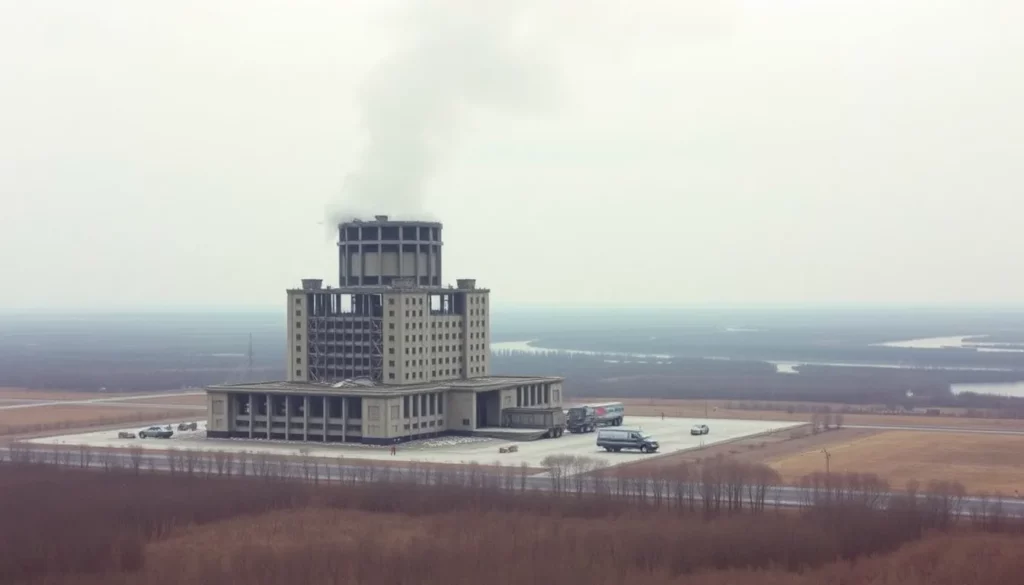
In 1986 Chernobyl was a small Ukrainian town in the Kyiv Oblast, surrounded by forest, farmland, and the Pripyat River. Nearby stood the Chernobyl Atomic Energy Station, one of the Soviet Union’s most ambitious nuclear complexes, and the purpose-built city of Pripyat, home to many plant workers and their families. The area was officially a showcase of Soviet technological progress; in practice it was a closed, carefully managed world in which the nuclear plant dominated employment, politics, and everyday conversation.
That world was shattered at about 1:23 a.m. on April 26, 1986, when an explosion destroyed Reactor No. 4 during an electrical systems test. Firefighters and plant workers confronted a fire and radiation release whose magnitude was not yet understood. Pripyat was evacuated on April 27, almost thirty-six hours after the explosion, and Chernobyl town and surrounding villages were soon emptied. Moscow waited until the evening of April 28 to issue a brief public statement, and for days Soviet citizens received almost no reliable information about the accident.
The disaster before the world knew its scale was therefore both a technological catastrophe and a crisis of information. Radiation crossed borders, detected first in Sweden, while Soviet authorities tried to preserve normalcy and control the narrative. In Chernobyl and Pripyat, residents learned of the danger through rumor, official fragments, military movements, and the sudden absence of children sent away from the contaminated zone.
Chernobyl in 1986
Chernobyl lies in northern Ukraine, roughly 90 kilometers north of Kyiv, near the confluence of the Pripyat and Uzh rivers. The landscape is flat and heavily wooded, with marshy ground, fields, and small settlements. The climate is temperate continental: cold winters, warm summers, and spring weather that in 1986 helped carry radioactive particles across Ukraine, Belarus, Russia, and Europe. The region was rural, but the nuclear station had transformed it into a strategic industrial zone.
The city of Chernobyl served as the district center, while Pripyat, about three kilometers from the plant, was a newer atomic city with apartment blocks, schools, a palace of culture, shops, and a river port. The atmosphere in early 1986 was outwardly ordinary. Residents prepared for May Day, children attended school, and plant employees discussed production targets. Beneath that normality lay the secrecy and hierarchy of the Soviet system. The plant was a state enterprise of enormous prestige, and information about its operations was not public property.
Population & Economy
In 1986 Chernobyl town had an estimated population of about 12,500, while Pripyat had approximately 49,000 residents. The wider Chernobyl Raion included villages and collective farms. Pripyat’s population was young and specialized: engineers, technicians, construction workers, teachers, doctors, and their families. The plant was the dominant employer, but forestry, agriculture, river transport, and auxiliary services also shaped the local economy.
The Soviet economy provided subsidized bread, utilities, and rents, so money wages mattered less than access to goods, housing, and privileges. Plant workers enjoyed comparatively good apartments and wages, but consumer goods were often scarce. Pripyat’s shops and schools were part of a planned socialist city, where the nuclear station supplied both prestige and material investment. After April 26, this economy collapsed almost overnight: workplaces were abandoned, buses replaced commuters, and the state began paying compensation to evacuated families.
Government & Politics
Chernobyl had no elected mayor in the Western sense. Local administration was exercised through the Communist Party, the Chernobyl Raion executive committee, and the management of the nuclear plant. The Ukrainian Communist Party, led by Vladimir Shcherbitsky, controlled regional politics, while Mikhail Gorbachev headed the Soviet leadership in Moscow. At the plant, director Viktor Brukhanov and chief engineer Nikolai Fomin held enormous local authority; deputy chief engineer Anatoly Dyatlov was responsible for the test that went catastrophically wrong.
After the explosion, political authority shifted to a government commission headed by Deputy Prime Minister Boris Shcherbina. The Council of Ministers, the KGB, the Interior Ministry, Civil Defense, and the Soviet Army all became involved. Decisions about evacuation, radiation measurement, and public statements were made within a system that prized secrecy and feared panic. The result was not simply censorship but a broader political failure: local and national officials withheld information while trying to demonstrate that the Soviet system remained in control.
Industry
The Chernobyl Atomic Energy Station was the region’s defining industry. By 1986 four RBMK-1000 reactors were in service, and additional units were under construction or planned. The RBMK was a Soviet graphite-moderated, water-cooled reactor design. Reactor No. 4 was the unit destroyed in the accident. The plant generated electricity for Ukraine and symbolized Soviet nuclear engineering, but its operators faced pressure to complete tests and maintain production schedules.
Pripyat also contained auxiliary factories and workshops, a river port, and construction organizations tied to the nuclear complex. The surrounding countryside depended on collective and state farms, timber work, and food processing. For many residents, the plant was not an abstract symbol but the source of wages, housing, and social identity. Its sudden destruction therefore erased not only workplaces but the economic foundation of an entire planned community.
Education
Chernobyl and Pripyat had well-developed Soviet schools, kindergartens, and technical training programs. Literacy was near universal. Pripyat’s schools served the children of plant workers and included modern facilities and extracurricular activities. Older students could pursue technical qualifications connected to the power station or travel to Kyiv for higher education; there was no university in Chernobyl itself.
The accident turned schools into instruments of crisis management. Children were sent home, and by early May many mothers were arranging to move them out of the region. In Kyiv, some teachers reported that they learned of the explosion through private contacts rather than official channels. Education continued, but in a climate of rumor, absent classmates, and contradictory advice about whether windows should be kept shut or floors washed.
Transportation
Roads and buses connected Chernobyl, Pripyat, and the nuclear plant, while rail links and the Pripyat River port supported freight and passenger movement. The region was not isolated in ordinary times: workers commuted, food arrived from collective farms, and construction materials moved by road and rail. The evacuation of Pripyat on April 27 relied on 1,125 buses gathered from Kyiv and surrounding areas. Later, helicopters became crucial for dropping materials onto the burning reactor and for aerial photography.
The railway station at Chernobyl and the roads out of the zone became routes of departure in 1986. Personal cars were relatively rare, so buses and trains carried most evacuees. At Kyiv’s railway station, parents reportedly pushed infants through train windows, asking passengers to deliver them to relatives farther from the contaminated region. Transportation thus became both a means of escape and a measure of how quickly ordinary life had unraveled.
Everyday Life
Before April 26, daily life in Pripyat followed the rhythms of a Soviet atomic city. Families lived in apartment blocks, children attended school, and adults worked shifts at the plant or in service jobs. Food came from state shops and markets; clothing was practical and often standardized; entertainment included cinema, sports, books, and the Palace of Culture. Residents looked forward to May Day, weddings, and summer holidays by the river.
The disaster transformed these routines. Residents were told to prepare for a temporary evacuation, often leaving belongings, pets, and food behind. In Chernobyl town and nearby villages, older residents resisted leaving homes and gardens. Those who remained or returned faced radiation, restricted access, and a landscape emptied of children. The black humor that spread in Kyiv and Chernobyl, including jokes about dying from information rather than radiation, reflected a society trying to cope with official silence.
Major Events
The central event was the April 26 explosion and fire at Reactor No. 4. Emergency workers fought the fire without knowing the true radiation levels. On April 27, Pripyat was evacuated. On April 28, Swedish monitoring stations detected radiation and Western pressure forced Moscow to issue a short statement that evening. On April 29, the evacuation of Chernobyl town and nearby areas proceeded, and reports of radiation sickness reached Moscow. On May 1, the traditional May Day parade went ahead in Kyiv despite elevated radiation readings, a decision that many residents later saw as a betrayal.
In May, Soviet authorities admitted a more serious accident and sent letters and leaflets with precautionary advice. Gorbachev addressed the nation on television on May 14. By late 1986, a concrete shelter, later called the sarcophagus, was being built over the ruined reactor. The disaster also accelerated the policy of glasnost, as censorship and official secrecy became impossible to defend.
What Newspapers Were Reporting
For the first days, Soviet newspapers and television carried almost nothing about the accident. Local readers in Ukraine found routine reports about agriculture, production, and preparations for May Day. On the evening of April 28, Moscow television broadcast a four-sentence government statement: "An accident has taken place at the Chernobyl power station, and one of the reactors was damaged. Measures are being taken to eliminate the consequences of the accident. Those affected by it are being given assistance. A government commission has been set up." The statement raised more questions than it answered.
Foreign wire services, meanwhile, reported that Sweden had detected abnormal radiation and suspected a Soviet nuclear accident. Soviet print media gradually published official explanations that minimized the danger. Local newspapers in Kyiv and Chernobyl carried advice to keep windows closed and wash floors, but many readers no longer trusted such guidance. The contrast between reassuring headlines and the visible movement of buses, ambulances, and troops became a defining feature of the coverage.
What People Were Talking About
Residents exchanged rumors about radiation levels, contaminated water, and the risk of a second explosion. Some drank red wine in the belief that it would help remove radiation from the body; others took iodine or sought advice from doctors and nuclear specialists. Parents debated whether to send children to relatives in Moscow, Leningrad, or other cities. In Kyiv, the sudden departure of children from elite families after the May Day parade convinced many citizens that officials knew far more than they were saying.
One Ukrainian teacher later recalled the mood with a bitter phrase: "We will die of information, not of radiation." The line captured the central social experience of 1986: not only fear of an invisible contaminant but anger at contradictory rumors and official evasion. Trust in the state was damaged in ways that outlasted the immediate emergency.
Historical Photographs
Photographs from Chernobyl in 1986 are among the most important visual records of the disaster. The first known photograph of the ruined Unit Four was taken from a helicopter by plant photographer Anatoly Rasskazov at approximately 3:00 p.m. on April 26, 1986. It shows the shattered reactor building, smoke, and the surrounding industrial site. The image is held in the Ukrainian National Chernobyl Museum and has become a key document of the immediate aftermath.
Other photographs record Pripyat before and after evacuation: empty streets, abandoned apartments, schoolrooms, and buses lined up to carry residents away. Images of firefighters, soldiers, and helicopters dropping materials onto the reactor document the emergency response. May Day photographs from Kyiv show crowds marching while the authorities knew of elevated radiation, creating a stark visual contradiction between public celebration and hidden danger.
Documents & Primary Sources
Historians studying Chernobyl in 1986 rely on Soviet party and government records, plant documents, KGB and Interior Ministry reports, evacuation orders, medical records, maps, and oral histories. Viktor Brukhanov signed an official accident report on April 26 that listed initial casualties and underestimated radiation levels. A secret order from the Ukrainian Council of Ministers prepared the evacuation of Pripyat using buses from Kyiv and the surrounding area. KGB reports tracked radiation in Pripyat and other cities, including Rovno.
The Ukrainian National Chernobyl Museum in Kyiv holds photographs, documents, and personal objects from the period. Memoirs by plant workers, firefighters, and residents provide eyewitness testimony, while IAEA and UN reports offer technical and health assessments. Soviet newspapers and television transcripts show the official information campaign, and foreign news reports reveal how the world first learned that a nuclear accident had occurred.
1986 Timeline
| Date | Event |
|---|---|
| April 26, about 1:23 a.m. | Explosion destroys Reactor No. 4 during a systems test. |
| April 26, daytime | Firefighting and emergency response; first aerial photograph by Anatoly Rasskazov. |
| April 27, afternoon | Pripyat evacuated using 1,125 buses, almost 36 hours after the explosion. |
| April 28, evening | Moscow television issues a brief statement about the accident after foreign radiation detections. |
| April 29 | Chernobyl town and nearby areas begin evacuation; reports of radiation sickness reach Moscow. |
| May 1 | May Day parade proceeds in Kyiv despite elevated radiation readings. |
| May 14 | Mikhail Gorbachev addresses the nation on television. |
| Late 1986 | Construction of the concrete sarcophagus over Reactor No. 4 proceeds. |
What Changed Next
The evacuation of Pripyat and Chernobyl became permanent for most residents. A 30-kilometer exclusion zone was established, and the plant site was entombed in a concrete sarcophagus completed in late 1986. Workers and their families were relocated, especially to the new city of Slavutych. The accident contributed to the policy of glasnost, as official secrecy about Chernobyl undermined confidence in Soviet institutions. Long-term health and environmental consequences remained disputed, but the political and social effects were immediate and lasting.
For the world, Chernobyl became a warning about nuclear safety, emergency communication, and the cost of hiding technological failure. For the people of the region, 1986 marked the end of an ordinary life that photographs, documents, and memoirs preserve.
Sources
- Lily Poberezhska, "In the Dark," IAEA Bulletin 47/2, March 2006, https://www.iaea.org/sites/default/files/publications/magazines/bulletin/bull47-2/47202790608.pdf
- Adam Higginbotham, "An Explosion Occurred in Power Unit No. 4: The Story of Chernobyl in Documents," Wilson Center, April 26, 2019, https://www.wilsoncenter.org/blog-post/explosion-occurred-power-unit-no-4-the-story-chernobyl-documents
- International Atomic Energy Agency, INSAG-7: The Chernobyl Accident: Updating of INSAG-1, IAEA Safety Series No. 75-INSAG-7, Vienna, 1992.
- United Nations Scientific Committee on the Effects of Atomic Radiation, UNSCEAR 2008 Report, Volume II, Annex D: Health Effects due to Radiation from the Chernobyl Accident, New York, 2011.
- Adam Higginbotham, Midnight in Chernobyl: The Untold Story of the World’s Worst Nuclear Disaster, New York: Simon & Schuster, 2019.
FAQ
What was the population of Chernobyl in 1986?
Chernobyl town had an estimated population of about 12,500, while the nearby atomic city of Pripyat had approximately 49,000 residents before the evacuation.
What major events happened in Chernobyl in 1986?
Reactor No. 4 at the Chernobyl Atomic Energy Station exploded on April 26, 1986. Pripyat was evacuated on April 27, Moscow issued a brief public statement on April 28, and Chernobyl town and surrounding areas were evacuated soon afterward. The May Day parade in Kyiv proceeded despite elevated radiation, and later in the year a concrete sarcophagus was built over the ruined reactor.
What primary sources are available for studying Chernobyl in 1986?
Key sources include Soviet party and government records, plant accident reports, KGB and Interior Ministry reports, evacuation orders, newspapers and television transcripts, photographs such as Anatoly Rasskazov's first aerial image, memoirs, oral histories, and holdings at the Ukrainian National Chernobyl Museum.
How did daily life in Chernobyl in 1986 differ from today?
Before the disaster, Chernobyl and Pripyat were ordinary Soviet communities dominated by the nuclear plant, with state-subsidized housing and goods, limited public information, and no independent local press. Today the area is an exclusion zone with restricted access, and the plant is no longer operating.










Leave a Reply