
Short Answer
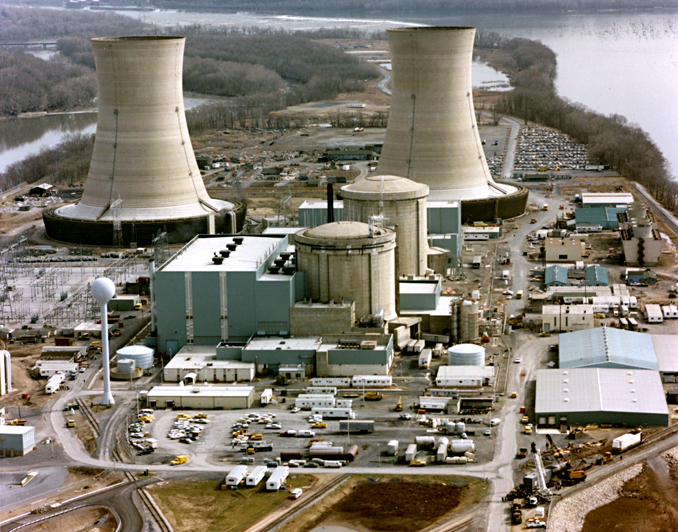
At 4:00 a.m. on March 28, 1979, the quiet hum of the Three Mile Island Nuclear Generating Station near Harrisburg, Pennsylvania, was broken by an alarm. The Unit 2 reactor, a newly licensed facility on the Susquehanna River, was experiencing a failure that would escalate into the most serious accident in U.S. commercial nuclear power history. For five nerve-wracking days, engineers struggled to control a runaway reactor, government officials debated whether to evacuate the area, and residents contemplated the ultimate horror of a nuclear meltdown. The accident that unfolded would release small amounts of radioactive gases and iodine into the environment, yet would cause no detectable health effects. But its consequences were profound: it transformed the nuclear industry, reshaped emergency planning, and left a lasting scar on the American psyche. This is the story of that crisis as it was experienced, reported, and remembered at the time.
What Happened?
The accident began with a combination of equipment failures, design problems, and human error. The following chronological account is based on the official record and contemporary reporting:
- 4:00 a.m., March 28, 1979: A failure in the non-nuclear secondary system triggered a cascade of events. The pilot-operated relief valve (PORV) in the primary cooling loop stuck open, allowing large amounts of water to escape from the pressurized coolant system.
- Operator error: Plant operators, misreading the instruments, initially believed the reactor was overfilled with water when it was actually losing coolant. They took actions that further reduced the water level.
- Partial meltdown: The core of the Unit 2 reactor partially melted, and a significant amount of radioactive gas and iodine was released into the environment.
- Emergency response: The NRC and state authorities monitored the situation, and a limited evacuation of pregnant women and young children was recommended for a five-mile radius, though many residents fled voluntarily.
The accident was rated Level 5 on the seven-point International Nuclear Event Scale, an “Accident with Wider Consequences.” It remains the worst commercial nuclear accident in U.S. history.
How It Was Seen at the Time
At the time, the public and the media were gripped by fear and uncertainty. The prevailing mood was one of disbelief and dread. The PBS documentary Meltdown at Three Mile Island captured this sentiment with the opening line: “It was never supposed to happen.” The NRC’s official backgrounder later described the event as “the most serious accident in U.S. commercial nuclear power plant operating history,” but during those tense days in late March 1979, the outcome was far from clear.
“It was never supposed to happen. In the predawn hours of March 28, 1979, a pressure valve suddenly malfunctioned at the Three Mile Island nuclear power plant near Harrisburg, Pennsylvania.” — Meltdown at Three Mile Island, PBS American Experience
For five days, engineers struggled to control the runaway reactor, government officials debated whether to order a full evacuation, and residents listened to conflicting reports on the radio and television. The language of the time was filled with uncertainty: “partial meltdown,” “radiation leak,” “dangerous levels,” and “worst-case scenario” were used interchangeably, often without clear explanation. The prevailing mood was fear, not of the immediate radiation, but of the unknown consequences.
Historical Snapshot
| Aspect | Detail |
|---|---|
| Date | March 28, 1979 |
| Place | Three Mile Island Nuclear Generating Station, Unit 2, near Harrisburg, Pennsylvania, on the Susquehanna River |
| People | Operators and engineers at the plant; NRC officials; local residents; state and federal emergency planners |
| What Happened | A stuck-open relief valve caused a loss of coolant, leading to a partial meltdown of the reactor core and the release of radioactive gases and iodine |
| Why It Mattered | The worst accident in U.S. commercial nuclear history; it led to sweeping regulatory changes and altered public perception of nuclear power |
What People Knew at the Time
Contemporaries knew the basics of the accident, but many details were incomplete or misunderstood. The following table compares what was known then with what is known now.
| What People Knew Then | What We Know Now |
|---|---|
| That a partial meltdown had occurred and that radioactive gases were released. | The precise sequence of events, including the stuck-open PORV and the operator errors, is fully documented. |
| That there were no immediate deaths or injuries. | Decades of follow-up studies confirm no detectable health effects on workers or the public. |
| That the reactor was in a dangerous state and a full meltdown was possible. | The core had melted partially, but the containment structure held, preventing a larger release. |
| That the accident was a serious setback for nuclear power. | It is now seen as a turning point that led to major safety improvements in the U.S. nuclear industry. |
Official Reports
The official reports from the Nuclear Regulatory Commission (NRC) and other agencies provide the authoritative record of the accident. The NRC’s Backgrounder on the Three Mile Island Accident states that the accident’s small radioactive releases “had no detectable health effects on plant workers or the public.” The NRC also emphasizes that the aftermath brought about sweeping changes in emergency response planning, reactor operator training, human factors engineering, radiation protection, and regulatory oversight.
In 2016, the NRC published Three Mile Island Accident of 1979 Knowledge Management Digest (NUREG/KM-0001), which compiles the official record and lessons learned. It notes that although the accident caused no deaths or injuries, it was the most serious incident in U.S. commercial nuclear power history. The report also highlights the role of the NRC in tightening regulatory oversight after the event.
What People Feared
The fears of the time were real and often amplified by uncertainty. The most immediate fear was of a full meltdown, which could release massive amounts of radiation and force a permanent evacuation of the Harrisburg area. Residents also feared the long-term health effects of radiation, even at low levels, and the possibility of a hydrogen bubble explosion.
- Full core meltdown: The worst-case scenario that would have released catastrophic radiation.
- Evacuation of the region: The government debated and issued a recommendation for pregnant women and young children to leave a five-mile radius, but many residents fled on their own.
- Cancer and genetic damage: Fear of undetectable radiation causing long-term health problems.
- Loss of the nuclear industry: Many believed the accident would end the growth of nuclear power in the United States.
Some fears were unfounded, such as the immediate danger of a hydrogen bubble that could have exploded. The NRC later explained that the risk was minimal, but at the time it was a serious concern.
Aftermath
The immediate aftermath of the accident was a period of intense scrutiny and reform. The NRC tightened its regulatory oversight and imposed new requirements on reactor operators. Emergency response planning was overhauled, and the concept of “human factors” became central to reactor design. The accident also had a chilling effect on the U.S. nuclear power industry. No new nuclear power plants were ordered in the United States for several decades after 1979. The clean-up of the damaged reactor took years and cost billions of dollars. The Unit 2 reactor was permanently shut down and later decommissioned, while Unit 1 continued to operate until 2019.
How Historians See It Today
Modern historians and scholars view Three Mile Island not as a catastrophe but as a pivotal event that significantly improved the safety of U.S. nuclear power. Contemporary accounts often exaggerated the immediate danger, and the public’s fear was not matched by the actual health effects. Historians now emphasize that the accident was the result of a combination of equipment malfunctions, design-related problems, and worker errors, and that the NRC’s response led to a more robust safety culture. The accident is also seen as a major reason for the decline of the nuclear industry in the United States, as public opposition grew and costs increased. Today, the lessons of Three Mile Island are taught in engineering and emergency management courses, and the event remains a symbol of both the promise and the peril of nuclear energy.
In the decades since 1979, the primary sources from the time—newspapers, official reports, and the recollections of those who lived through it—continue to serve as a reminder of how quickly a technological promise can turn into a national crisis. The accident at Three Mile Island was a turning point in American history, and its legacy is a more cautious, more safety-conscious nuclear industry. The fear and uncertainty of those five days in March were real, but the outcome also demonstrated the resilience of the American system in learning from its mistakes.
FAQ
Did anyone die or get injured in the Three Mile Island accident?
No. The NRC backgrounder states that the small radioactive releases had no detectable health effects on plant workers or the public. No deaths or injuries were directly attributed to the accident.
Why is Three Mile Island considered the worst nuclear accident in U.S. history?
It is considered the most serious because it was a partial meltdown of a commercial reactor core, the first such event in the U.S. It resulted in a release of radioactive material and prompted major regulatory changes. Although the health impact was minimal, it had a profound effect on the nuclear industry and public perception.








Leave a Reply