
Short Answer
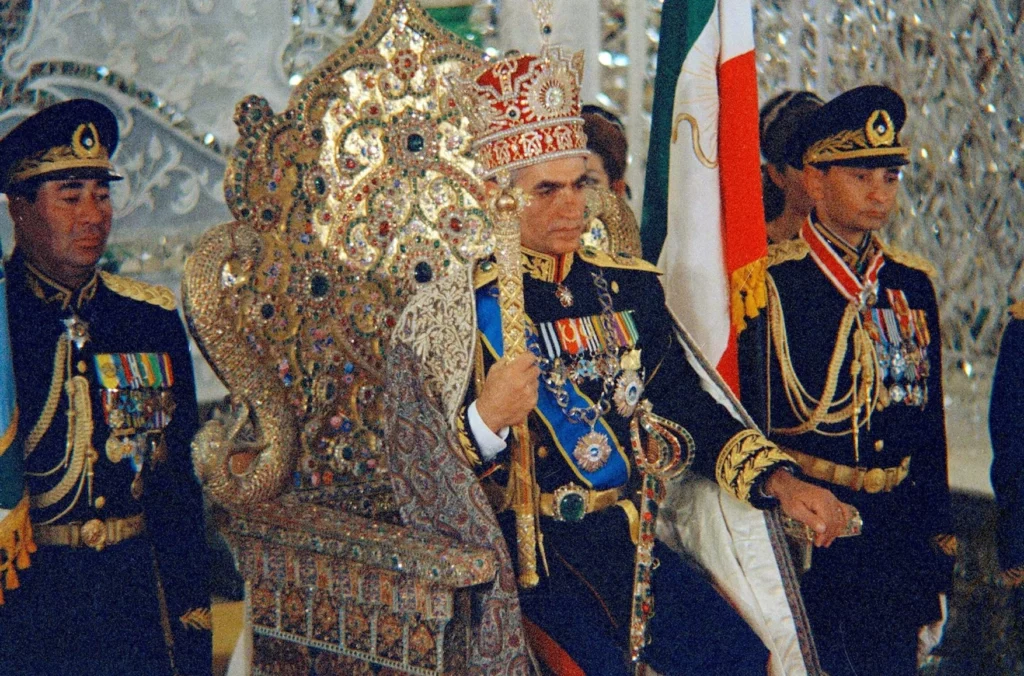
On January 16, 1979, Tehran’s Mehrabad Airport was a scene of controlled tension. The Shah of Iran, Mohammad Reza Pahlavi, mounted the steps of his imperial Boeing 707, carrying a small box of Iranian soil—a symbol of his intention to return. He had just bid a tearful farewell to a small coterie of top officials, while outside the airport walls, millions of Iranians exploded in jubilation. The 37-year reign of the Pahlavi dynasty was effectively over, though the formal collapse would not come for nearly a month. In the streets, the air was thick with hope and anxiety: hope for an Islamic republic, fear of chaos and a violent power struggle.
What Happened?
The fall of the Pahlavi dynasty unfolded in two dramatic phases. The first was the Shah’s departure on January 16, 1979. After more than a year of mounting protests, strikes, and demonstrations, the Shah had appointed Shahpour Bakhtiar as prime minister in an attempt to appease the opposition. But the pressure was relentless. As the Washington Post reported, the Shah, “overwhelmed by more than a year of mounting opposition to his 37-year rule,” flew into exile “with his wife, a few aides and a boxful of Iranian soil.” He piloted the Boeing 707 himself, a gesture of control that belied the loss of his empire.
The second phase came on February 11, 1979, when the Bakhtiar government collapsed. According to the Washington Post, “armed civilians took over most of Tehran and top military commanders swung their support behind the drive for a new Islamic republic.” The monarchy was formally abolished, and the way was opened for Ayatollah Ruhollah Khomeini, who had been leading the opposition from exile, to return and establish an Islamic government.
The key events of these final days were:
- January 16, 1979: Shah Mohammad Reza Pahlavi departs Iran, flying to Aswan, Egypt, with his wife, Empress Farah.
- January 13–16, 1979: The Shah appoints Shahpour Bakhtiar as prime minister, but Bakhtiar’s government is unable to control the streets.
- February 11, 1979: The Bakhtiar government falls; armed civilians and defecting military units take over Tehran; the monarchy is formally ended.
- February 1–11, 1979: Ayatollah Khomeini returns to Iran from Paris, and a new Islamic republic begins to take shape.
How It Was Seen at the Time
Contemporary observers understood these events as a dramatic and unpredictable turn in Iran’s history. The Washington Post described the Shah’s departure as a “tearful departure ceremony” and noted that the country “exploded in joy,” but also warned of “an uncertain political and economic future, with the likelihood of future chaos and the risk of a violent power struggle.” The mood in Tehran was a mixture of euphoria and anxiety. The fall of the government on February 11 was seen as a popular uprising, not a coup. As the Post reported, “armed civilians took over most of Tehran,” and the military’s defection sealed the fate of the monarchy. The language of the day was charged with revolution—words like “uprising,” “republic,” and “freedom” filled the air, but also “chaos” and “struggle.”
“The shah of Iran, overwhelmed by more than a year of mounting opposition to his 37-year rule, flew into exile today with his wife, a few aides and a boxful of Iranian soil.” — The Washington Post, January 17, 1979
“The government of Prime Minister Shahpour Bakhtiar—and with it Iran’s monarchy—fell today after armed civilians took over most of Tehran and top military commanders swung their support behind the drive for a new Islamic republic.” — The Washington Post, February 12, 1979
Historical Snapshot
| Aspect | Detail |
|---|---|
| Date | January 16 – February 11, 1979 |
| Place | Tehran, Iran |
| People | Shah Mohammad Reza Pahlavi, Empress Farah, Prime Minister Shahpour Bakhtiar, Ayatollah Ruhollah Khomeini |
| What Happened | The Shah fled into exile, and the monarchy fell to an armed civilian uprising supported by the military |
| Why It Mattered | It ended 2,500 years of Iranian monarchy and led to the establishment of the Islamic Republic of Iran |
Contemporary Newspaper Coverage
The American and international press covered the fall of the Shah with extensive, often on-the-ground reporting. The Washington Post ran a series of articles by William Branigin, who was in Tehran. On January 17, 1979, the front-page story headlined “Iranians Jubilant as Shah Departs” described the scene: “The shah of Iran, overwhelmed by more than a year of mounting opposition to his 37-year rule, flew into exile today with his wife, a few aides and a boxful of Iranian soil.” The article also noted that the Shah had “left behind a country that exploded in joy at his departure, but which faces an uncertain political and economic future.”
On February 12, the Post reported the government’s fall with the headline “Iranian Government Falls in Uprising.” The article described the military’s defection and the popular takeover of Tehran. The AP also covered the events, later reflecting on the Shah’s departure as “the shah abandoning his Peacock Throne and leaving his nation for the last time in his life, setting the stage for the country’s 1979 Islamic Revolution.” The tone of the coverage was a mix of awe at the speed of the collapse and worry about the future.
Eyewitness Accounts
Journalist William Branigin of the Washington Post was an eyewitness to the Shah’s departure. His account provides a vivid picture of the scene:
“The shah of Iran, overwhelmed by more than a year of mounting opposition to his 37-year rule, flew into exile today with his wife, a few aides and a boxful of Iranian soil after a tearful departure ceremony restricted to a small coterie of top officials.”
He also observed the jubilation in Tehran: “The shah left behind a country that exploded in joy at his departure.”
Another eyewitness, an unnamed Iranian soldier, was photographed smiling and decorated with flowers and pictures of Ayatollah Khomeini, as reported by the AP. This image symbolized the military’s shift of loyalty.
What People Feared
Contemporary fears centered on the potential for chaos and civil war. The Washington Post warned of “the likelihood of future chaos and the risk of a violent power struggle.” Many Iranians feared that the departure of the Shah would leave a power vacuum, with multiple factions competing for control. There were also concerns about economic collapse, as the country had been paralyzed by strikes and protests. The departure of the Shah was seen as a prelude to a dangerous period of instability, not as a final solution.
What People Expected Would Happen Next
At the time, most observers expected a prolonged and uncertain transition. The Washington Post predicted “an uncertain political and economic future.” Some expected that Prime Minister Bakhtiar might be able to form a government, but the events of February 11 made that impossible. The widespread expectation was that a power struggle would ensue, with the military, the secular left, and the religious right all vying for control. No one could have predicted the speed with which the Islamic Republic would consolidate under Khomeini.
Timeline
- 1978 – A year of increasing protests against the Shah’s rule, with strikes and demonstrations.
- January 13, 1979 – The Shah appoints Shahpour Bakhtiar as prime minister in an attempt to quell the unrest.
- January 16, 1979 – The Shah and his wife leave Iran for Egypt; the military declares its neutrality.
- February 1, 1979 – Ayatollah Khomeini returns to Iran after 15 years of exile.
- February 11, 1979 – The Bakhtiar government falls; armed civilians and defecting military take control of Tehran.
- February 12, 1979 – The Washington Post reports the fall of the government and the end of the monarchy.
Aftermath
In the immediate aftermath of February 11, Iran’s military high command announced its support for the Islamic republic, and the Bakhtiar government dissolved. Ayatollah Khomeini became the de facto leader, and a referendum on March 30-31, 1979, formally established the Islamic Republic. The Shah would never return to Iran; he died in exile in Egypt on July 27, 1980. The fall of the Pahlavi dynasty ended 2,500 years of monarchy and set Iran on a new, radically different course.
How Historians See It Today
Contemporary observers saw the events as a popular uprising against an authoritarian regime, but they were uncertain about the outcome. Modern historians, however, view the fall of the Pahlavi dynasty as a watershed moment in Middle Eastern history, one that fundamentally reshaped the region. They emphasize the role of Islamic ideology, the failure of the Shah’s modernization policies, and the deep-rooted social and economic grievances. The primary sources from January and February 1979 capture the raw emotions and the unpredictability of the moment, but they also reveal the deep divisions in Iranian society—between secularists, religious leaders, and the military—that would later be resolved in favor of the Islamic Republic. Historians now recognize that the revolution was not simply a coup, but a broad-based movement that had been building for years.
The fall of the Pahlavi dynasty was a moment of both liberation and profound uncertainty. The primary sources from those days—the newspaper reports, the eyewitness accounts, the photographs of celebrating crowds and the tearful Shah—capture the drama of a people taking their destiny into their own hands, but also the anxiety of an unknown future. The Shah’s box of Iranian soil, the jubilant crowds, and the defecting soldiers all tell the story of a regime that had lost its legitimacy. In the end, the revolution of 1979 was not just a change of government, but a transformation of Iran’s identity, and the world would never be the same.
FAQ
Why did the Shah leave Iran in January 1979?
The Shah left Iran on January 16, 1979, after more than a year of mounting protests and strikes against his 37-year rule. He was effectively forced out by the opposition, and his departure was part of an attempt to appease the revolutionaries. He flew to Egypt with his wife and a box of Iranian soil, symbolizing his intention to return, but he never did.
What happened on February 11, 1979?
On February 11, 1979, the government of Prime Minister Shahpour Bakhtiar fell as armed civilians took over most of Tehran and top military commanders swung their support behind the Islamic Republic. This marked the formal end of the Pahlavi dynasty and the monarchy.







Leave a Reply