
Short Answer
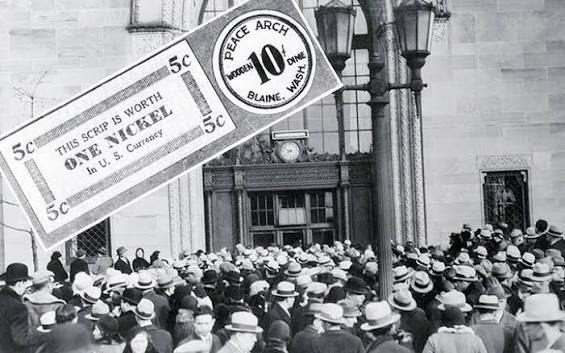
In the cold, tense air of December 11, 1930, a small merchant in the Bronx walked into a branch of the Bank of United States and asked to sell his stock in the institution. The teller told him to keep it—it was a good investment. But the merchant misunderstood, and by late afternoon a “good-sized run” had developed. Police kept clamorous depositors in line as the bad news spread to other branches. That evening, nearly one hundred of New York’s most powerful bankers gathered on the tenth floor of the Federal Reserve Bank of New York, summoned by the crisis. The run on the Bank of United States was not the beginning, nor the end, but it marked the moment when the nation’s financial system began to unravel in earnest.
What Happened?
In the fall of 1930, the American economy appeared poised for recovery. The previous three contractions—in 1920, 1923, and 1926—had lasted an average of fifteen months, and the downturn that began in the summer of 1929 had already run its course. But in November 1930, a series of crises among commercial banks turned what had been a typical recession into the beginning of the Great Depression.
Over 8,000 commercial banks belonged to the Federal Reserve System, but nearly 16,000 did not. These nonmember banks operated in a more fragile environment. The first major collapse was the Bank of United States in New York City. For months, rumors had circulated about its solvency; two attempts to merge the bank with other institutions had failed, the second announced only two days before the run. The December 11 run triggered a wave of withdrawals. The bank’s president, Joseph Marcus, and its vice president had made massive, hidden loans to affiliates—loans that would later be exposed in grand jury testimony reported by the New York Times.
The Bank of United States closed its doors, and the panic spread. According to The Atlantic in January 1932, approximately 5,000 national, state, and private banks had failed between 1920 and 1929. Since then, about 3,200 more had been added, with the momentum reaching its height in October 1931, when 512 institutions with liabilities of $566,000,000 closed in a single month. In the first ten months of 1931, total liabilities of defunct banks amounted to about $1,400,000,000—almost $200,000,000 more than the total for the previous decade.
How It Was Seen at the Time
Contemporaries were both bewildered and terrified. The Atlantic article of January 1932 captured the prevailing mood: “The reasons why banks fail are of less concern to embarrassed depositors than the fact that they do fail, bringing suffering to thousands of individuals and business stagnation to a number of communities.” The consequences, not the causes, dominated public concern.
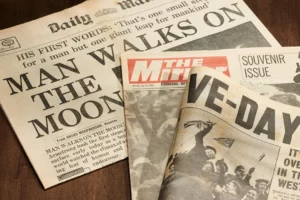
Newspapers were the primary source of information, and they reflected the confusion and urgency of the moment. The Time magazine described the run on the Bank of United States with dramatic detail, while the New York Times provided investigative revelations about hidden loans. The mood was one of betrayal and fear, as the public watched the institutions that held their savings collapse one by one.
Historical Snapshot
| Aspect | Detail |
|---|---|
| Date | November 1930 – August 1931 (peak in October 1931) |
| Place | United States, with the most dramatic events in New York City |
| People | Bank depositors, bankers, government officials, and the general public |
| What Happened | A series of bank runs and failures, beginning with the Bank of United States in December 1930, leading to a nationwide panic. |
| Why It Mattered | The panic transformed a typical recession into the Great Depression, causing widespread loss of savings and economic stagnation. |
Contemporary Newspaper Coverage
Newspapers and magazines were the lifeline for the public’s understanding of the crisis. Time magazine, in its December 22, 1930, issue, reported on the Bank of United States run with a tone of grim urgency. The article described the merchant’s misunderstanding and the ensuing chaos, noting that “police kept clamorous depositors in line.” It also recounted the bankers’ meeting at the Federal Reserve Bank of New York, where about 100 executives gathered, and the late arrival of Charles Mitchell of National City Bank, who found the door locked and said to a guard, “I am Mr. Mitchell.”
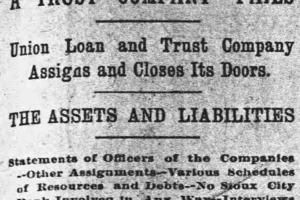
The New York Times provided more investigative coverage. On February 7, 1931, it ran the headline: “HUGE LOANS HIDDEN BY BANK OF U.S. HEADS, OFFICIAL TESTIFIES; Vice President Says Marcus and Singer Acted Alone on $12,000,000 to Affiliates.” The article reported grand jury testimony revealing that the bank’s leaders had made hidden loans to affiliates, asking other officers to leave the room. This reporting exposed the mismanagement that had contributed to the collapse.
“The reasons why banks fail are of less concern to embarrassed depositors than the fact that they do fail, bringing suffering to thousands of individuals and business stagnation to a number of communities.” — Charles F. Speare, The Atlantic, January 1932
Eyewitness Accounts
The run on the Bank of United States was witnessed by many. Time magazine provided a vivid account of the Bronx branch, where a small merchant asked to sell his stock. The misunderstanding led to a “good-sized run,” and police were called to keep the “clamorous depositors” in line. This was a direct eyewitness of the panic.
Another eyewitness was Charles Mitchell, the president of National City Bank, who arrived late to the Federal Reserve Bank meeting. The Time article records his exchange with the guard: “I am Mr. Mitchell.” The meeting itself was a scene of desperation, as the city’s top bankers struggled to respond to the crisis.
In the aftermath, grand jury testimony provided further eyewitness accounts from inside the bank. A vice president testified that Marcus and Singer acted alone on $12 million in loans, and that they had asked other officers to leave the room. This testimony, reported by the New York Times, revealed the bank’s internal workings and the extent of its mismanagement.
What People Feared
The most immediate fear was the loss of savings. The Atlantic article noted that bank failures brought “suffering to thousands of individuals” and “business stagnation to a number of communities.” The run on the Bank of United States was driven by the fear that deposits would be lost.
There was also a broader fear that the banking system itself might collapse. The Federal Reserve History notes that the panics turned a typical recession into the Great Depression, but at the time, many did not realize the severity. Rumors were rampant, and the Time article mentioned that the run was the “climax to weeks of silent withdrawals, months of rumors.” The fear of a total economic collapse was real.
What People Expected Would Happen Next
Initially, many expected a quick recovery. The Federal Reserve History points out that the previous contractions had lasted an average of fifteen months, and the downturn that began in 1929 had already lasted that long. But as the bank failures continued, expectations shifted. The Atlantic article from January 1932 suggested that the failures were still ongoing, with the momentum reaching its height in October 1931. People expected more banks to fail and that the economic hardship would persist.
There was also a hope that the government would intervene. The Federal Reserve Bank was expected to provide liquidity, but its actions were often inadequate. The public’s expectations were uncertain, and that uncertainty itself fueled further withdrawals.
Aftermath
The immediate aftermath of the Bank of United States failure was a legal investigation. The grand jury indicted the bank’s leaders, and the New York Times reported on the hearings, revealing the hidden loans. The bank’s collapse also had a broader impact, undermining confidence in the banking system and contributing to the ongoing panics.
By October 1931, the crisis had reached its peak, with 512 banks closing in one month. The Federal Reserve History notes that the panics continued until August 1931, but the effects were long-lasting. The crisis eventually led to the creation of the Federal Deposit Insurance Corporation (FDIC) in 1933, but that was after the events described here. In the short term, the aftermath was a continuation of financial distress and economic decline.
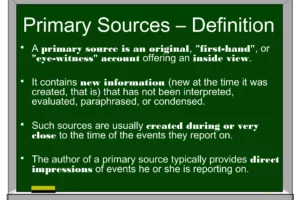
The bank runs and the panic of 1931 were a turning point in American history. The newspapers of the time—the dramatic headlines of the New York Times, the urgent reports in Time, and the analytical essays in The Atlantic—captured the fear, the betrayal, and the confusion of a nation losing faith in its financial institutions. These primary sources remind us that the Great Depression was not just a series of statistics, but a lived experience of millions of Americans who watched their savings evaporate and their communities stagnate. The reporting of the era, with all its limitations, remains a powerful record of how a nation copes with crisis.
FAQ
What caused the Bank of United States to fail in 1930?
The Bank of United States failed due to a combination of hidden, massive loans to affiliates, a loss of public confidence, and a run on deposits. According to New York Times reporting from February 1931, the bank's leaders, Marcus and Singer, had acted alone on $12 million in loans to affiliates without proper oversight. The bank's failure was also precipitated by two failed merger attempts and months of rumors.
How did newspapers report the banking panic of 1931?
Newspapers reported the panic with a mix of urgency and investigative depth. Time magazine described the dramatic scenes of runs, such as the one on the Bank of United States, while the New York Times exposed the hidden loans and mismanagement behind the failures. The Atlantic magazine provided a retrospective analysis, noting the human suffering and economic stagnation caused by the failures.






Leave a Reply