
Short Answer
In the living rooms of 1930s America, the family gathered not around a glowing screen but around a wooden console radio, its dial glowing warm as the evening news crackled through the speaker. The newspaper lay on the breakfast table, its headlines bold and black. At the movie theater, the newsreel flickered before the feature film. This was how Americans learned about the world before television—through a patchwork of print, broadcast, and cinema that shaped their understanding of events from the Great Depression to World War II. The news was not a constant presence; it arrived at appointed times—morning papers, evening radio bulletins, weekly newsreels—and families planned their days around these moments.
What Happened?
Before television became the dominant medium in the 1950s, American families relied on a combination of newspapers, radio, magazines, and film newsreels. The United States Holocaust Memorial Museum notes that during the 1930s and 1940s, “Americans got their news from radio, newspapers, magazines, and film newsreels shown at movie theaters.” Newspapers were ubiquitous, delivered to subscribers’ homes or sold at newsstands, with dailies published in the morning or evening, and some papers printed only on certain days of the week. Specialized newspapers served specific audiences—Black Americans, Christians, Jews, and workers in particular industries—focusing on topics of interest to those communities.
Radio emerged as a powerful force in the 1920s and became a household staple by the 1930s. Families tuned in for live broadcasts of presidential addresses, war reports, and breaking news. The immediacy of radio was unprecedented; listeners heard events as they happened, from the Hindenburg disaster in 1937 to the attack on Pearl Harbor in 1941. Newsreels, shown in movie theaters before feature films, provided visual coverage of world events, often with dramatic narration and music. By the late 1940s, television began to appear in American homes, but it was not until the 1950s that it became a serious competitor to radio and newspapers. The 1950 U.S. Census, as highlighted by Ancestry, shows that families still primarily relied on newspapers and radio, with television just beginning to make inroads.
The historical roots of this news ecosystem go deeper. Town criers, as described by historian Christopher Gordon, were “the primary source of information in a city or town” in early America and Europe, spreading news and alerts by voice. Over centuries, print and broadcast technologies replaced the human voice, but the function remained the same: to inform the public about events that mattered.
How It Was Seen at the Time
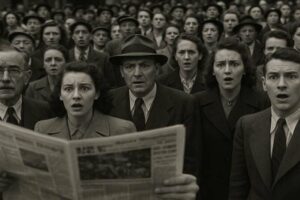
Contemporaries viewed the news media of their era as reliable and authoritative. Newspapers were trusted for their factual reporting and well-known reporters. The United States Holocaust Memorial Museum describes the presentation of news in the 1930s and 1940s: “Attention-grabbing headlines on the front page, black and white photos and cartoons, factual news stories written by well-known, trusted reporters, up-to-date news: International events were often in…” This trust was essential during times of crisis. Radio, in particular, created a sense of intimacy and immediacy. Families gathered around the radio for President Franklin D. Roosevelt’s “fireside chats,” which made the government feel accessible and personal. The newsreel, with its dramatic visuals, brought the war into American living rooms, albeit in a curated and often propagandistic form.
“Their main purpose throughout history was to spread news or to alert people of emergencies and other situations,” says Christopher Gordon, historian and director of library and collections at the Missouri History Museum.
This quote, though about town criers, underscores the enduring human need for news and the role of media as a communal experience. In the 1930s and 1940s, news was not just information; it was a shared ritual that connected families to their communities and the nation.
Historical Snapshot
| Aspect | Detail |
|---|---|
| Date | 1930s–1940s (pre-television era) |
| Place | United States |
| People | American families, newsboys, radio announcers, newspaper reporters, newsreel producers |
| What Happened | Families received news through daily newspapers, radio broadcasts, and movie theater newsreels |
| Why It Mattered | These media shaped public opinion during the Great Depression and World War II, influencing how Americans understood and responded to national and global events |
What People Knew at the Time
| What People Knew Then | What We Know Now |
|---|---|
| News arrived at fixed times: morning and evening papers, scheduled radio bulletins, weekly newsreels. | News is available 24/7 via smartphones, social media, and streaming services. |
| Radio provided live, immediate coverage of major events, but only audio. | We have live video and real-time text updates from anywhere in the world. |
| Newspapers were the primary source for detailed analysis and local news. | Digital news sites and apps offer personalized, on-demand content. |
| Newsreels offered visual coverage but were often delayed by days or weeks. | Video news is instantaneous and often user-generated. |
Contemporary Newspaper Coverage
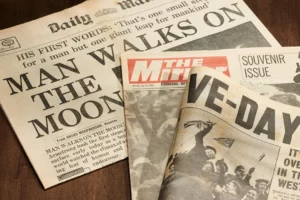
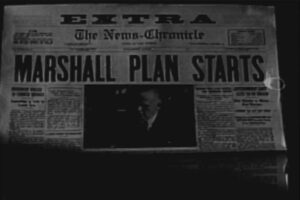
Newspapers were the backbone of daily news. The United States Holocaust Memorial Museum provides a vivid example: “Newsboys in Redding, California, selling extra editions of The Searchlight newspaper. The headline reports the Japanese attack on Pearl Harbor on December 7, 1941.” This scene was repeated across the country as newspapers rushed out “extra” editions to announce breaking news. The front page was designed to grab attention with bold headlines, photographs, and cartoons. Reporters were often well-known and trusted figures, and their stories were presented as objective facts. During World War II, newspapers published maps, casualty lists, and government communiqués, keeping families informed about the progress of the war. The tone was patriotic and supportive of the war effort, with censorship limiting some details.
“Factual news stories written by well-known, trusted reporters” — United States Holocaust Memorial Museum
Newspapers also served specific communities. Black newspapers, such as the Chicago Defender, covered issues of racial injustice and the war from a Black perspective, filling gaps left by mainstream papers. Similarly, ethnic and religious newspapers provided news relevant to their readers.
Daily Life
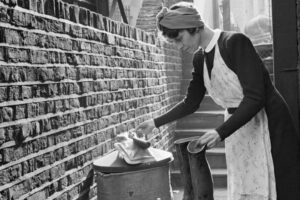
News was woven into the fabric of daily routines. In the morning, the head of the household might read the newspaper over coffee, sharing headlines with the family. The evening brought the family together around the radio for the nightly news broadcast, often after dinner. Radio programs like “The News” or “H.V. Kaltenborn’s Commentary” became appointment listening. On weekends, families might go to the movies, where the newsreel played before the feature film, offering a visual summary of the week’s events. The home itself was busier and more hands-on, as described by History Trek: “Meals took longer to plan, laundry was heavier work, and keeping food fresh was less automatic.” This meant that news consumption was often a deliberate act, not a background hum. The radio was a piece of furniture, often a large console in the living room, and listening was a shared activity. Newspapers were passed from hand to hand, and articles were discussed at the dinner table.
Timeline
- 1920s: Radio broadcasting begins; by the end of the decade, millions of American homes have radios.
- 1933: President Franklin D. Roosevelt delivers the first “fireside chat,” using radio to speak directly to the American people.
- 1937: The Hindenburg disaster is captured on radio and newsreel, demonstrating the power of live media.
- December 7, 1941: Japanese attack on Pearl Harbor; newspapers issue extra editions, and radio broadcasts interrupt regular programming.
- 1945: World War II ends; news coverage of victory celebrations dominates newspapers and newsreels.
- 1950: The U.S. Census shows that television is present in only a small percentage of homes; newspapers and radio remain primary news sources.
- 1950s: Television ownership skyrockets, and TV news programs begin to compete with radio and newspapers.
Common Misconceptions
How Historians See It Today
Modern historians recognize the pre-television era as a time of rich media diversity. The United States Holocaust Memorial Museum’s educational materials emphasize the importance of understanding how Americans received news during World War II, noting that radio and newspapers were not just sources of information but also tools of propaganda and morale. Historians also study the role of community-specific newspapers in shaping minority perspectives. The shift to television in the 1950s is seen as a transformative moment, but scholars caution against viewing the earlier era as primitive. Instead, they highlight the sophistication of radio journalism and the visual power of newsreels. The town crier, as noted by historian Christopher Gordon, represents the deep historical roots of news dissemination, reminding us that the need for news is timeless.
The primary sources from the 1930s and 1940s—newspapers, radio transcripts, newsreels, and personal accounts—reveal a society that was deeply engaged with current events. Families did not passively receive news; they actively discussed, debated, and shared it. The rituals of reading the morning paper, gathering around the evening radio, and watching the newsreel at the movies created a shared national experience that helped Americans navigate the challenges of the Great Depression and World War II. These media not only informed but also connected, fostering a sense of community and common purpose that remains a powerful lesson for our own fragmented media landscape.
FAQ
How did families get news before television?
Families relied on daily newspapers, radio broadcasts, and movie theater newsreels. Newspapers were delivered to homes or sold at newsstands, radio provided live coverage of events, and newsreels offered visual summaries shown before feature films.
What was the role of radio in the 1930s and 1940s?
Radio was a primary news source, offering live, immediate coverage of major events such as the Pearl Harbor attack and President Roosevelt's fireside chats. Families gathered around the radio in the evening to listen to news programs and commentary.
Were newspapers still important before TV?
Yes, newspapers were the backbone of daily news, providing detailed analysis, local news, and community-specific coverage. They were trusted for their factual reporting and were often the first to report breaking news through 'extra' editions.






Leave a Reply