Short Answer
The 1920s opened with the hum of assembly lines and the promise of a new age. By 1925, Henry Ford’s factories were turning out a Model T every ten seconds, and automobiles—once a luxury—were becoming a fixture of the American street. Telephones rang in 13 percent of homes by 1921, and by the end of the decade 23.1 million passenger cars crowded the nation’s roads. For many Americans, the decade felt like a liberation from the past: cities swelled, consumer goods multiplied, and a new sense of freedom—expressed in jazz, flapper dresses, and weekend road trips—swept through daily life. Yet beneath the surface, the same forces of change stirred deep anxieties about immigration, morality, and the meaning of progress. This article reconstructs what it was like to wake up, work, play, and dream in the 1920s, using the numbers, reports, and cultural artifacts of the time.
What Happened?
The 1920s were a period of dramatic economic and social change in the United States. The nation’s total wealth more than doubled between 1920 and 1929, and the gross national product expanded by 40 percent from 1922 to 1929. For the first time, more Americans lived in cities than on farms, and a new consumer culture took hold as people across the country saw the same advertisements, bought the same goods, and listened to the same music.
Technological advances reshaped daily life. The automobile, already invented, became truly accessible during this decade. In 1919 there were 6.9 million passenger cars; by 1929 there were 23 million. Henry Ford’s assembly-line innovations made cars affordable, with some models selling for as little as $50. Telephones spread rapidly, and American Telephone and Telegraph (AT&T) became the nation’s largest corporation by 1925. Airplanes, though still in their infancy, began to capture the public imagination.
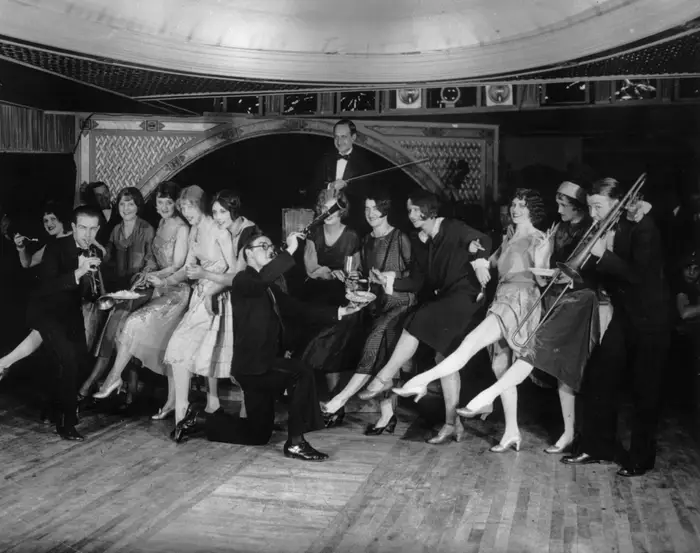
Socially, the decade was marked by the rise of the “New Woman”—the flapper—who challenged Victorian norms with short hair, shorter skirts, and a bold public presence. Jazz music exploded in popularity, giving the era its nickname, the Jazz Age. Prohibition, enacted by the 18th Amendment in 1920, banned the sale of alcohol, but it did not stop drinking; instead, it fueled bootlegging, speakeasies, and a culture of defiance.
Yet the decade was also a time of bitter cultural conflict. Immigration, evolution, the Ku Klux Klan, and racial tensions divided communities. The Scopes Trial in 1925 highlighted the clash between modern science and traditional religion. The decade ended with the stock market crash of 1929, which brought the Roaring Twenties to an abrupt halt.
How It Was Seen at the Time
Contemporaries experienced the 1920s as a time of both liberation and unease. Many Americans embraced the “revolution in morals and manners,” seeing it as a break from the restrictive Victorian past. The new consumer culture promised freedom through ownership—of cars, radios, and household appliances. A contemporary observer might have described the era as one of “jazz bands, raccoon coats, bathtub gin, flappers, flagpole sitters, bootleggers, and marathon dancers,” as one later summary put it.
“For many Americans, the growth of cities, the rise of a consumer culture, and the so-called ‘revolution in morals and manners’ represented a liberation from the restrictions of the country’s Victorian past.”
But for others, the United States seemed to be changing in undesirable ways. The same decade that produced flappers also saw a resurgence of the Ku Klux Klan and fierce debates over immigration and evolution. The result, as one historian later noted, was a “thinly veiled cultural civil war.” People at the time were acutely aware of these tensions, even as they enjoyed the new freedoms.
Historical Snapshot
| Aspect | Detail |
|---|---|
| Date | 1920–1929 |
| Place | United States, especially urban centers |
| People | Americans of all classes; immigrants; the “New Woman”; African American musicians and writers |
| What Happened | Rapid industrialization, consumer boom, social change, Prohibition, and cultural conflict |
| Why It Mattered | Laid the groundwork for modern American consumer society and set the stage for the Great Depression |
Daily Life
Daily life in the 1920s was transformed by technology and leisure. The automobile gave families unprecedented mobility. Camping became a popular vacation activity, and cars could pull recreational vehicles for “more luxurious outdoor living.” Those with means could fly to sunny destinations like Florida for the winter, while others installed swimming pools in their backyards. Even families of modest income could enjoy time away from work, as the concept of the vacation spread.
At home, telephones connected people in ways that had been impossible a generation earlier. By 1921, 13 percent of American homes had a telephone, and by 1925 AT&T had become the largest corporation in the country. Radios, though not mentioned in the provided sources, were also becoming common, but we focus on what the sources tell us. The automobile, in particular, changed not only travel but also dating, shopping, and commuting. The assembly line, which produced a Model T every ten seconds by 1925, made cars affordable for many.
Work itself was changing. Factory jobs multiplied, and the consumer economy created new occupations in advertising, sales, and services. Women entered the workforce in greater numbers, and the flapper image—though not universal—symbolized a new independence. Yet not everyone shared in the prosperity. Farmers struggled with falling prices, and many rural Americans lacked the modern conveniences that city dwellers took for granted.
Numbers at the Time
| Statistic | Figure | Year/Source |
|---|---|---|
| Passenger cars in the U.S. | 23.1 million | 1929 (Encyclopedia.com) |
| Passenger cars in 1919 | 6.9 million | 1919 (Encyclopedia.com) |
| Homes with telephones | 13% | 1921 (Encyclopedia.com) |
| Increase in national wealth | More than doubled | 1920–1929 (History.com) |
| GNP growth | 40% | 1922–1929 (History.com) |
| Price of some cars | As low as $50 | 1920s (Encyclopedia.com) |
Contemporary Terminology
The 1920s introduced a rich vocabulary that reflected the era’s social and cultural shifts. Flapper referred to a young woman who defied conventional dress and behavior, often wearing short skirts and bobbed hair. Bathtub gin was homemade alcohol, often made in bathtubs during Prohibition. Raccoon coats were fashionable fur coats worn by college students, symbolizing youthful rebellion. The Jazz Age described the era’s music and the free-spirited culture that accompanied it. Speakeasies were illegal bars that flourished despite Prohibition. Bootleggers smuggled and sold alcohol. These terms captured the excitement and defiance of the decade, though many were used with a mix of admiration and disapproval.
Common Misconceptions
How Historians See It Today
Contemporary observers often saw the 1920s as a simple story of progress or decline, depending on their values. Modern historians, however, emphasize the decade’s contradictions. They point out that the consumer culture and technological advances were real, but they also highlight the deep divisions over immigration, race, and religion. The “cultural civil war” that contemporaries sensed has become a central theme in historical analysis. Historians also note that the prosperity of the 1920s was fragile, built on speculation and uneven distribution of wealth, which contributed to the crash of 1929. The decade is now understood not as a carefree interlude but as a period of profound transformation and conflict that shaped the rest of the century.
The primary sources of the 1920s—newspapers, diaries, photographs, and statistics—reveal a generation caught between excitement and anxiety. They embraced the automobile, the telephone, and the new freedoms, but they also worried about the erosion of traditional values. The everyday life of the 1920s was not a single story but a mosaic of experiences, from the urban flapper to the rural farmer, from the factory worker to the bootlegger. What remains clear is that the decade’s changes—technological, social, and economic—set the stage for the modern world, and its tensions still resonate today.
FAQ
What was the most significant technological change in everyday life during the 1920s?
The automobile was arguably the most transformative. Car ownership skyrocketed from 6.9 million in 1919 to 23.1 million by 1929, making personal travel accessible to many middle-class families. This changed commuting, shopping, dating, and vacation habits, and also spurred the growth of suburbs and roadside businesses.
Did Prohibition actually stop people from drinking alcohol?
No. Prohibition, which began in 1920, led to a thriving black market. Bootleggers smuggled alcohol, and speakeasies operated openly in many cities. Homemade 'bathtub gin' was common. The law was widely flouted and eventually repealed in 1933.






Leave a Reply