
Short Answer
Quick Snapshot
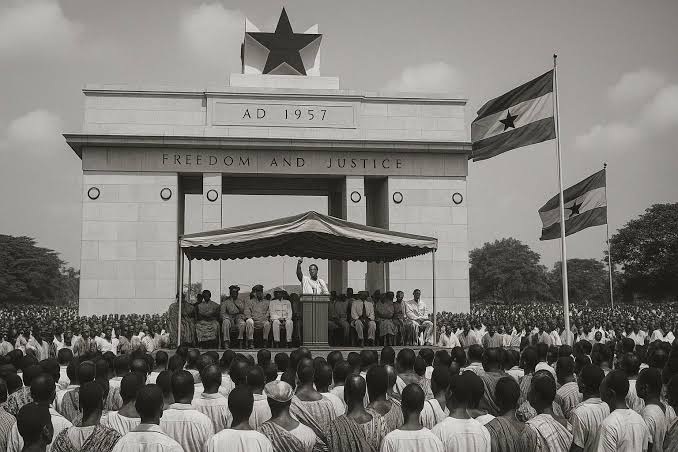
In 1957, Accra, the capital of the Gold Coast, stood on the threshold of history. On March 6, the British Union Jack was lowered and the flag of a new nation—Ghana—was raised, marking the end of colonial rule and the birth of the first sub-Saharan African country to achieve independence from a European power. The city erupted in celebration, with tens of thousands of people gathering to witness the historic moment and to cheer their leader, Kwame Nkrumah.
Accra was not just a political capital; it was a bustling commercial hub, a melting pot of cultures, and a city on the move. The independence celebrations drew delegates from 72 nations, including U.S. Vice President Richard Nixon, and placed Accra at the center of a global movement toward decolonization. This article explores the city in that pivotal year—its people, its economy, its daily rhythms, and the profound changes that independence brought.
Accra in 1957
Accra lies on the Gulf of Guinea, along the southern coast of Ghana. Its tropical climate, with warm temperatures and two rainy seasons, shaped daily life. The city was a patchwork of neighborhoods: the old Ga settlements like Jamestown and Usshertown, the colonial administrative area with its government buildings, and newer suburbs that had grown rapidly after World War II. Palm-lined streets, open markets, and the constant hum of trade gave Accra a vibrant, energetic atmosphere.
In 1957, Accra was undergoing a transformation. The colonial grid of the city center was expanding, with new roads, buildings, and infrastructure projects. The construction of Tema Harbour, a few miles east, promised to modernize the port facilities, while the University College of the Gold Coast at Legon was training a new generation of leaders. The city’s population was swelling as rural migrants arrived seeking work and opportunity, drawn by the promise of independence and economic progress.
Population & Economy
Accra’s population in 1957 was estimated at around 200,000, a diverse mix of the indigenous Ga people, other ethnic groups from across the Gold Coast, and a small but influential European and Lebanese merchant community. The city was the commercial heart of the country, with its port handling exports of cocoa, timber, and gold. The economy was heavily dependent on cocoa, which accounted for the majority of export earnings, and Accra was the headquarters for many trading firms and banks.
Employment was concentrated in government administration, commerce, and the service sector. Many residents worked as clerks, traders, dockworkers, and artisans. The cost of living was relatively low compared to Britain, but wages were also modest. A laborer might earn a few shillings a day, while a skilled clerk could earn a pound or more. The colonial government had invested in infrastructure, but poverty and inequality remained widespread, and the gap between the small elite and the masses was a source of social tension.
Government & Politics
The political landscape of Accra in 1957 was dominated by the transition from colonial rule to independence. The Gold Coast had been a British colony, but a series of constitutional reforms had led to self-government under Kwame Nkrumah’s Convention People’s Party (CPP). On March 6, 1957, the Ghana Independence Act came into effect, formally ending British sovereignty. The last British Governor, Sir Charles Arden-Clarke, handed over power, and Nkrumah became the first Prime Minister of independent Ghana.
The celebrations in Accra were both official and popular. According to a UPI report, Nkrumah missed the flag-raising ceremony to attend the dissolution of the last British Gold Coast colonial parliament, and the first parliament of independent Ghana took its place. The new nation remained a member of the Commonwealth, and Nkrumah quickly became a symbol of African liberation. The political climate was optimistic, but also marked by challenges: Nkrumah faced opposition from regional and ethnic groups, and the question of how to build a unified nation was pressing.
Industry
Accra’s economy was driven by trade and light manufacturing. The city’s port, though limited, handled imports and exports, and there were processing facilities for cocoa and other agricultural products. The government was planning the construction of Tema Harbour, which would become a major industrial and shipping center. In Accra itself, small factories produced textiles, foodstuffs, and consumer goods. The construction industry boomed as new government buildings, schools, and housing projects were undertaken. The city also had a thriving informal sector, with markets like Makola Market serving as hubs of commerce.
Education
Education was a priority for the new nation. Accra was home to several prestigious schools, including Achimota School, founded in 1924, which had educated many of the country’s future leaders. The University College of the Gold Coast, established in 1948 at Legon, just outside Accra, was the first higher education institution in the country. In 1957, it was still affiliated with the University of London, and its students were among the most politically active. Literacy rates were low—perhaps around 20%—but the government had launched campaigns to expand primary education. The independence movement had been fueled by educated elites, and Nkrumah promised to make education accessible to all.
Transportation
Accra was connected to the rest of the country by a network of roads and railways. The Accra-Kumasi railway line, built in the 1920s, carried passengers and freight, and a new road system was being improved. The city’s airport, later named Kotoka International Airport, had been expanded during World War II and now offered flights to other African cities and to Europe. Within the city, people walked, cycled, or used buses and taxis. The port at Accra was shallow, so larger ships anchored offshore and unloaded via lighters. The planned Tema Harbour was intended to solve this problem and would become operational in 1962.
Everyday Life
Daily life in Accra in 1957 was a blend of tradition and modernity. Most people lived in compounds or single-story houses, often without electricity or running water. The Ga people, the original inhabitants, had a rich cultural heritage, with festivals, drumming, and dancing. Food was based on local staples like cassava, plantain, and maize, often served with fish or meat in soups and stews. Clothing ranged from Western-style suits for the elite to colorful traditional cloths like kente for special occasions.
Entertainment included football matches, dance bands, and the cinema. The city had several cinemas showing Hollywood films and Indian movies. Radio was a popular medium, and the Ghana Broadcasting Corporation provided news and music. Independence brought a sense of euphoria, and many people felt that a new era of opportunity was dawning. The streets were filled with celebration in March, with brass bands, highlife music, and spontaneous dancing.
Major Events
The defining event of 1957 was Ghana’s independence on March 6. The celebrations in Accra were described by UPI: “Africa gave birth today to its first native Negro nation, Ghana, a former British colony that won freedom through brotherhood, not by guns.” The flag-raising ceremony at midnight was witnessed by tens of thousands, and Nkrumah was carried through the streets on the shoulders of jubilant supporters. Delegates from 72 nations attended, including U.S. Vice President Richard Nixon. The event marked a turning point in African history and inspired independence movements across the continent.
Other events that year included the opening of the first parliament of independent Ghana, the appointment of Nkrumah as Prime Minister, and the country’s admission to the United Nations in August. The year also saw the beginning of major development projects, including the Volta River Project, which would later lead to the construction of the Akosombo Dam.
What Newspapers Were Reporting
Newspapers in Accra, such as the Daily Graphic and the Ghanaian Times, were dominated by independence coverage. The UPI report from March 6 captured the mood: “The 4.7 million people of the new state danced, sang, prayed and shouted in celebration while their premier wept with joy in a ceremony that mingled brass bands and jungle drums.” The Daily Graphic ran headlines like “Ghana is Free” and “Nkrumah Leads the Nation to Independence.” International media also covered the event, with the BBC reporting on the day’s festivities. Editorials praised the peaceful transition and looked forward to a prosperous future.
What People Were Talking About
In Accra’s streets, markets, and homes, the talk was of independence and its meaning. People discussed Nkrumah’s vision of a united Africa and the challenges ahead. Many expressed hope for better jobs, education, and healthcare. Some worried about the future, fearing that political divisions could undermine the new nation. There was also excitement about the international attention: the presence of Nixon and other dignitaries made Accra feel like the center of the world. The phrase “Freedom!” was on everyone’s lips, and the black star of the new flag became a symbol of pride.
Historical Photographs
Photographs from the independence celebrations are among the most iconic images of 20th-century Africa. They show the flag-raising at midnight, the crowds gathered at the Old Polo Ground, and Nkrumah being carried aloft by supporters. Black-and-white photos capture the joy and dignity of the occasion: women in bright cloth, men in suits, children waving flags. The official photographs, taken by government photographers and press agencies, document the arrival of foreign delegates, the ceremony in Parliament, and the street parties. These images are preserved in archives such as the Ghana National Archives and the British Pathé film collection, which also captured moving footage of the events.
Documents & Primary Sources
Historians studying Accra in 1957 rely on a variety of primary sources. The Ghana Independence Act 1957 (available at legislation.gov.uk) is the legal document that granted independence. The UPI news report from March 6, 1957, provides a vivid eyewitness account. The BBC’s “On This Day” page offers a retrospective but includes contemporary details. Other sources include colonial government reports, census data, and the personal papers of Kwame Nkrumah. Photographs and film footage are held in archives such as the Ghana National Archives and the Imperial War Museum. Oral histories from residents who lived through the independence era are also invaluable.
1957 Timeline
- January-February: Preparations for independence ceremonies intensify; new national flag designed.
- March 6: Ghana becomes independent; flag-raising at midnight; Nkrumah becomes Prime Minister.
- March 7: First parliament of independent Ghana convenes.
- March 8: Celebrations continue with parades and cultural performances.
- August: Ghana joins the United Nations.
- October: Government announces plans for the Volta River Project.
- December: Nkrumah tours the country to promote national unity.
What Changed Next
The years following 1957 saw Ghana consolidate its independence. In 1960, the country became a republic, with Nkrumah as its first President. The Volta River Project led to the construction of the Akosombo Dam, which provided hydroelectric power and created Lake Volta. However, economic difficulties and political repression grew, and Nkrumah was overthrown in a military coup in 1966. Despite these challenges, Ghana’s independence in 1957 had a profound impact on Africa, inspiring dozens of other countries to pursue self-rule. Accra’s role as the birthplace of African liberation remains a source of national pride.
FAQ
What was the population of Accra in 1957?
The population of Accra in 1957 was estimated at around 200,000, though it was growing rapidly due to migration from rural areas.
What major events happened in Accra in 1957?
The most significant event was Ghana's independence from British colonial rule on March 6, 1957, celebrated with a flag-raising ceremony and international delegations. Ghana also joined the United Nations later that year.
What primary sources are available for studying Accra in 1957?
Primary sources include the Ghana Independence Act 1957, contemporary newspaper reports (e.g., UPI, Daily Graphic), photographs and film footage of the celebrations, colonial government records, and oral histories.
How did daily life in Accra in 1957 differ from today?
Daily life was less technologically advanced, with limited electricity and running water for many residents. The economy was heavily reliant on cocoa and colonial-era infrastructure. Independence brought hope and rapid social change, but also challenges of nation-building.



Leave a Reply