
Short Answer
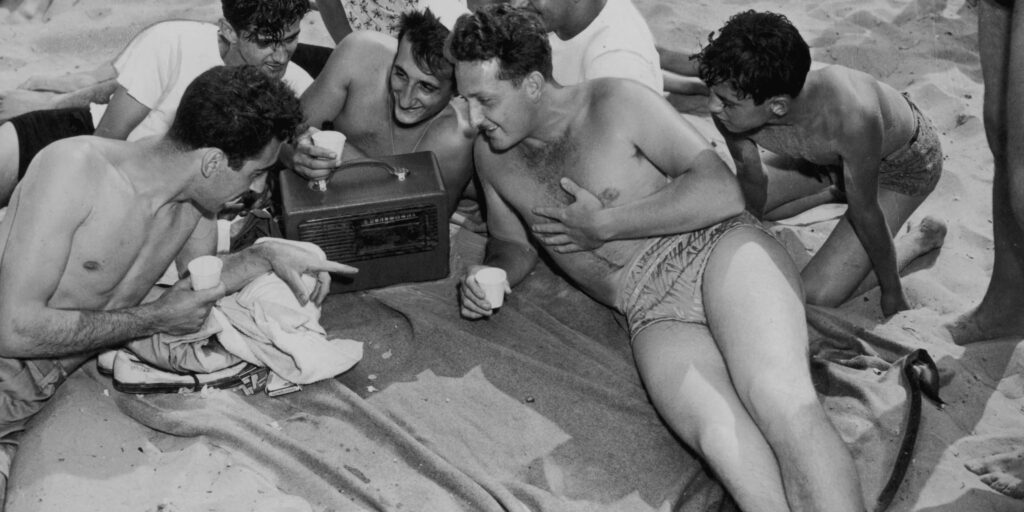
In the spring of 1930, a family in Ohio gathered around their Atwater Kent radio, not for music but for the evening’s news. The voice of a commentator crackled from the speaker, bringing the world’s headlines into their living room. This was a marvel, but it was also a flashpoint. For centuries, newspapers had held a near-total monopoly on news. Now, a new medium—radio—was challenging that grip. The 1930s became a decade of conflict and transformation, as the press and radio fought for the American audience. Newspapers saw their circulation fall, radio networks expanded their news bureaus, and ordinary citizens found themselves at the center of a revolution in how they understood the world.
What Happened?
The rise of radio news in the 1930s was neither sudden nor easy. In the early years of the decade, radio was primarily a source of entertainment—music, comedy, and drama. News broadcasting was limited, often consisting of brief bulletins read from newspaper headlines. But the demand for up-to-the-minute information grew, especially with major events like the Great Depression and the rise of European dictatorships. According to the Digital Public Library of America, “By the 1930s, radio news—and broadcast programs, more generally—were such a hit that established newspapers were seeing dramatic decreases in circulation.”
Networks responded by building their own news operations. In 1933, CBS began placing correspondents in every American city with a population of 20,000 or more, as well as in many foreign capitals. This was a significant investment, signaling that radio intended to become a serious journalistic force. Yet the path was not smooth. The wire services—the Associated Press, United Press, and International News Service—initially refused to sell their news to radio stations, fearing that broadcasting would undercut their newspaper clients. This led to a period of conflict known as the “press-radio war.”
The conflict escalated until a temporary truce was reached in 1933 with the Biltmore Agreement, which limited radio to brief news bulletins and required that news be presented as a “service” rather than a “newscast.” However, the agreement was short-lived and widely ignored. By the mid-1930s, broadcast journalism had developed its own methods, and radio networks were building their own reporting staffs. As the Journal of Broadcasting noted, “Broadcast journalism is far from celebrating its 50th anniversary as a major source of news, since it did not develop until the mid‐1930s.” The war was effectively over by the end of the decade, and radio news had become a permanent feature of American life.
How It Was Seen at the Time
Contemporaries understood the press-radio war as a battle for survival. Newspaper publishers saw radio as a parasitic threat—one that used the news gathered by print reporters without paying for it. The early relationships were “not friendly,” as the Journal of Broadcasting observed. Radio journalists, for their part, felt that they were providing a public service, bringing news to a wider audience. The term “press-radio war” itself was used in the 1930s, capturing the aggressive, competitive spirit of the era.
“The early relationships between the older print media and the newer medium of radio were not friendly, and the fledgling broadcast journalists needed a considerable diplomatic skill in dealing with the wire services and their own employers, as well as pastepot and scissors to deal with the day’s events.” — Journal of Broadcasting (source: 3)
The prevailing mood was one of anxiety and uncertainty. Newspapers feared that radio would destroy their business model, while radio broadcasters worried that the wire services would cut them off entirely. The public, meanwhile, was delighted by the convenience of listening to news at home, often hearing the president’s voice or the latest election results within hours.
Historical Snapshot
| Aspect | Detail |
|---|---|
| Date | 1930s (particularly 1930–1938) |
| Place | United States (urban and rural areas) |
| People | Newspaper publishers, radio broadcasters, wire service operators, journalists, and the American public |
| What Happened | Radio news emerged as a major source of information, leading to a conflict with newspapers over access to news content. |
| Why It Mattered | The press-radio war ended with radio as a permanent news source, changing how Americans received their news and setting the stage for broadcast journalism’s role in World War II. |
What People Knew at the Time
| What People Knew Then | What We Know Now |
|---|---|
| Radio was a novelty that threatened the newspaper industry. Newspapers claimed radio was stealing their news without paying for it. | The press-radio war was a classic example of old media resisting new media, but it ultimately led to the modern broadcast journalism model. |
| Radio news was often limited to short bulletins and was considered inferior to print journalism. | Radio news developed its own style of reporting, with live correspondents and commentary, which would become essential during World War II. |
| Wire services refused to sell news to radio, and the Biltmore Agreement sought to limit radio news to brief summaries. | The Biltmore Agreement was short-lived and ineffective; radio networks built their own news-gathering operations, leading to the decline of the agreement. |
Different Perspectives
Newspaper Publishers
Newspaper publishers saw radio as a direct threat to their economic viability. They argued that radio stations were using news gathered by newspapers without any cost, thereby undercutting the newspapers’ ability to sell advertising. The press-radio war was a desperate attempt to protect their monopoly on news.
Radio Broadcasters
Radio broadcasters saw themselves as providing a public service. They believed that news was too important to be restricted to the printed page and that radio could bring news to a wider audience, including those who could not afford a newspaper or who could not read. They also saw the potential for radio to become a source of revenue through advertising.
Wire Services
The wire services, such as the Associated Press, were caught in the middle. They had long-standing contracts with newspapers and feared that selling news to radio would alienate their primary clients. However, they also recognized the growing power of radio and eventually began to sell news to radio networks, albeit with restrictions.
What People Feared
The most immediate fear was that radio would destroy the newspaper industry. Newspapers had held a monopoly on news for centuries, and the sudden rise of radio news seemed to threaten their very existence. Publishers feared that if radio could provide news for free, no one would buy a newspaper. This fear was not entirely unfounded; the DPLA notes that newspapers were indeed seeing dramatic decreases in circulation.
Radio broadcasters, meanwhile, feared that the wire services would cut them off entirely, leaving them with no access to national and international news. They also feared that the press-radio war would lead to restrictive legislation that would limit radio’s ability to broadcast news. The public feared that the conflict might lead to censorship or to a loss of free access to news, but for the most part, the public simply enjoyed the convenience of radio news.
How Historians See It Today
Modern historians view the press-radio war of the 1930s as a pivotal case study in the struggle between old and new media. Gwenyth Jackaway’s study, “America’s Press-Radio War of the 1930s,” frames the conflict as an example of how established industries attempt to suppress new technologies that threaten their dominance. Historians note that the war was not simply about news but about control of the public sphere. The resolution of the war—with radio becoming a permanent news source—marked a significant shift in American journalism.
Today, historians also recognize that the press-radio war was not a single event but a series of negotiations and conflicts that took place over several years. The eventual emergence of radio news as a major source of information was not inevitable; it required the persistence of broadcasters and the public’s appetite for immediate news. The war set the stage for the rise of television news and the modern media landscape.
The 1930s press-radio war was more than a battle between two industries; it was a moment when the American public’s relationship with news fundamentally changed. Radio brought the world into the living room, making news an immediate and personal experience. The primary sources of the era—newspaper editorials, radio broadcasts, and the memories of listeners—reveal a time of both anxiety and excitement. The war ultimately gave birth to a new form of journalism that would prove essential in the years of World War II and beyond. The story of the rise of radio news is a reminder that media transformations are never easy, but they can ultimately enrich the way we understand our world.
FAQ
What was the press-radio war?
The press-radio war was a conflict in the 1930s between newspapers and radio broadcasters over the right to broadcast news. Newspapers feared that radio would destroy their business, while radio broadcasters wanted to provide news to a wider audience. The conflict involved wire services refusing to sell news to radio, and it led to the Biltmore Agreement in 1933, which temporarily limited radio news.
Why did radio news become popular in the 1930s?
Radio news became popular because it was immediate and accessible. Unlike newspapers, which were only printed once a day, radio could broadcast news as it happened. Also, the radio was a common household item, and listening to the news was a shared experience. The 1930s were a time of great events, such as the Great Depression and the rise of totalitarianism, which made people hungry for news.
What was the Biltmore Agreement?
The Biltmore Agreement was a 1933 agreement between the press and radio industries that limited radio news broadcasts to two five-minute periods per day, and required that news broadcasts be based on wire service reports. It was intended to protect newspapers, but it was short-lived and widely ignored.







Leave a Reply