Short Answer
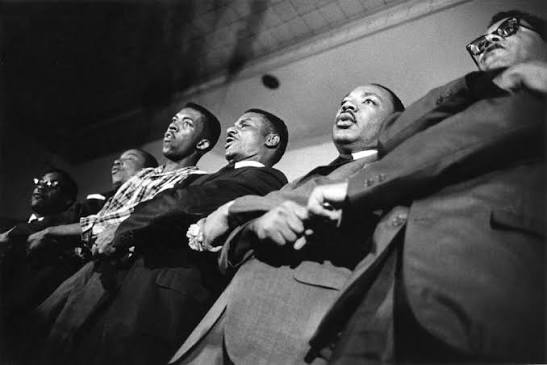
In the summer of 1962, as the civil rights movement swept across the American South, a new kind of weapon emerged from the pews and the jails: the freedom song. In Albany, Georgia, in Birmingham, Alabama, and in countless meeting halls and protest lines, African Americans raised their voices in songs rooted in spirituals, gospel, and folk traditions. These were not mere anthems of comfort; they were tools of resistance. As Martin Luther King Jr. told a reporter during the Albany Movement, “The freedom songs are playing a strong and vital role in our struggle. They give the people new courage and a sense of unity.” This article reconstructs that sound of change through primary sources—newspaper reports, eyewitness accounts, and the words of the activists themselves—to show how music became the heartbeat of the civil rights movement.
What Happened?
The civil rights movement of the 1950s and 1960s was a time of intense activism, and music was woven into every aspect of it. African American spirituals, gospel, and folk music had long carried the hopes and sorrows of the Black community. During the movement, these musical forms were adapted and transformed into what became known as “freedom songs.” The Library of Congress notes that singers and musicians collaborated with ethnomusicologists and song collectors to spread these songs to activists, both at large meetings and through publications (Library of Congress, Civil Rights History Project).
The most famous freedom song, “We Shall Overcome,” had its roots in the Highlander Folk School in Tennessee during the labor struggles of the 1940s and 1950s. The song was later adopted by civil rights activists and became an anthem of the movement. According to the Martin Luther King Jr. Research and Education Institute, King himself explained in his 1964 book Why We Can’t Wait that activists “sing the freedom songs today for the same reason the slaves sang them, because we too are in bondage and the songs add hope to our determination that ‘We shall overcome, Black and white together, We shall overcome someday’” (King Institute).
The music was not confined to rallies; it filled the jails and the streets. In the early 1960s, the Albany Movement in Georgia saw daily mass meetings where freedom songs were sung with fervor. The New York Times reported on August 20, 1962, under the headline “Songs a Weapon in Rights Battle,” that these songs were a “new force in bolstering morale” (NYT, 1962). The article described how songs buoyed spirits across the South, giving activists a sense of unity and courage.
By the March on Washington in 1963, music had become a central feature of the movement’s public face. Performances of “We Shall Overcome” and other songs were delivered to a crowd of hundreds of thousands, cementing the role of music as both a rallying cry and a form of collective prayer.
How It Was Seen at the Time
Contemporaries understood music as more than a cultural expression; they saw it as a strategic weapon. The New York Times headline “Songs a Weapon in Rights Battle” captured this sentiment. The article declared that folk music was “a new force in bolstering morale” and that leaders believed these songs were essential to the struggle (NYT, 1962).
“The freedom songs are playing a strong and vital role in our struggle. They give the people new courage and a sense of unity. I think they keep alive a faith, a radiant hope, in the future, particularly in our most trying hours.” — Martin Luther King Jr., quoted in the New York Times, August 20, 1962
King also called music “the soul of the movement.” In his book Why We Can’t Wait (1964), he wrote that the songs gave hope and determination. The mood was one of defiant optimism; the songs were not only a comfort but a declaration that the struggle would continue.
Historical Snapshot
| Aspect | Detail |
|---|---|
| Date | 1950s–1960s, with peak activity in the early 1960s |
| Place | American South, especially Albany, Birmingham, Montgomery, and Washington, D.C. |
| People | Civil rights activists, including Martin Luther King Jr., musicians, and everyday participants |
| What Happened | Freedom songs, adapted from spirituals and gospel, were sung at meetings, marches, and jails to inspire courage and unity. |
| Why It Mattered | The music gave activists a sense of shared purpose and hope, helping to sustain the movement through difficult and dangerous times. |
Contemporary Newspaper Coverage
The mainstream press recognized the power of music early on. The New York Times article of August 20, 1962, titled “Songs of Weapon in Rights Battle; Vital New Ballads Buoy Negro Spirits Across the South,” is a primary example. The article reported that folk music had become “a new force in bolstering morale” and quoted leaders who declared that the songs were essential to the struggle. The tone was respectful and somewhat fascinated, as the paper described the phenomenon to its largely white readership.
“Songs have become a weapon in the civil rights fight. They are sung at meetings, in jails, and on the streets. They are a source of courage and unity.” — From the New York Times, August 20, 1962
The article also noted the collaboration between musicians and activists, and the role of the Highlander Folk School in spreading these songs. This coverage helped to bring the music to a national audience and to legitimize its importance.
Eyewitness Accounts
Eyewitnesses, including civil rights leaders and participants, left powerful testimonies about the role of music. Martin Luther King Jr. spoke repeatedly about the songs. In his address to the Albany Movement, he said: “The freedom songs are playing a strong and vital role in our struggle. They give the people new courage and a sense of unity. I think they keep alive a faith, a radiant hope, in the future, particularly in our most trying hours” (quoted in the New York Times, 1962).
“We sing the freedom songs today for the same reason the slaves sang them, because we too are in bondage and the songs add hope to our determination that ‘We shall overcome, Black and white together, We shall overcome someday.’” — Martin Luther King Jr., Why We Can’t Wait, 1964
Other participants, such as those interviewed by the Library of Congress in its Civil Rights History Project, recalled how singing in jail cells gave them strength and a sense of solidarity. One participant described how a song could turn fear into courage.
What People Knew at the Time
| What People Knew Then | What We Know Now |
|---|---|
| Contemporaries understood that freedom songs were powerful morale boosters and a unifying force. | Modern historians emphasize that music was not only a morale booster but also a strategic tool for movement building and communication, with deep roots in African American cultural history. |
| Many believed the songs were spontaneous expressions of the movement. | We now know that songs were carefully collected, adapted, and disseminated by activists and ethnomusicologists, sometimes with deliberate political purpose. |
| The press often described the songs as “folk music” or “spirituals.” | Scholars now categorize them as “freedom songs” with a distinct genre blending gospel, folk, and protest. |
Timeline
- 1940s–1950s: The Highlander Folk School in Tennessee begins using “We Shall Overcome” in labor and civil rights training.
- 1960: The sit-in movement in Greensboro, North Carolina, uses freedom songs to sustain morale among students.
- 1961: Freedom Riders sing freedom songs on buses and in jail cells.
- 1962: The Albany Movement in Georgia features mass meetings with singing; the New York Times reports on the “songs as a weapon.”
- 1963: The March on Washington includes performances of “We Shall Overcome” and other freedom songs.
- 1964: The Civil Rights Act is passed; King’s book Why We Can’t Wait discusses the importance of music.
- 1965: The Selma to Montgomery marches are accompanied by freedom songs.
Key Documents
- “We Shall Overcome” (song) — A gospel-derived freedom song that became the anthem of the movement; its use at the Highlander Folk School and later at marches is documented in primary sources.
- Martin Luther King Jr.’s “Why We Can’t Wait” (1964) — A book in which King explains the role of music in the movement.
- The Library of Congress Civil Rights History Project — A collection of oral histories and articles that document the music and its significance.
- The New York Times article “Songs of Weapon in Rights Battle” (August 20, 1962) — A contemporary newspaper report that captures the era’s view of music.
How Historians See It Today
Modern historians view the music of the civil rights movement as a central, not peripheral, element. While contemporaries recognized the emotional power, scholars now argue that the songs were also a means of political communication, a way to transmit strategies and values across communities, and a tool for building collective identity. The Library of Congress’s Civil Rights History Project highlights how music was not just a soundtrack but a form of participation and resistance. Historians also emphasize the continuity with earlier African American traditions, as King himself noted, linking the freedom songs to the spirituals of slavery. This modern scholarship builds on primary sources to show that music was a deliberate and effective strategy, not merely an emotional release.
In conclusion, the primary sources of the civil rights movement—newspaper reports, eyewitness accounts, and the words of leaders like Martin Luther King Jr.—reveal that music was a dynamic and indispensable force. It gave the movement a voice, a heart, and a spirit that sustained activists through the darkest moments. The songs of the movement were not just a reflection of the struggle; they were a weapon in the fight for justice, a sound of change that still echoes today.


Leave a Reply