
Short Answer
In 1964, as American and Soviet rockets climbed toward the heavens, a science teacher in the newly independent Republic of Zambia named Nkoloso announced a rival programme: the Zambia Space Academy. He declared that he would send a young woman and two cats to the Moon, beating both superpowers. His plan, which involved a wooden rocket and a barrel, was ridiculed in Western press, but it spoke to a deeper truth—the space race was not a private duel between Washington and Moscow. Across the non-aligned world, leaders, journalists, and ordinary citizens watched the celestial contest with their own dreams, fears, and ambitions. They saw in the heavens not just Cold War rivalry, but a promise of development, a symbol of national pride, and a reminder of the vast gap between the industrial powers and the rest of humanity.
What Happened?
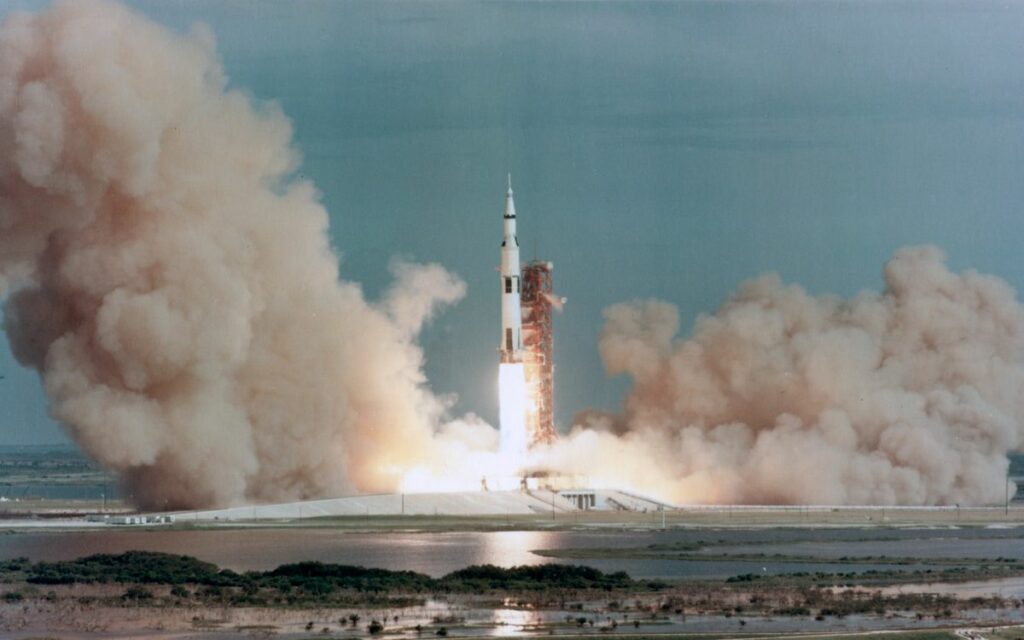
The space race proper began on 4 October 1957, when the Soviet Union launched Sputnik 1, the first artificial satellite. The United States followed with Explorer 1 in 1958. The rivalry escalated through the 1960s: Yuri Gagarin’s orbital flight in April 1961, John Glenn’s orbit in 1962, and the Apollo program aimed at the Moon. For the Global South, the race was a backdrop to decolonization and the rise of the Non-Aligned Movement, which sought a third path between the two blocs.
In India, the physicist Vikram Sarabhai, who had been building the Indian space programme since the early 1960s, articulated a vision of “leapfrogging”—using space technology to jump over the developmental stages that Western nations had taken. He argued that satellites could provide education, weather forecasting, and communications to a vast, poor nation. In 1962, India established the Indian National Committee for Space Research (INCOSPAR), and Sarabhai became its driving force.
In Zambia, Nkoloso’s space academy was one of several “alternative” space programmes in Africa. While it never launched anything, it captured the imagination of the press and served as a symbol of the ambition of newly independent states to participate in the great technological feats of the era.
Latin American nations, meanwhile, were not passive observers. As the historian Peter H. Smith documented in a 1964 study, the Latin American press covered the space race extensively, but often through a lens of skepticism and concern. Editorials questioned the enormous expenditures while poverty persisted at home. At the United Nations, Latin American countries played a key role in shaping the outer space regime, advocating for the principle that outer space should be the province of all mankind, not just the superpowers. Their efforts contributed to the 1967 Outer Space Treaty, which declared that space was free for all nations and not subject to national appropriation.
How It Was Seen at the Time
Contemporaries in the Global South saw the space race as both a spectacle and a challenge. In Latin America, the press often depicted the race as a competition between two imperial powers, but also as a demonstration of the technological gap between the developed and developing worlds. A 1964 editorial in a major Brazilian newspaper, quoted in Peter H. Smith’s study, argued that “the conquest of space is a luxury of the rich” and that the region had more pressing needs. In India, Sarabhai’s speeches were infused with a developmental promise. He famously said, “There are some who question the relevance of space activities in a developing nation. To us, there is no ambiguity of purpose. We do not have the fantasy of competing with the economically advanced nations in the exploration of the Moon or the planets or manned space-flight.” Instead, he insisted, India’s space programme was for the benefit of its people.
“We must be able to use space technology for the solution of the pressing problems of our people—education, health, and communications.” — Vikram Sarabhai, 1969 address, quoted in the British Journal for the History of Science, 2025.
In Zambia, Nkoloso’s vision was more literal. He declared that he would launch a rocket to the Moon, and that the first Zambian astronaut would be a young woman named Matha Mwambwa, who would “land on the Moon and plant the Zambian flag.” The press, both in Zambia and abroad, treated it as a bizarre stunt, but for Nkoloso it was a way to assert that even a poor African nation could reach for the stars.
Historical Snapshot
| Aspect | Detail |
|---|---|
| Date | 1957–1969 (and beyond) |
| Place | Global, with focus on India, Zambia, and Latin America |
| People | Vikram Sarabhai (India), Nkoloso Makuka (Zambia), Latin American journalists and diplomats |
| What Happened | Superpowers competed in space; non-aligned nations watched, launched their own programmes, and shaped the international legal framework. |
| Why It Mattered | The space race became a lens for debates about development, sovereignty, and the future of humanity. |
What People Knew at the Time
| What People Knew Then | What We Know Now |
|---|---|
| The space race was a contest between the US and USSR, with each side claiming technological superiority. | It was also a deeply political and ideological contest, but the participation of non-aligned nations was more significant than often recognized. |
| Many in the Global South saw space as a distant, expensive fantasy. | Space technology has become integral to development (satellites for communications, weather, navigation), fulfilling Sarabhai’s vision. |
| The Zambian space programme was dismissed as absurd. | It is now seen as an example of “alternative imaginaries” of space travel, reflecting the hopes of newly independent nations. |
| Latin American countries were mostly observers at the UN. | They were active contributors to the Outer Space Treaty, pushing for non-appropriation and openness. |
Contemporary Newspaper Coverage
Latin American newspapers gave extensive coverage to the space race, but with a distinct local angle. According to Peter H. Smith’s 1964 study in the Journal of Inter-American Studies, the press in countries like Argentina, Brazil, and Mexico often ran front-page stories on the American and Soviet launches, but also included editorials and cartoons that critiqued the superpowers’ priorities. A common theme was the “space gap”—the enormous cost of the race contrasted with the poverty in Latin America. One editorial in the Mexican newspaper Excélsior in 1962, quoted by Smith, declared: “The Moon is a distant goal, but hunger is a near enemy.” The press also highlighted the participation of Latin American scientists and engineers who worked in the U.S. space program, suggesting a sense of pride and participation.
“The Moon is a distant goal, but hunger is a near enemy.” — Editorial in Excélsior (Mexico), 1962, quoted in Smith’s study.
Different Perspectives
India: The Developmental Vision
Vikram Sarabhai’s approach was unique. He did not seek to put an Indian on the Moon, but to use space for what he called “leapfrogging”—bypassing the slow evolution of terrestrial infrastructure. He argued that satellites could provide education and health services to remote villages, and that India could skip the stage of developing a vast ground-based network. This vision was presented in speeches and in the design of the Indian space program, which in 1963 launched its first sounding rocket from Thumba.
Zambia: The Symbolic Challenge
Nkoloso’s space academy was a direct, symbolic challenge to the superpowers. He called his program the “Zambia Space Academy” and claimed he would beat the Americans and Soviets. His methods were crude—he used a wooden rocket and a barrel—but his rhetoric was serious. He told the press that he was training a young woman and two cats to go to the Moon, and that he would “not allow the United States and Russia to take the Moon for themselves.” His programme was a product of the post-independence spirit, a desire to assert African capabilities.
Latin America: The UN Advocates
Latin American countries took a more institutional approach. In the United Nations, they advocated for the principle that outer space was the “province of mankind” and that no nation could claim sovereignty over celestial bodies. According to the 2026 article in International Relations, these middle powers influenced the regime’s commitment to non-appropriation and openness, and they played a constructive role in sustaining multilateralism. The 1967 Outer Space Treaty, which incorporated these principles, was signed by dozens of countries, including many Latin American states.
What People Expected Would Happen Next
In the 1960s, many in the Global South expected that the space race would continue to be a superpower affair, and that the benefits of space would eventually trickle down to them. Some predicted that the Moon would be colonized within a decade, and that the first lunar landing would be followed by a race to Mars. Others feared that the superpowers would militarize space, leading to a conflict beyond the Earth. The Latin American press often speculated that the space race would bring about a new era of global cooperation, but also warned of the dangers of a space arms race.
In India, Sarabhai’s vision was more optimistic. He expected that by the 1980s, India would have its own satellites, and that space would become a tool for development. He was not wrong. The Indian space programme has indeed launched satellites for communications and weather, and has become a major player in space.
How Historians See It Today
Modern historians, as represented in the sources we have used, have shifted away from a purely US-Soviet narrative. They now recognize that the Global South was not a passive observer but an active participant in the space race, both in terms of their own programmes and in shaping the international legal framework. The Zambian space programme, once ridiculed, is now studied as an example of “alternative imaginaries” of space travel, as shown in the 2023 article in Interventions. The role of Latin American countries in the UN is now seen as crucial to the development of the outer space regime, as argued in the 2026 article in International Relations. Sarabhai’s “leapfrog” vision is recognized as a prescient developmental strategy, not a mere fantasy.
This historiography emphasizes the need to decenter the space race, to see it as a global phenomenon with multiple actors, and to understand how non-aligned nations used the space race to assert their own identities and interests.
In the end, the primary sources from the era reveal a world that was both hopeful and anxious. The space race was a mirror in which the Global South saw both its own potential and its limitations. The dreams of Nkoloso and Sarabhai, the editorials of Latin American newspapers, and the diplomatic efforts at the UN all show that the heavens were not just a superpower playground, but a canvas for the aspirations of all humanity.
FAQ
Did any non-aligned nation actually launch a satellite during the space race?
India launched its first satellite, Aryabhata, in 1975, after Sarabhai's death, but the groundwork was laid in the 1960s. Zambia's programme never left the ground. Latin American countries did not launch their own satellites until later, but they contributed to the legal framework.
Why did Nkoloso's Zambian space programme become so famous?
It was a striking example of the Global South's ambitions, and it was covered by international press as a curiosity. It has since been reinterpreted by historians as a serious attempt to assert African agency in the space age.
How did Latin American countries influence the Outer Space Treaty?
They were among the most vocal advocates for the principles of non-appropriation and the common heritage of mankind. Their diplomatic efforts helped shape the treaty's language, ensuring that space would not be claimed by any one nation.















Leave a Reply