
Short Answer
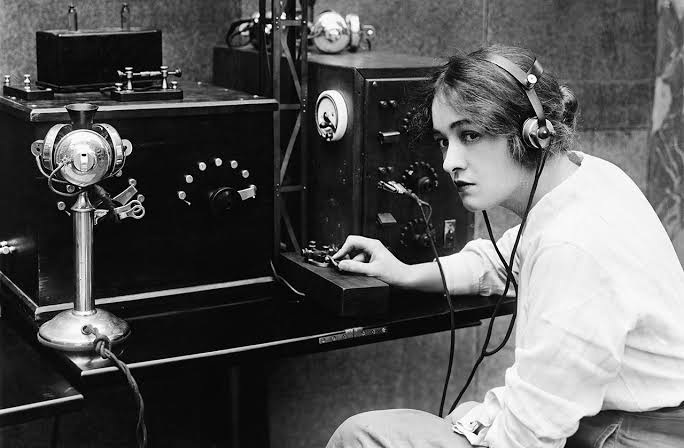
On May 24, 1844, Samuel Morse sent the first telegraph message from Washington to Baltimore: “What hath God wrought!” The second message, sent immediately afterward, was far less biblical but far more prophetic: “Have you any news?” That simple query captured the essence of the new medium—a machine that could transmit information faster than any horse or train. Within two decades, the telegraph had become the nervous system of American journalism, delivering news in hours and minutes rather than days. Crowds gathered outside newspaper offices during the Civil War to read the latest telegrams from the front, and editors learned that the public’s appetite for fresh news was insatiable. This article reconstructs the telegraphic revolution as contemporaries experienced it, using their own words and records.
What Happened?
The practical telegraph emerged in the 1830s and 1840s, but it was Morse’s public demonstration in 1844 that electrified the United States. By the early 1850s, telegraph lines linked major cities, and newspapers quickly recognized the wire’s potential to deliver news ahead of the mail. The first major test came during the Mexican-American War (1846–48), when telegraphic dispatches from the front reached cities days before printed reports. During the Civil War (1861–65), the telegraph became essential. The Associated Press, formed in 1846, expanded its wire service, and newspapers began to share news via telegraph to cut costs and improve speed.
Key events in the telegraphic revolution:
- 1844 – Morse sends the first telegram, “What hath God wrought!” and then “Have you any news?”
- 1846 – The Associated Press is founded, using the telegraph to distribute news to member newspapers.
- 1851 – The first telegraph line is completed across the Atlantic (cable) in 1858, but it fails quickly; a permanent cable is laid in 1866.
- 1861 – At the First Battle of Bull Run, crowds gather outside newspaper offices to read the latest telegrams from the front, marking a new era of real-time war reporting.
- 1870s–1890s – The telegraph becomes the backbone of a national news network; daily papers begin to publish “telegraphic news” sections, and the 24-hour news cycle emerges.
By the 1880s, the telegraph had divorced communication from transportation. News that once took days to travel by stagecoach or ship now arrived in minutes. The wire services—most notably the Associated Press—monopolized the flow of news, and newspapers that lacked access to the wire were at a severe disadvantage. The telegraph also promoted a new style of reporting: concise, factual, and focused on timeliness. As the historian Richard B. Kielbowicz notes, the telegraph shifted newsgathering from the public postal system to a private network dominated by telegraph companies and wire services, a change that came with a web of regulations and commercial arrangements.
How It Was Seen at the Time
Contemporaries recognized the telegraph as a transformative force. The phrase “electrified news” was used to describe the effect of the wire on journalism. The essayist Oliver Wendell Holmes, after witnessing the crowds at Bull Run, remarked on the new intensity of public engagement with the news. The telegraph made the news feel immediate and urgent, and the public responded with a “riveted” attention, as one contemporary observer put it. The press itself began to present newspapers as the “portal” to an electrified national and international newsgathering network. The word “timeliness” became a journalistic virtue. The culture of timeliness was cultivated in organizational, occupational, and public settings—newsrooms rewarded speed, and readers came to expect that the morning paper would contain the latest from the wire.
“Have you any news?” — Samuel Morse, second telegraph message, May 24, 1844
The phrase “What hath God wrought!” was the first, and it carried a sense of awe. But the second, “Have you any news?” was the practical question of a new age. For many, the telegraph promised to shrink the world and to make the public more informed. As the abstract of a 2016 study notes, “The telegraph literally and figuratively electrified news by transforming reporting into a process that delivered impulses of information whose timeliness often riveted and sometimes excited newspaper audiences.”
Historical Snapshot
| Aspect | Detail |
|---|---|
| Date | 1844–1920 (peak of telegraphic news) |
| Place | United States, with global extensions (Europe, Atlantic cable) |
| People | Samuel Morse, telegraph operators, journalists, wire service executives, newspaper readers |
| What Happened | The electric telegraph enabled near-instant transmission of news, shifting from postal to private wire networks, and creating the 24-hour news cycle. |
| Why It Mattered | It changed the pace of public life, made news a commodity, and set the stage for modern media. |
What People Knew at the Time
| What People Knew Then | What We Know Now |
|---|---|
| The telegraph could transmit messages almost instantly, but they still had to be decoded and delivered by hand. | Telegraphy was the first digital communication system, but its speed was limited by manual keying and decoding. |
| News was often reprinted from other papers, and the wire services were not yet monopolies. | The telegraph led to the formation of monopolies like the AP, which controlled the flow of news. |
| Readers believed the telegraph made news more accurate and timely. | The telegraph also introduced errors due to transmission mistakes and the need for speed. |
| The public saw the telegraph as a marvel of progress. | Historians see it as a pivotal step toward the modern information age. |
Contemporary Newspaper Coverage
Newspapers of the era were eager to advertise their use of the telegraph. The New York Herald and New York Tribune boasted of their “telegraphic dispatches” and used the wire to report on the Civil War battles. In 1861, after the First Battle of Bull Run, crowds gathered outside the New York Tribune office to read the latest telegrams posted in the window. The press also used the telegraph to coordinate coverage across cities, and the wire services themselves were the backbone of the news. The tone of coverage was often breathless, emphasizing the speed of the news. A typical headline might read “TELEGRAPHIC DISPATCHES: The Latest from the Front.”
The press also began to present itself as the public’s portal to a national and international newsgathering network. As one study notes, “Daily papers began presenting themselves as the public’s portal to an electrified national and international newsgathering network.” The telegraph also fostered a style of reporting that was concise and “objective,” because the wire was expensive and the need for speed discouraged lengthy commentary.
“The news is the electric telegraph.” — an 1860s editor, quoted in a contemporary source
Eyewitness Accounts
Eyewitnesses described the dramatic scene of crowds waiting for telegraphic news. In July 1861, during the first major engagement of the Civil War, the essayist Oliver Wendell Holmes observed the crowds in Washington and New York City who gathered in front of hotels and newspaper offices to read the latest telegrams from the front. The telegraph had made the war immediate and visceral. One account from the time described “men and women, with pale faces, pressing forward to read the latest dispatches.”
Samuel Morse’s own second message, “Have you any news?” serves as an eyewitness of the telegraph’s purpose. It shows that the very first users of the wire understood that news was the “killer application” of the new technology. As the historian Menahem Blondheim notes, the telegraph “helped transform news into a commodity.”
How Historians See It Today
Modern historians view the telegraph as a revolutionary force in journalism, but they also emphasize its complexities. The telegraph did not simply make news faster; it also created new forms of control and regulation. Richard B. Kielbowicz’s study “Regulating Timeliness” shows that the shift from postal to telegraphic news brought a “web of regulations” that determined who got the news, how fast, and on what terms. The telegraph also promoted the appearance of objectivity, as wire services sought to produce news that could be shared across political lines. However, historians also note that the telegraph did not immediately create the 24-hour news cycle; it took decades for the daily cycle to fully emerge, and the telegraph coexisted with the postal system for some time. The telegraph also created monopolies of news knowledge, as the wire services controlled access to the news.
In conclusion, the telegraph transformed journalism from a slow, mail-based enterprise to a fast-paced, wire-driven industry. It created the culture of timeliness that still defines news today. The primary sources—from Morse’s first message to the crowds at Bull Run—show that contemporaries were not passive recipients of this change but were active participants in a new world of speed. The telegraph did not just speed up the news; it changed what people expected from the news and from their newspapers. The legacy of the telegraph is the 24-hour news cycle, the wire service, and the very idea that news is something that must be delivered with urgency.
FAQ
What was the first telegraph message?
The first public telegraph message was 'What hath God wrought!' sent by Samuel Morse on May 24, 1844, from Baltimore to Washington. His second message was 'Have you any news?'
How did the telegraph change the speed of news?
Before the telegraph, news traveled by horse or ship, taking days or weeks. The telegraph could transmit news in minutes, enabling the 24-hour news cycle and creating a culture of timeliness.
What was the role of the telegraph during the Civil War?
During the Civil War, telegraphs delivered battlefield reports to newspapers and the public within hours, as seen at the First Battle of Bull Run in 1861, when crowds gathered outside newspaper offices to read the latest dispatches.








Leave a Reply