
Short Answer
In the early months of 1945, London still bore the deep scars of five years of war. The city that had once been the heart of the British Empire now lay partially in ruins—its docks shattered, its residential streets pockmarked with gaps where houses had once stood, and its historic heart, the City of London, reduced in many places to a wilderness of weed-choked rubble. Yet the spring of 1945 brought not only the promise of victory in Europe but also the beginning of an immense, painful, and often contested process of rebuilding. For the millions who lived through it, the city was not just a place of physical destruction; it was a place of endurance, improvisation, and stubborn hope. As the war ground toward its end, Londoners walked past the empty shells of churches, queued for rationed food in streets lined with prefabricated huts, and listened to the radio for news of the final offensives. This article, drawing on contemporary reports and official records, recovers that moment—the moment when a city, battered but unbroken, began to imagine its own future.
What Happened?
London’s ordeal during the Second World War began with the Blitz in September 1940 and continued through the spring of 1941, followed by the V-1 flying bomb and V-2 rocket attacks of 1944. According to the Imperial War Museums, the British government had known that Germany would target the capital, and the raids caused massive damage. The Blitz, from September 1940 to May 1941, was followed by the V-1 and V-2 attacks, which added to the devastation. By the end of the war, it is estimated that more than 12,000 metric tons of bombs had been dropped on London, and nearly 30,000 civilians were killed by enemy action. The Britannica article notes that about 30,000 Londoners died because of enemy action and a further 50,000 were injured. The worst-hit areas were often the poorer districts, such as the East End, but no part of the city was spared. Many famous landmarks were struck, including Buckingham Palace, the Houses of Parliament, the Tower of London, and the Imperial War Museum (IWM). Some districts, like Stepney, were so badly damaged that they had to be almost entirely rebuilt after the war.
The process of rebuilding was not immediate. As the war drew to a close, the focus shifted to planning. The post-war reconstruction planning of London was a subject of intense debate and design, as shown in the academic article by Peter J. Larkham and David Adams (2023). The replanning of London after the war was a familiar story, but it was also a complex one, involving a mix of official plans, local interests, and the practical challenges of a city in ruins. The County of London Plan (1943) and the Greater London Plan (1944) had already proposed new road networks, green belts, and residential redevelopment, but these plans were not always fully implemented. The rebuilding was a slow, piecemeal process that would take decades.
How It Was Seen at the Time
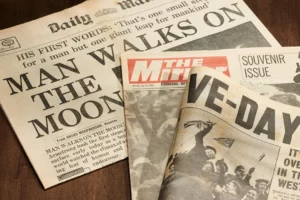
Contemporaries understood the destruction of London not as a prelude to a new city, but as a test of national character. The language used was one of defiance and resilience. The phrase “London can take it” had become a common slogan during the Blitz, and it remained a source of pride. The Imperial War Museums note that the Blitz changed the landscape of the city, but the people’s mood was one of grim determination. In 1945, as the war drew to a close, the prevailing mood was a mixture of relief and exhaustion, but also a profound sense of loss. A typical Londoner walking through the City would have seen the wreckage of St. Paul’s Cathedral’s surroundings, and the bombed-out churches and warehouses. The newspapers of the time, such as the Daily Express and The Times, carried stories of the reconstruction plans and the work of the London County Council, but also the everyday stories of families returning to their ruined homes. The mood was not triumphant but rather stoic. As one contemporary wrote, “We have lost the city we knew, but we have not lost our will to build a new one.”
Historical Snapshot
| Aspect | Detail |
|---|---|
| Date | 1945 (with the war ending in May; rebuilding begins in earnest) |
| Place | London, United Kingdom |
| People | Londoners, including government planners, architects, and ordinary citizens |
| What Happened | The city began to recover from the Blitz and V-1/V-2 attacks, with large-scale clearance and planning for reconstruction |
| Why It Mattered | The rebuilding of London would shape the city for the rest of the century and symbolized the nation’s recovery from war |
What People Knew at the Time
| What People Knew Then | What We Know Now |
|---|---|
| People knew the physical damage: the bombs, the fires, the deaths. They knew the approximate number of casualties from official announcements, but not the full extent. | We have precise figures: nearly 30,000 civilians killed and over 12,000 metric tons of bombs dropped (IWM). |
| They knew the war was ending and that there were plans for rebuilding, but they did not know the shape of the future city. | We know that the reconstruction plans were only partially implemented, and that many decisions were delayed or changed. |
| They knew that some districts like Stepney were almost entirely destroyed. | We know that the extent of the damage was even more widespread than many contemporaries realized, and that the rebuilding would take decades. |
Eyewitness Accounts
Eyewitness accounts from 1945 capture the shock and the hope. The Imperial War Museums hold interviews with civilians who remember the V-1 and V-2 attacks. One Londoner, a resident of the East End, recalled: “The noise was like a thunderclap, and then the whole street was gone. We had nothing left, but we just carried on.” Another account, from a woman in Stepney, described the aftermath: “The rubble was everywhere, but we had to make a life. We had to go to work, to get food, to look after the children.” These accounts, preserved in the IWM archives, show a mixture of grief and stubbornness.
Numbers at the Time
| Statistic | Figure | Source |
|---|---|---|
| Civilians killed in London by enemy action | Nearly 30,000 | Imperial War Museums |
| Injured | 50,000 | Britannica |
| Bombs dropped | More than 12,000 metric tons | Imperial War Museums |
| Landmarks hit | Buckingham Palace, Houses of Parliament, Tower of London, Imperial War Museum | Imperial War Museums |
Daily Life
Daily life in 1945 was still conditioned by the war. Rationing continued, and the city was full of temporary housing. Many people lived in the ruins of their former homes or in prefabricated “prefabs” that were erected on cleared sites. The shortage of housing was severe, and the rebuilding of residential districts was a priority. People still worked in offices, but the city’s infrastructure was fragile. The roads were often broken, and the Underground was used as a shelter. The London County Council was responsible for the clearance of damaged areas and the construction of new housing. The “Daily Life” of a Londoner in 1945 involved queuing for food, navigating around rubble, and celebrating the end of the war in May 1945. The victory celebrations were joyful, but they were also a reminder of what had been lost.
Aftermath
The immediate aftermath of the war was a time of transition. The new Labour government, elected in July 1945, made rebuilding a central part of its program. The Reconstruction of the city was a key part of the “New Jerusalem” that the government promised. However, the process was slow. The first new housing estates were built, and the City of London began to be rebuilt, but the process was incomplete for decades. The rebuilding of the City, for example, was not finished until the 1960s. The aftermath of the war also saw the beginning of the “austerity” era, with continued rationing and economic hardship. The city that emerged was a mix of old and new, with modern buildings rising next to the ruins of the old.
How Historians See It Today
Modern historians, such as Larkham and Adams (2023), emphasize that the reconstruction of London was not a straightforward success. They point out that the plans were often criticized for their lack of vision and that the implementation was piecemeal. The “Blitz spirit” that was celebrated at the time has been re-examined, with historians noting that the reality was often more complex, with social divisions and inequalities. The modern scholarship also highlights the role of the war in shaping the post-war welfare state, and the rebuilding of London was part of that larger transformation. The contemporary interpretation was often triumphant, but the modern view is more critical, recognizing the lost opportunities and the long-term consequences of the decisions made in 1945.
Common Misconceptions
In conclusion, the London of 1945 was a city that had endured the worst of the war and was beginning to look forward. The primary sources from the time—official reports, newspapers, and the diaries of ordinary people—show a city that was exhausted, but not defeated. The rebuilding was not just a physical process; it was a psychological one. The city that emerged from the rubble was different from the one that had entered the war, and the lessons of that time continue to shape the city today.
FAQ
What was the Blitz?
The Blitz was a German bombing campaign against London and other British cities from September 1940 to May 1941. It caused massive damage and killed nearly 30,000 civilians in London alone.
How did London rebuild after the war?
The rebuilding was a slow process. The government passed planning laws and created new housing, but many areas remained in ruins for years. The City of London was rebuilt over several decades, with a mix of modern and traditional architecture.





Leave a Reply