
Short Answer
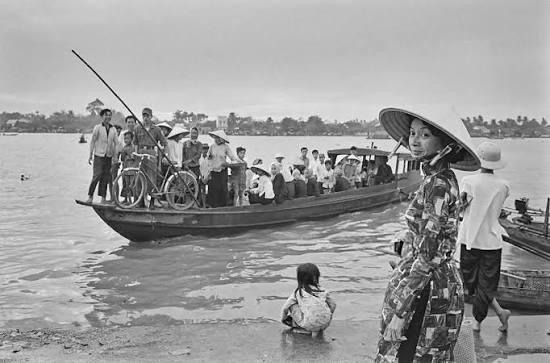
In 1965, the Mekong Delta was a vast, flat expanse of rice paddies and canals where the rhythm of life was set by the monsoon and the harvest. But the Delta was also the heartland of a guerrilla war that had been building for two decades. In My Tho Province (also known as Dinh Tuong), the National Liberation Front (NLF) and the forces of the Republic of Vietnam fought for control of the same villages, while American bombers began to pound the countryside. The villagers—mostly poor peasants—found themselves caught between two armed forces, their lives shaped by the twin pressures of revolution and counterinsurgency. The RAND Corporation, conducting research for the U.S. military, interviewed hundreds of villagers, defectors, and refugees, producing a rare archive of personal testimony. These interviews, along with captured NLF documents and the later work of historian David Hunt, provide the closest thing we have to the diaries and letters of the Delta’s rural population during this pivotal year.
What Happened?
In 1965, the Mekong Delta was the strongest bastion of the National Liberation Front. The NLF’s organization in the Delta was highly sophisticated. According to a 1967 RAND study of the Viet Cong in Dinh Tuong province covering 1964–1966, the insurgents emphasized “learning, adaptation, and analysis of the enemy’s behavior patterns” in their operations. They fought at times and places of their own choosing, and they relied on civilian organizations in the hamlets and villages to provide intelligence, reconnaissance, labor, and food supplies.
The war in the Delta was a “protracted war,” as David Hunt describes it in his study of the NLF in My Tho Province. The NLF’s strategy was to wear down the enemy through a combination of guerrilla attacks and political control of the countryside. The village was not just a military objective but the center of the political struggle. The NLF worked to build a base of support among the poor peasants, who formed the majority of the population.
The American response was escalation. Hunt’s study describes the “bombardment of the countryside” and the “generation” of refugees as deliberate strategies. By 1965, U.S. aircraft were bombing villages suspected of harboring the NLF, and the displacement of civilians became a central feature of the war. The RAND study “Evolution of a Vietnamese Village” (1965) describes a village that had passed from insurgent control through pacification to government control—a pattern repeated across the Delta.
How It Was Seen at the Time
At the time, the war in the Delta was understood by many observers as a civil war between Vietnamese factions, with the United States increasingly involved. The NLF saw itself as the vanguard of a peasant revolution, and its own documents and the interviews with defectors emphasized the struggle against the “puppet government” in Saigon. The villagers themselves had a more complex view. They experienced the violence as a series of demands and threats from both sides: the NLF collected taxes, recruited fighters, and controlled the villages at night; the government and the American forces bombed and pursued “pacification” during the day.
The prevailing mood among the villagers was one of fear and uncertainty. Hunt’s study describes the NLF’s “General Insurrection and Offensive” being postponed, and the “rooting out” of the Viet Cong infrastructure by government forces. The RAND village study noted that the pacification program had an impact on the population, but the security situation remained fragile.
Historical Snapshot
| Aspect | Detail |
|---|---|
| Date | 1965 (with context from 1964–1966) |
| Place | Mekong Delta, Vietnam—particularly My Tho (Dinh Tuong) Province |
| People | Poor peasants, National Liberation Front guerrillas, Republic of Vietnam forces, American advisors, RAND researchers |
| What Happened | The NLF controlled much of the Delta countryside; U.S. bombing escalated; villages were bombed; refugees were displaced; pacification programs were attempted. |
| Why It Mattered | The Delta was the NLF’s heartland, and the struggle there shaped the course of the Vietnam War. |
Eyewitness Accounts
The most valuable eyewitness accounts from the Mekong Delta in 1965 come from the extensive interviews conducted by RAND researchers with villagers, defectors, and NLF leaders. These interviews formed the basis of the RAND studies and of David Hunt’s later analysis. They provide a rare window into the local experience of the war.
The RAND study “Evolution of a Vietnamese Village” describes the environment of a village, its inhabitants, and the present situation after eight months of pacification. It details the implementation of the rural pacification program, including security and civic defense, economic activities, education and information programs, and the impact on the population. The village, like many in the Delta, was a place where the war was not abstract but lived daily.
David Hunt’s “Villagers at War” is based on RAND interviews with NLF defectors and prisoners. Hunt describes the villagers as “a vanguard of poor peasants” and emphasizes the “force of hatred” that fueled the insurgency. He also documents the role of women in the movement, describing them as “without caution and care”—a phrase that reflects the villagers’ own language about the female militants who were among the most committed fighters.
Daily Life
Daily life in the Mekong Delta villages in 1965 was dominated by the rice fields and the war. The villagers were mostly poor peasants who worked the paddies, but the war had made daily life a constant negotiation. The NLF controlled the countryside at night, and the government forces and their American allies controlled the daytime. The villagers had to navigate between the two forces, paying taxes to the NLF and providing intelligence to the government.
The material conditions were harsh. The bombing destroyed crops, and the displacement of villages broke up families. The RAND study of the village evolution describes the economic activities and the education and information programs that were part of the pacification effort. The villagers’ lives were a constant negotiation between the demands of the war and the needs of survival.
What People Feared
The villagers’ fears were immediate and concrete. They feared the bombing of their villages, the reprisals from both sides, and the displacement that came with the war. The RAND interviews document the fear of the villagers as they were caught in the crossfire. The NLF’s planned “General Insurrection and Offensive” was a source of tension, and its postponement (as described in Hunt’s study) left the villagers in a state of uncertainty.
There was also the fear of the “rooting out” of the NLF infrastructure by the government—a campaign that often meant interrogation, torture, and executions. The villagers feared being labeled as Viet Cong sympathizers, and they feared the consequences of refusing to cooperate with either side.
Different Perspectives
The National Liberation Front
The NLF saw the war as a revolutionary struggle for justice. Their documents and interviews with their defectors reveal a belief that the war was a necessary and just fight against the Saigon government and its American supporters. The NLF’s a “vanguard of poor peasants” and the “force of hatred” were central to their worldview.
The Vietnamese Government and the Americans
The South Vietnamese government and the American advisors saw the war as a counterinsurgency against communist aggression. The pacification program was an attempt to win the “hearts and minds” of the villagers, but it was also a military campaign to root out the NLF infrastructure. The RAND studies reflect this perspective, focusing on the “insurgent organization and operations” and the “evolution” of the village from insurgent to government control.
The Villagers
The villagers were caught in the middle. Their accounts, as captured in the RAND interviews, reveal a complex mix of fear, resentment, and resignation. They wanted to survive, and they had to support both sides. The villagers’ perspective was not one of ideology but of survival.
How Historians See It Today
Historians today understand the Mekong Delta in 1965 as a crucial battleground in the Vietnam War, and they see the war not just as a military conflict but as a social and political struggle for the countryside. David Hunt’s “Villagers at War” is an important example of the social history of the war, using the RAND interviews to give voice to the peasants who were the war’s central actors.
Modern scholarship has also emphasized the role of the peasants as participants in the war, not just victims. The NLF’s success in the Delta was not merely a matter of military force but of political mobilization. The RAND interviews, which were originally conducted for counterinsurgency purposes, have become an invaluable historical source for understanding the local experience of the war.
The Mekong Delta in 1965 was a place where the war was not a distant event but a daily reality. The personal accounts captured in the RAND interviews and in the local documents reveal the experiences of the villagers and the guerrillas who lived through it. The Delta was the heartland of the NLF, and the struggle there would continue to shape the course of the Vietnam War. The primary sources—the interviews, the local documents, the letters and diaries that were lost or captured—remind us that the war was not just a series of battles but a transformation of the daily life of an entire region.
FAQ
What was life like for villagers in the Mekong Delta in 1965?
Villagers lived in constant fear and uncertainty. The NLF controlled the countryside at night and the government during the day. They were caught between the two forces, and the bombing of the countryside and the displacement of refugees were a constant threat. Daily life was centered on rice farming, but the war made survival a constant negotiation.
How did the RAND studies contribute to our understanding of the war?
The RAND studies were based on extensive interviews with villagers, defectors, and NLF leaders. They provided the U.S. military with insights into the insurgent organization and the village dynamics. Today, they are a valuable historical source for understanding the local experience of the war.
What was the National Liberation Front's strategy in the Delta?
The NLF used a strategy of protracted war, emphasizing learning, adaptation, and analysis of the enemy's behavior. They fought at times and places of their own choosing and relied on civilian organizations to provide intelligence, food, and labor. Their goal was to wear down the enemy and build a base of support among the poor peasants.








Leave a Reply