
Short Answer
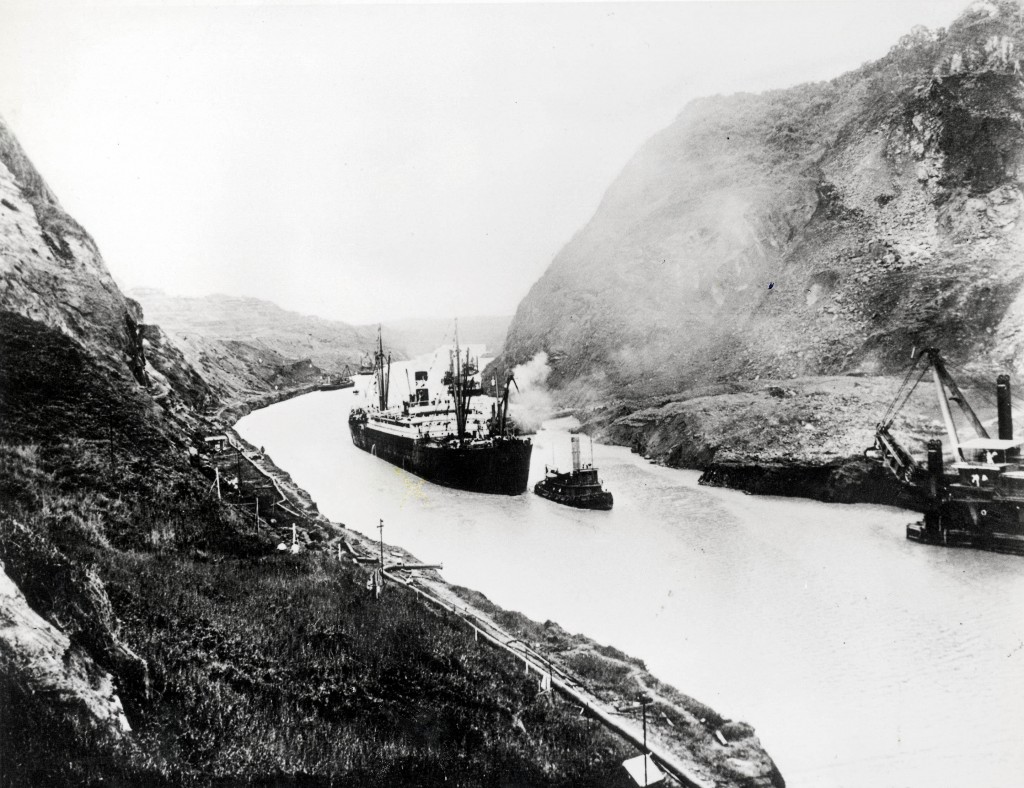
The Isthmus of Panama, 1907. The air is thick with humidity and the distant clang of machinery. At dawn, a whistle pierces the heat, and thousands of men—many from the sugar islands of the West Indies—stream into the cuts and locks of the great canal. For the workers, the canal is a daily grind of pick, shovel, and dynamite; for the engineers, it is a battle against mud, disease, and time. The world watches, calling it the “8th Wonder of the World,” but to those on the ground, it is a brutal, relentless enterprise that would transform the globe.
What Happened?
The dream of a canal across Panama began with the French in 1881, but their effort collapsed in 1889 after disease and financial ruin. After Panama’s secession from Colombia in 1903 and the Hay-Bunau-Varilla Treaty, the United States took control of the Canal Zone. In May 1904, the Isthmian Canal Commission assumed authority, and the French property was formally transferred. By September 1904, 1,800 workers were on site, but early conditions were so harsh that nearly all skilled American workers deserted within a year.
The Americans, under Chief Engineer John Frank Stevens and later George Washington Goethals, first attacked the diseases that had defeated the French. Dr. William C. Gorgas led a campaign against yellow fever and malaria, transforming the Zone into a healthier place. Then the excavation began in earnest. The canal was designed as a lock-and-lake system, not a sea-level cut, to reduce excavation. Key events include:
- 1904: U.S. takes over; initial labor force of 1,800.
- 1907: Labor force peaks at 24,000 men, over 75% from the West Indies.
- 1913: The Miraflores Locks are constructed with tripod drills.
- 1914: The canal opens; the first ship passes through in August.
One of the greatest challenges was the Cucaracha slide, a massive mudslide that repeatedly blocked the cut, requiring relentless digging. The work was continuous, day and night, with crews rotating.
How It Was Seen at the Time
Contemporaries saw the canal as a monumental triumph of human engineering, a feat that would unite the oceans and transform commerce. The American press celebrated it as “the greatest work of man,” and the phrase “the 8th Wonder of the World” was common. Yet for the workers, the experience was far more mundane and often brutal. The Isthmian Canal Commission’s own reports acknowledged the harshness. As one observer noted, “Working six days a week, most men got Sundays off,” but the workflow never stopped. The engineers designed the workflow to never stop, with coal train operators and maintenance crews working through the night.
“The whistle blew at 6:00 am the next morning. When Simmons lined up, the boss picked every other man and gave each a pick and shovel.” — Edgar Llewellyn Simmons, a Barbadian worker, recounting his first day.
The prevailing mood among the workers was a mix of pride and endurance. Many saw it as an opportunity to escape poverty, but the reality was often disappointment. The bosses called the workers “Shine,” a racial epithet that underscored the racial hierarchy of the time.
Historical Snapshot
| Aspect | Detail |
|---|---|
| Date | 1904-1914 |
| Place | Isthmus of Panama, Canal Zone |
| People | American engineers, West Indian laborers (Barbados, Jamaica, etc.), French remnants |
| What Happened | Construction of the Panama Canal, using a lock-and-lake system |
| Why It Mattered | Connected the Atlantic and Pacific, revolutionizing global trade and naval power |
Eyewitness Accounts
One of the most vivid accounts comes from Edgar Llewellyn Simmons, a young man from Barbados who sailed to Colon in January 1908. His story, preserved in the Isthmian Historical Society Collection, describes his arrival: “The whistle blew at 6:00 am the next morning. When Simmons lined up, the boss picked every other man and gave each a pick and shovel. Simmons thought he would get a better job, since he’d not been chosen yet. Then came ‘one of our own West Indian fellow men’ who took him to a dump car filled with coal, handed him a shovel, and told him to get to work unloading it all. The bosses called him ‘Shine.'”
This account illustrates the racial segregation and the physical demands of the work. The men were given labor-intensive tasks, and the engineers were often Americans, while the heavy labor fell to the West Indians.
Daily Life
Working six days a week, most men got Sundays off. Engineers designed the workflow to never stop, so when day workers returned to their barracks, coal train operators and maintenance crews would work through the night. The large majority of laborers came from the West Indies, especially from Barbados. By 1907, the labor force consisted of 24,000 men, more than 75% of whom hailed from the West Indies. They lived in barracks, often segregated by race and nationality. The work was physically demanding: digging, drilling, and moving earth. The tripod drills at the upper Miraflores Locks were operated by West Indian workers, as shown in a photograph from the PBS collection.
The conditions were so harsh that early skilled American workers deserted within a year. The Isthmian Canal Commission improved facilities and provided incentives to keep workers, but the daily grind remained. The men worked under the tropical sun, with the constant threat of disease, landslides, and accidents.
Numbers at the Time
| Statistic | Value | Year/Source |
|---|---|---|
| Initial U.S. workforce | 1,800 | September 1904 |
| Peak labor force | 24,000 | 1907 |
| West Indian share | 75% | 1907 |
| American skilled workers | Most deserted within a year | 1904-1905 |
Different Perspectives
American Engineers and Supervisors
For the American engineers, the canal was a grand engineering challenge. They saw the West Indian workers as a labor force to be managed. The Isthmian Canal Commission’s reports focused on progress, disease control, and the engineering marvel. They took pride in the project and celebrated its completion.
West Indian Laborers
For the West Indians, the canal was a job, a chance to escape poverty, but often they were met with exploitation and racial discrimination. Their accounts, like Simmons’s, reveal the harsh reality of the work and the social hierarchy. They were often given the most dangerous and physically demanding tasks, and their living conditions were poor.
French Legacy
The French had left behind infrastructure and a history of failure, but also a body of knowledge. Some French engineers remained, but the American takeover was decisive.
What People Feared
The greatest fear was disease, especially yellow fever and malaria, which had decimated the French effort. The American medical campaign under Dr. Gorgas was crucial. Another fear was the collapse of the canal’s walls, such as the Cucaracha slide, which repeatedly threatened the excavation. Engineers feared that the slide could never be overcome, but they eventually did. There was also fear of financial ruin, as the project cost hundreds of millions of dollars.
Aftermath
The canal opened on August 15, 1914, just as World War I broke out. The opening was a global event, but the war overshadowed it. The canal was a strategic asset, and its construction transformed the economy and military geography of the Americas. The workers who built it were largely forgotten, but their labor left a permanent mark.
How Historians See It Today
Modern historians emphasize the canal as a story of exploitation and racialized labor, not just an engineering marvel. They point to the harsh conditions, the racial hierarchy, and the significant contribution of West Indian workers. The history of the canal is now seen through the lens of social history, with a focus on the workers’ experiences and the impact on the region. The primary sources, like Simmons’s account, are crucial for this perspective.
The primary sources of the time—the photographs, the letters, the official reports—show both the grandeur of the achievement and the human cost. The canal was indeed the 8th Wonder of the World, but it was built on the backs of thousands of men who often had no choice but to endure. Their stories remind us that every great monument is also a testament to the human spirit and its capacity to overcome—and to endure.
FAQ
Who built the Panama Canal?
The construction was carried out by a large workforce, over 75% of whom were West Indian laborers, primarily from Barbados and other Caribbean islands, alongside American engineers and supervisors. The U.S. took over the project in 1904 from the French.
What were the working conditions like for the laborers?
Workers worked six days a week, with Sundays off. The work was physically demanding, and early conditions were so harsh that many skilled American workers deserted within a year. The West Indian workers were given labor-intensive tasks and often faced racial discrimination.






Leave a Reply