
Short Answer
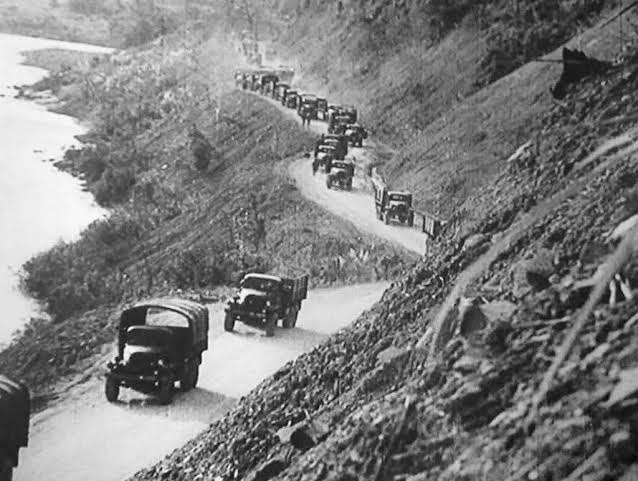
Deep in the triple-canopy jungle of Laos and Cambodia, a hidden network of roads and paths carried the Vietnam War southward. To the American soldiers and pilots who flew over it or walked through it, the Ho Chi Minh Trail was both a strategic lifeline for the enemy and a personal nightmare of ambushes, anti-aircraft fire, and official secrecy. In the late 1960s and early 1970s, thousands of covert operatives—special forces, forward air controllers, and CIA pilots—risked their lives inside this trail, yet their existence was denied by their own government. Their accounts, told in interviews and memoirs, reveal a war fought in shadows, where the trail was the heart of the enemy’s supply system and the soldiers’ own presence was a secret that haunted them for decades.
What Happened?
The Ho Chi Minh Trail was not a single road but a sprawling network of roads and paths that stretched from North Vietnam through the jungles of Laos and Cambodia, feeding the Communist forces in South Vietnam. Jim Bolen, a Special Forces veteran who served in the Studies and Observations Group (SOG), described its geography: “The Ho Chi Minh Trail runs out of the South western part of North Vietnam through Laos and down into Cambodia and at one time stopped at the Cambodian border towards Kontum in South Vietnam. The Trail runs North and South and is about 50 kilometers deep from South Vietnam’s border.” This deep penetration made it a difficult target.
American forces conducted relentless covert operations to disrupt the trail. The most secretive efforts were carried out by SOG, a classified unit that executed unconventional warfare. SOG teams often crossed into Laos and Cambodia to gather intelligence and strike at targets, but they were limited by political restrictions. As Bolen recalled, “Every road or trail we saw was some sort of artery linked to the Ho Chi Minh Trail.”
Forward Air Controllers (FACs) like Fredrick Pumroy also played a vital role. Pumroy served with the 23rd Tactical Air Support Squadron from March to December 1970, flying low and slow over the trail to direct air strikes. His missions earned him a Distinguished Flying Cross. In the same period, CIA pilots like Robert D. Curry flew secret missions in Laos, supporting Hmong guerrilla forces and conducting resupply and evacuation operations. Curry’s memoir, Whispering Death, describes the secret war and the final, desperate evacuation of Long Tieng in May 1975.
- 1960s–1970s: SOG teams conduct reconnaissance and direct-action missions into Laos and Cambodia.
- 1970: Fredrick Pumroy serves as an FAC over the trail, earning a Distinguished Flying Cross.
- May 14, 1975: CIA officers at Long Tieng, Laos, burn files and evacuate as Hmong refugees flee the advancing North Vietnamese.
How It Was Seen at the Time
At the time, the trail was a secret. President Nixon publicly denied any U.S. military presence in Laos, despite the fact that CIA pilots and SOG teams were operating there. In his memoir, Curry quotes Nixon’s address: “We can say flatly, we do not have U.S. troops operating in Laos. We are abiding by the Geneva Convention that recognizes the neutrality of Laos. We have not lost any of our forces to action there, nor have any been taken prisoner by Communists.” This denial was a lie, as Curry and thousands of others knew.
For the soldiers and pilots who served on the trail, the prevailing mood was one of duty and fear. They understood the trail’s strategic importance, but they also knew that their missions were hidden from the American public. The secrecy added to the danger, as they operated without the support of public awareness or, in some cases, without official recognition.
“I can say flatly, we do not have U.S. troops operating in Laos.” — President Richard Nixon, as quoted in Robert D. Curry’s Whispering Death
Historical Snapshot
| Aspect | Detail |
|---|---|
| Date | 1955–1975 (peak operations 1965–1973) |
| Place | Laos, Cambodia, and the border regions of South Vietnam |
| People | SOG operators, Forward Air Controllers, CIA pilots, North Vietnamese and Viet Cong forces |
| What Happened | Covert operations to disrupt the trail’s supply network |
| Why It Mattered | The trail was the main supply route for North Vietnam; disrupting it was essential to the American war effort. |
Eyewitness Accounts
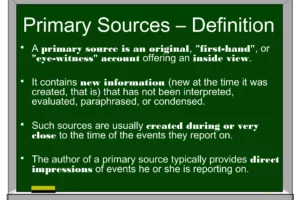
The primary sources—interviews, memoirs, and oral histories—provide vivid first-hand descriptions of the trail and the missions. Below are three accounts that capture the danger and the secrecy.
“The Ho Chi Minh Trail runs out of the South western part of North Vietnam through Laos and down into Cambodia and at one time stopped at the Cambodian border towards Kontum in South Vietnam. The Trail runs North and South and is about 50 kilometers deep from South Vietnam’s border.” — Jim Bolen, SOG veteran
“During the helicopter extraction, the pilot estimated enemy strength to be at least battalion size and that as they lifted beyond the treetops, they came under fire from 22mm and 37mm anti-aircraft guns.” — Ed Wolcoff, SOG team member, describing a mission into Target Area T-7
“Long Tieng, Laos – May 14, 1975 – 0600 Hours – The CIA officer threw another armload of files onto the burning pile. The smoke mixed with morning fog, drifting across the airstrip where a silver C-130 sat with engines running. Its cargo hold could fit maybe three hundred people. Five thousand Hmong pressed against the fence.” — Robert D. Curry, Whispering Death
What People Knew at the Time
| What People Knew Then | What We Know Now |
|---|---|
| The public was told that the U.S. had no troops in Laos. | Thousands of covert operatives, including SOG teams and CIA pilots, operated in Laos and Cambodia. |
| The trail was often described as a single road. | The trail was a complex network of roads, paths, and hidden supply lines. |
| The trail was believed to be in Vietnam. | The trail was primarily in Laos and Cambodia, extending into South Vietnam. |
Aftermath
The end of the Vietnam War in 1975 brought the fall of Saigon and the closure of the trail. The secret war in Laos came to a brutal conclusion with the evacuation of Long Tieng on May 14, 1975, as CIA officers burned files and Hmong refugees fled. The Hmong people, who had fought alongside the CIA, were left behind to face the consequences. The trail itself was abandoned, but the legacy of the covert war lived on in the memories of the soldiers and pilots who served there.
How Historians See It Today
Modern historians now have access to declassified records and the personal accounts of veterans, which have revealed the full scope of the secret war. The Ho Chi Minh Trail is now understood as a vital factor in the Vietnam War, not just a supply route but a strategic target that shaped the entire conflict. The secrecy that once surrounded the operations is now part of the historical record, and the accounts of soldiers and pilots are recognized as essential primary sources for understanding the war’s true nature. The trail’s history is a reminder of the gap between official policy and the lived experience of those on the ground.
The Ho Chi Minh Trail was more than a road; it was a battlefield that few knew about and even fewer acknowledged. The accounts of the soldiers and pilots who served there—through their interviews, memoirs, and oral histories—reveal the courage, the fear, and the silence that defined the secret war. They remind us that history is often made in the shadows, and that the voices of those who were there are the truest guides to the past.
FAQ
What was the Ho Chi Minh Trail?
The Ho Chi Minh Trail was a network of roads and paths that ran from North Vietnam through Laos and Cambodia to South Vietnam. It was the main supply route for the North Vietnamese Army and the Viet Cong, moving troops, weapons, and ammunition. It was about 50 kilometers deep from the South Vietnamese border, as described by SOG veteran Jim Bolen.
Why was the Ho Chi Minh Trail kept secret?
The U.S. government denied any military presence in Laos and Cambodia because of international neutrality agreements. President Nixon publicly stated that no U.S. troops were operating in Laos, even though CIA pilots and SOG teams were there. This secrecy was to avoid diplomatic fallout and maintain the fiction of neutrality.
What role did SOG play in the trail?
SOG (Studies and Observations Group) conducted covert reconnaissance and direct-action missions against the trail. Teams like the one led by Jim Bolen and Ed Wolcoff crossed into Laos and Cambodia to gather intelligence, destroy targets, and call in air strikes. These missions were extremely dangerous, with teams often coming under fire from anti-aircraft guns and ground forces.




Leave a Reply