
Short Answer
In the autumn of 1929, the streets around the New York Stock Exchange were thick with crowds, their eyes fixed on the tape machine that chattered out the latest prices. For nearly a decade, the daily papers had told them the future was bright. Headlines like “Wave of Buying Sweeps Over Market as Stocks Swing Upward” and “Radio Flashes High; General Motors and Steels Soar” were not just financial news—they were invitations to join the party. Ordinary clerks, housewives, and college students poured their savings into stocks, convinced by a press that had become the loudest cheerleader for the bull market. But the very newspapers that fueled this frenzy had their own dark secrets: reporters accepting bribes to praise worthless securities, editors who played the market themselves, and a public that trusted the printed word as gospel. When the crash came in late October, the same papers that had promised endless prosperity would scramble to explain the unthinkable, and the nation would begin to realize that the boom had been built on a foundation of paper promises.
What Happened?
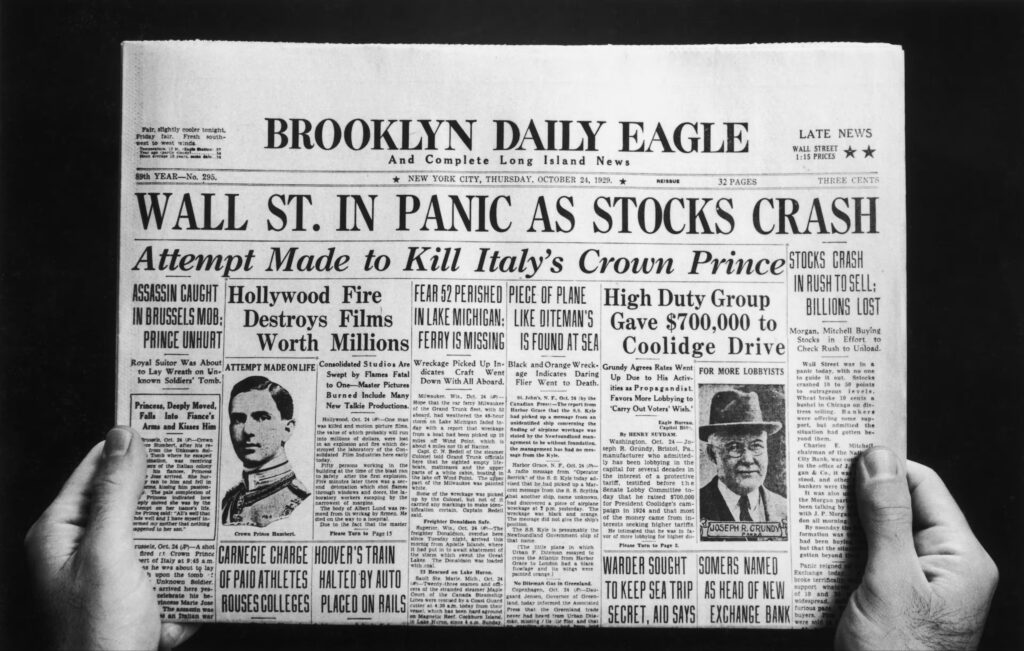
The 1920s were a decade of extraordinary economic expansion in the United States. Mass production, consumer credit, and a new culture of investing brought millions of first-time buyers into the stock market. As the PBS primary source collection on the Crash of 1929 notes, “Stock market news moved from the financial pages to the front pages as the number of first-time investors grew in the 1920s.” Daily papers throughout 1929 reported that the future looked bright for investors—even after the devastating market crash in October.
The crash itself came in stages. After a period of wild speculation, the market reached its peak in early September 1929. On October 24, 1929—known as Black Thursday—a wave of panic selling swept through the New York Stock Exchange. The following Tuesday, October 29, 1929, the market collapsed with record losses. In the days that followed, newspapers tried to calm investors, but the damage was done. The boom that newspapers had so eagerly promoted had turned to bust, and the nation would soon learn that the economy was not going to bounce back. As the National Humanities Center puts it, “the pivotal moment was not October 29—’Black Tuesday’—but some instant later when the nation as a whole realized the economy was not going to bounce back, prosperity had left the scene, and a bleak new reality had arrived: ‘depression.'”
How It Was Seen at the Time
In the years before the crash, the prevailing mood among contemporaries was one of unshakable confidence. The stock market was not just a place to invest—it was a symbol of American success. Newspapers reinforced this optimism with every issue. A headline from The World, reprinted in the PBS collection, declared:
“Wave of Buying Sweeps Over Market as Stocks Swing Upward”
Another, from The New York Herald Tribune, announced:
“Radio Flashes High; General Motors and Steels Soar”
These headlines were written by journalists like Laurence Stern, who described the market’s behavior as “firm, almost buoyant” and noted that “the tape is the one institution Wall Street does not argue with.” The press did not merely report the market—it celebrated it. The market’s strength was treated as self-evident proof of the nation’s prosperity. When doubt crept in, it was swept away by the next day’s rally. For the millions of Americans who read these papers, the message was clear: investing was safe, smart, and patriotic.
Historical Snapshot
| Aspect | Detail |
|---|---|
| Date | October 1929 (crash); boom throughout the 1920s |
| Place | New York Stock Exchange, New York City; newspapers nationwide |
| People | First-time investors, financial journalists, reporters, speculators, and editors |
| What Happened | Newspapers moved stock news to front pages, promoted speculation, and in some cases accepted bribes to write favorably about certain stocks. The market crashed in October 1929. |
| Why It Mattered | The crash ended a decade of speculative euphoria and triggered the Great Depression, the worst economic crisis in American history. |
Contemporary Newspaper Coverage
The press in the 1920s was not a passive observer of the stock market—it was an active participant. As the PBS primary source collection shows, newspapers throughout 1929 reported that the future looked bright for investors, even after the devastating crash. The tone of coverage was relentlessly optimistic. On the day of the crash, papers initially tried to minimize the damage, and even in the weeks that followed, many continued to suggest the market would soon recover.
The corruption behind this coverage was documented in the history of business journalism. According to the History of Business Journalism project, “Reporters for The Wall Street Journal accept bribes from investors to write favorably about certain stocks.” This was not an isolated case. The same source notes that “newspapermen and radio newscasters were privy to inside information that could practically guarantee profits in the stock market.” One publicity man spent $286,279 on articles favorable to his pool’s stock before the October 1929 crash. Another published The Stock and Bond… (the source is cut off, but the implication is clear).
The press did not just report the news; it shaped it. Headlines like “Wave of Buying Sweeps Over Market” were not neutral descriptions—they were calls to action. As the PBS collection notes, “Throughout 1929 daily papers reported that the future looked bright for investors.” This was the language of confidence, and it was everywhere.
What People Knew at the Time
| What People Knew Then | What We Know Now |
|---|---|
| Newspapers presented the stock market as a safe and reliable way to get rich. Headlines were optimistic and encouraged investment. | Modern research reveals that many reporters and editors were bought off, and that the press’s coverage was systematically biased by financial interests. The market was built on speculation, not real value. |
| Investors believed that stock prices would continue to rise indefinitely, and that the market was a reflection of the nation’s prosperity. | The crash of October 1929 was the result of a massive bubble. The market had been overvalued, and the economic collapse was inevitable. |
| People trusted the newspaper headlines as truthful and unbiased. | We now know that many journalists were paid to write favorable articles, and that the press was part of the speculation machine. |
What People Feared
Despite the general optimism, there were undercurrents of fear. Some financial experts warned that the market was overvalued, but these voices were drowned out by the chorus of optimism. The public feared missing out on the boom more than they feared a crash. In the weeks before October 1929, there were rumors that the market was overheated, but the newspapers dismissed these as the fears of “bears.” When the crash came, fear turned to panic, and the fear that people had suppressed—that the entire economy would collapse—became a reality.
What People Expected Would Happen Next
Even after the crash, many contemporaries expected the market to recover quickly. Newspapers, which had promoted the boom, now tried to calm the public. They predicted that the market would stabilize and that prosperity would return. But they were wrong. The crash was not a temporary setback; it was the beginning of the Great Depression. The National Humanities Center notes that the real turning point was when the nation realized the economy was not going to bounce back. That moment came later, and it was a devastating surprise for those who had trusted the headlines.
Aftermath
Immediately after the crash, the newspapers tried to put a positive spin on the disaster. But as the weeks turned into months, the truth became impossible to ignore. Banks failed, businesses closed, and millions lost their jobs. The stock market crash of 1929 is now seen as the single most important event that led to the Great Depression. The newspapers that had fueled the speculation were not held accountable in the moment, but a 1932 Congressional hearing exposed the bribes and corruption that had been common practice. The public’s trust in the financial press was shattered, and the lesson of the 1920s would shape American financial regulation for decades.
How Historians See It Today
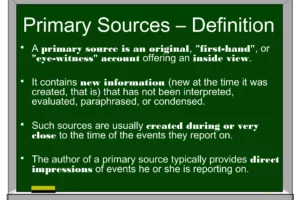
Historians today recognize that the newspapers of the 1920s were not simply mirrors of the stock market; they were active agents of speculation. The bribes and conflicts of interest documented in the History of Business Journalism are now seen as a major cause of the crash. Modern scholarship emphasizes that the media’s uncritical celebration of the market created a climate of speculation that was fundamentally unsustainable. The primary sources—the headlines, the bribes, the eyewitness accounts—show that the public was deliberately misled. This is a shift from the earlier view that the crash was simply an economic event. Today, historians see it as a failure of journalism as much as a failure of finance.
The 1920s newspapers were not just witnesses to the boom; they were its architects. By turning stock market news into front-page drama, they invited millions of Americans to risk their savings on a bubble that was bound to burst. The crash of 1929 was not just a financial event; it was a betrayal of trust. The primary sources—the headlines, the bribes, the optimistic forecasts—show us that the press was complicit in the very disaster it then reported. The lesson of that era is that when the news becomes a cheerleader for speculation, the public pays the price. The papers of the 1920s taught a generation that prosperity was a promise, and when the promise was broken, the consequences were felt for a decade.





Leave a Reply