
Short Answer
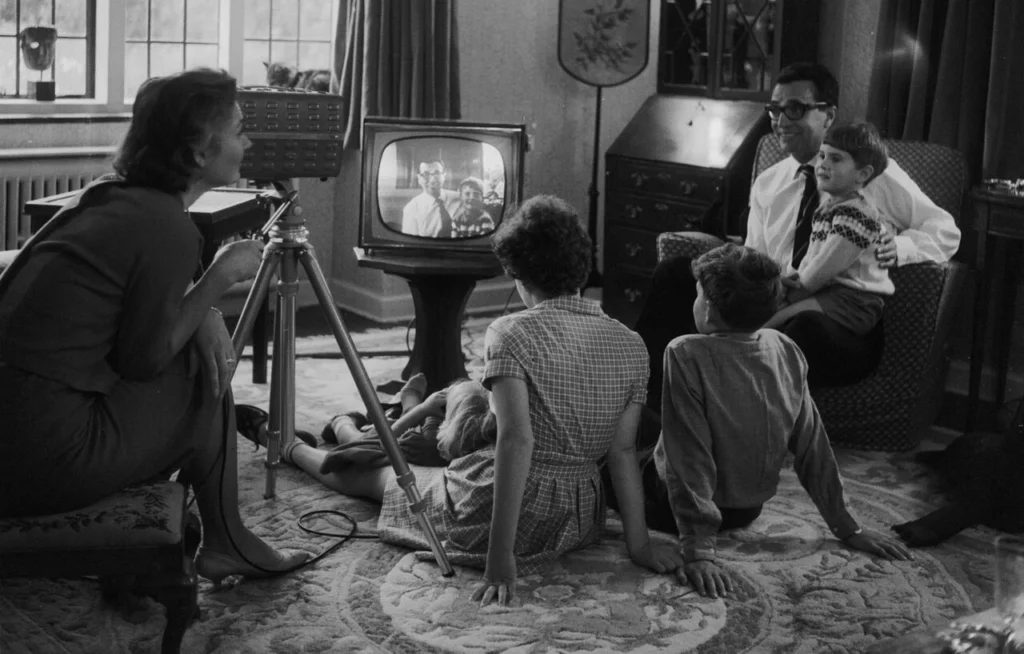
On a sweltering August evening in 1974, millions of Americans gathered around their television sets to watch a president resign for the first time in the nation’s history. Richard Nixon, his voice strained, told the nation, “I have never been a quitter.” Yet he was quitting, undone by the Watergate scandal that had consumed his presidency. The scene captured the paradox of the 1970s: a decade of profound disillusionment with government, yet also one of remarkable social transformation. The decade opened with the Vietnam War still raging, the environmental movement gaining strength, and women and minorities demanding equality. It closed with an energy crisis, a hostage crisis in Iran, and a conservative backlash that would reshape American politics. For those who lived through it, the 1970s felt like a time of uncertainty and change—a world where the old certainties of the postwar era were crumbling, and new ones had yet to emerge.
What Happened?
The 1970s were a decade of dramatic events, both at home and abroad. The decade began with the Vietnam War still in full swing, but public opposition was growing. In 1971, the New York Times published the Pentagon Papers, a secret government study that revealed the extent of U.S. involvement in Vietnam, further eroding public trust. The United States signed the Paris Peace Accords in January 1973, withdrawing its troops, but the war continued until the Fall of Saigon in April 1975.
At home, the Watergate scandal unfolded. In June 1972, burglars broke into the Democratic National Committee headquarters at the Watergate complex. The subsequent investigation revealed a cover-up that reached the highest levels of the Nixon administration. Facing impeachment, Nixon resigned on August 9, 1974, the first president to do so.
The decade also saw the 1973 oil crisis, when OPEC imposed an oil embargo, leading to fuel shortages and skyrocketing prices. This triggered a global economic crisis and a new awareness of energy dependence. The environmental movement gained momentum, with the first Earth Day in 1970 and the creation of the Environmental Protection Agency.
Social movements continued from the 1960s: women’s rights, gay liberation, and civil rights for African Americans and Native Americans. The Supreme Court’s Roe v. Wade decision in 1973 legalized abortion, a major victory for feminists. The decade also saw the rise of the “New Right,” a conservative movement that opposed these changes.
Internationally, the 1970s were marked by the Bangladesh Liberation War and genocide in 1971, the Bhola cyclone in 1970 that killed hundreds of thousands, and the Iranian Revolution of 1979, which ousted the Shah and established an Islamic theocracy. The Camp David Accords in 1978 brought peace between Israel and Egypt.
How It Was Seen at the Time
Contemporaries experienced the 1970s as a time of crisis and disillusionment. The Watergate scandal shattered faith in the presidency, while the Vietnam War left deep scars. The oil crisis exposed the vulnerability of Western economies. Many Americans felt a sense of decline and uncertainty. The term “Me Generation” was coined by writer Tom Wolfe in 1976 to describe a perceived turn toward self-absorption and away from social causes.
“I have never been a quitter. To leave office before my term is completed is abhorrent to every instinct in my body. But as President, I must put the interest of America first.” — Richard Nixon, resignation speech, August 8, 1974
At the same time, there was a conservative backlash. The “New Right” mobilized in defense of traditional family roles and political conservatism, as noted by historians. The decade was also a time of cultural ferment, with disco, punk rock, and new forms of television and film.
Historical Snapshot
| Aspect | Detail |
|---|---|
| Date | 1970–1979 |
| Place | United States and the world |
| People | Americans, Vietnamese, Iranians, Israelis, Egyptians, and others |
| What Happened | Vietnam War ended, Watergate scandal, oil crisis, social movements, Iranian Revolution |
| Why It Mattered | Transformed American politics, economy, and society; reshaped global relations |
What People Knew at the Time
| What People Knew Then | What We Know Now |
|---|---|
| Watergate was a break-in and cover-up, but the full extent of Nixon’s involvement was unclear until the tapes were released. | The tapes revealed Nixon’s direct role in the cover-up, leading to his resignation. |
| The oil crisis was seen as a temporary disruption caused by the Arab-Israeli conflict. | It marked a long-term shift in global energy politics and economic power. |
| The Vietnam War was widely unpopular, but the Pentagon Papers revealed secret government decisions. | The papers showed systematic deception of the public and Congress. |
Contemporary Newspaper Coverage
The press played a crucial role in exposing the truth. In June 1971, the New York Times published the Pentagon Papers, with the headline: “Vietnam Archive: Pentagon Study Traces 3 Decades of Growing U.S. Involvement.” The government attempted to stop publication, but the Supreme Court ruled in favor of the press. During Watergate, the Washington Post reporters Bob Woodward and Carl Bernstein uncovered the scandal through anonymous sources. On August 9, 1974, the Post‘s front page read “Nixon Resigns.”
“The Pentagon Papers revealed that the government had systematically lied to the American people about the Vietnam War.” — Editorial, New York Times, June 1971
Newspapers also covered the oil crisis with dramatic headlines about gas lines and price hikes, and the Iranian Revolution with images of the Shah’s departure and the return of Ayatollah Khomeini.
Eyewitness Accounts
Eyewitnesses to the era’s events left vivid accounts. During the oil crisis, President Nixon addressed the nation in November 1973, saying: “We are in the midst of an energy crisis. We must act to conserve energy.” Motorists waited in long lines at gas stations, and some reported frustration and anger. In Vietnam, the Fall of Saigon in April 1975 was captured by journalists and photographers. One American correspondent described the chaos as helicopters evacuated the last Americans from the embassy roof. A South Vietnamese pilot, who flew his family to safety, later recalled the desperation of those left behind.
“We are in the midst of an energy crisis. We must act to conserve energy.” — President Richard Nixon, November 1973
These accounts convey the fear and uncertainty of the time.
What People Feared
Contemporaries feared a range of outcomes. The Cold War continued, and the threat of nuclear war remained a constant anxiety. The oil crisis raised fears of economic collapse and permanent energy shortages. Many worried about social breakdown as traditional values were challenged. Some feared that the United States had become a “sick society” after Watergate and Vietnam. There were also unfounded panics, such as the fear that the 1979 Iranian hostage crisis would lead to a wider war. While some fears were rational, others were exaggerated, but they all shaped the decade’s mood.
How Historians See It Today
Modern historians have reinterpreted the 1970s as a pivotal decade rather than a mere “hangover” from the 1960s. According to Thomas Borstelmann’s The 1970s: A New Global History, the decade increased social inclusiveness while also encouraging commitments to the free market and wariness of government. This dual legacy—expanded rights for marginalized groups and a turn toward economic conservatism—has shaped the following decades. Historians now see the 1970s as a time when the cultural left and economic right both came to the fore, setting the stage for the Reagan era and beyond.
The primary sources of the 1970s—newspapers, speeches, diaries, and photographs—reveal a decade of profound change and anxiety. Americans and people around the world witnessed the end of an era of postwar optimism and the beginning of a new, more uncertain age. The events of the 1970s—from Watergate to the oil crisis to the Iranian Revolution—taught contemporaries to question authority and to expect less from government. Yet the decade also saw remarkable progress in civil rights and social justice. As the sources show, the 1970s were not simply a time of failure, but a crucible in which the modern world was forged.
FAQ
What were the major events of the 1970s?
The 1970s saw the end of the Vietnam War, the Watergate scandal and Nixon's resignation, the 1973 oil crisis, the rise of social movements (women's rights, gay liberation, environmentalism), the Iranian Revolution, and the Camp David Accords. These events transformed American politics and global relations.
How did the 1970s change American society?
The 1970s increased social inclusiveness for marginalized groups while also fostering a wariness of government and a turn toward free-market conservatism. The decade's legacy includes expanded civil rights, a more skeptical public, and the rise of the New Right, which shaped the political landscape for decades.











Leave a Reply