Short Answer
In the late summer of 1939, as a heatwave gripped the English coast, fourteen-year-old Colin Paine stood on a pier in Herne Bay, watching paddle steamers and listening to the wireless crackle with news of Germany’s invasion of Poland. Within days, the seafront lights were turned off, and holidaymakers rushed home to a London transformed by sandbag-clad buildings and trenches dug in the royal parks. The decade that followed would be defined by total war, genocide, and the birth of a new world order—yet for those who lived through it, the future was uncertain and terrifying. This article reconstructs the 1940s as contemporaries experienced it, drawing on oral histories, memoirs, and the journalism of the era.
What Happened?
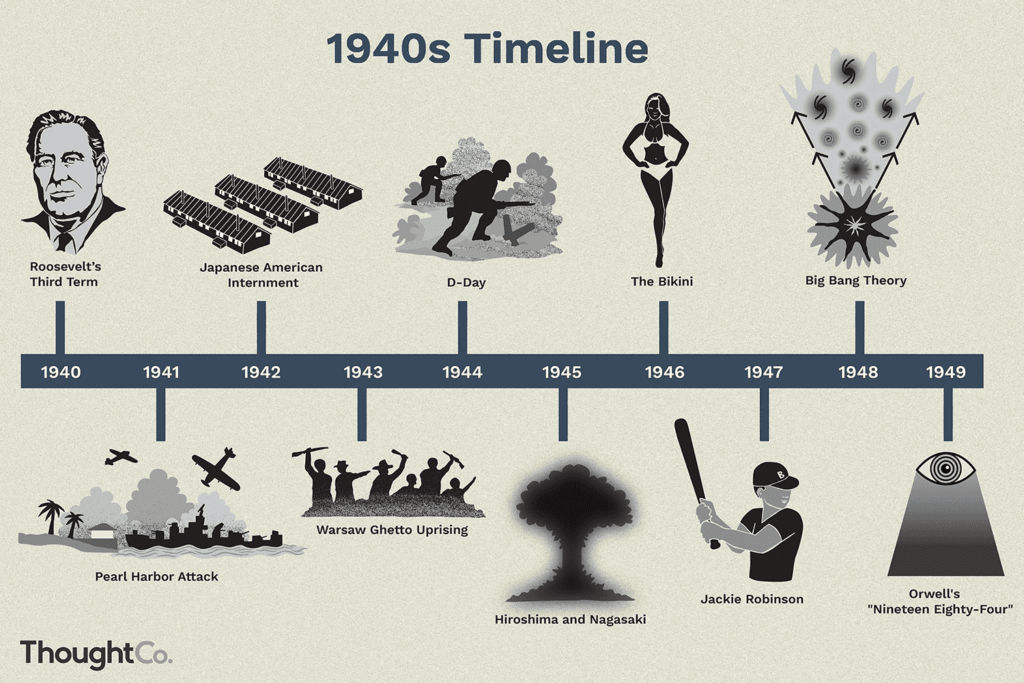
The 1940s opened with the world already at war. Germany’s invasion of Poland on September 1, 1939, triggered declarations of war from Britain and France two days later. The conflict expanded rapidly: the fall of France and Dunkirk in 1940, the Battle of Britain and the Blitz, the German invasion of the Soviet Union in 1941, and the Japanese attack on Pearl Harbor on December 7, 1941, which brought the United States into the war. The Allies fought on multiple fronts—North Africa, the Pacific, the Eastern Front—while the Holocaust unfolded as Nazi Germany systematically murdered approximately six million European Jews. The war reached its climax with the D-Day landings on June 6, 1944, and the atomic bombings of Hiroshima and Nagasaki in August 1945, which led to Japan’s surrender and the end of World War II.
The post-war years were marked by reconstruction and new conflicts. The Nuremberg trials held prominent Nazi leaders accountable, the United Nations was established, and the Cold War began to take shape. In 1948, the State of Israel was declared, and the decade closed with the Berlin Airlift and the division of Europe. The 1940s were, as The New Yorker’s anthology later described, “a decade of trauma and upheaval.”
How It Was Seen at the Time
Contemporaries experienced the decade not as a neat narrative but as a series of immediate, often terrifying moments. The BBC’s People’s War project preserves the memory of Colin Paine, who recalled the outbreak of war with vivid sensory detail:
“A heatwave … most houses with windows and doors wide open … wireless (radios!) on for crisis news as Germany invades Poland. Herne Bay fishermen tell us of receiving call-up papers for the Merchant and the Royal Navies … ultimatum given to Hitler to withdraw from Poland by Sunday 3rd September ‘or a state of war will exist…’ Friday 1st September, seafront lights turned off.”
The mood was a mixture of disbelief and resignation. The World at War oral history, compiled from interviews with key participants—from civilians to generals—captured the sense of a world in flux. As the decade progressed, the language of total war—rationing, evacuation, blackouts—became part of everyday speech. The New Yorker, which came of age during these years, published pieces by Elizabeth Bishop, Langston Hughes, Joseph Mitchell, Vladimir Nabokov, and George Orwell, reflecting the cultural and political anxieties of the time.
Historical Snapshot
| Aspect | Detail |
|---|---|
| Date | 1939–1949 |
| Place | Global—Europe, Asia, North Africa, the Pacific, and the Americas |
| People | Winston Churchill, Franklin D. Roosevelt, Adolf Hitler, Joseph Stalin, Harry S. Truman, and millions of ordinary soldiers and civilians |
| What Happened | World War II (1939–1945) followed by post-war reconstruction, the Holocaust, the atomic bomb, and the onset of the Cold War |
| Why It Mattered | The decade reshaped global power, led to the creation of the United Nations and Israel, and introduced the nuclear age |
What People Knew at the Time
| What People Knew Then | What We Know Now |
|---|---|
| That the war was a life-or-death struggle; that Germany and Japan were enemies; that the Allies were fighting for democracy. | The full scale of the Holocaust—six million Jews murdered—was not widely known until the camps were liberated in 1945. |
| That the atomic bomb was a new and terrible weapon; many believed it would end all wars. | The long-term effects of radiation and the nuclear arms race became clear only in later decades. |
| That the post-war world would be shaped by the victorious Allies; the Cold War was not yet a dominant framework. | Historians now see the 1940s as the seedbed of the Cold War, with the division of Europe and the nuclear standoff. |
Eyewitness Accounts
Eyewitness testimony is the backbone of our understanding of the 1940s. The BBC’s People’s War project collected thousands of personal stories, including that of Colin Paine, who described the sudden transformation of everyday life:
“We cross a London transformed … sandbag-clad buildings, trenches being dug in the royal parks, uniforms everywhere.”
The World at War oral history, drawn from previously unpublished archives, offers the voices of statesmen, generals, and ordinary citizens. One chapter, “Germany’s Hitler,” traces the rise of Nazism through the testimony of those who lived through it. Another, “The Holocaust,” presents the harrowing accounts of survivors and liberators. These accounts are not detached records but emotional, fragmented memories—yet they convey the immediacy of events better than any summary.
What People Feared
Fear was a constant companion. In Britain, the fear of invasion and bombing was palpable; the Blitz brought the war to civilians’ doorsteps. In the United States, after Pearl Harbor, there was widespread fear of Japanese attacks on the West Coast, leading to the internment of Japanese Americans. As the war progressed, the fear of new weapons—rockets, jet aircraft, and ultimately the atomic bomb—grew. The New Yorker’s 1946 issue devoted entirely to John Hersey’s account of the Hiroshima bombing revealed the human cost of nuclear war, prompting both horror and a new kind of anxiety. People also feared the unknown: what would happen after the war? Would the peace last? The BBC memoir captures the uncertainty of September 1939, when no one knew how long the war would last or what it would bring.
Daily Life
Daily life in the 1940s was shaped by scarcity and disruption. Rationing of food, clothing, and fuel was common in Britain and other combatant nations. The BBC memoir describes a pre-war holiday in Herne Bay with pier concert parties and trips on paddle steamers—a world that vanished almost overnight. In the United States, the war effort brought full employment but also shortages of consumer goods. The New Yorker’s profiles of figures like Albert Einstein, Walt Disney, and Eleanor Roosevelt reflect the cultural landscape, while its reporting on the war, such as John Hersey’s account of a naval lieutenant’s heroism, brought the front lines home. For civilians, the blackout, air-raid sirens, and the constant newsreels in cinemas were part of the fabric of existence. The decade also saw social change: women entered the workforce in unprecedented numbers, and African Americans and other minorities pushed for civil rights, though these struggles were often overshadowed by the war.
How Historians See It Today
Modern historians view the 1940s as a watershed, but they also recognize that contemporaries did not have the benefit of hindsight. The New Yorker’s 2014 anthology, The 40s: The Story of a Decade, edited by Henry Finder with an introduction by David Remnick, places original pieces from the era alongside reflections by today’s writers. This approach highlights the difference between how events were understood at the time and how they are interpreted now. For example, the full extent of the Holocaust was not known to the public until the liberation of the camps, and even then, the scale was difficult to grasp. Similarly, the atomic bomb was initially seen as a necessary means to end the war, but its long-term consequences—both human and geopolitical—became clear only later. Historians now emphasize the global nature of the conflict, the role of colonial peoples, and the social transformations that the war accelerated. The 1940s, they argue, were not just a military struggle but a decade that remade the world in ways that contemporaries could only dimly perceive.
The primary sources of the 1940s—memoirs, letters, oral histories, and journalism—offer a window into a world that was both familiar and alien. They remind us that history is not a series of dates but a lived experience, filled with fear, hope, and uncertainty. The decade’s legacy, from the United Nations to the nuclear age, continues to shape our own time, and the voices of those who lived through it remain essential to understanding its meaning.
FAQ
What was the most common fear among civilians in the 1940s?
Civilians feared invasion, bombing, and the unknown duration of the war. In Britain, the Blitz brought the war home, while in the United States, the attack on Pearl Harbor sparked fears of further attacks. Later, the atomic bomb created a new kind of existential fear.
How did people get news during the 1940s?
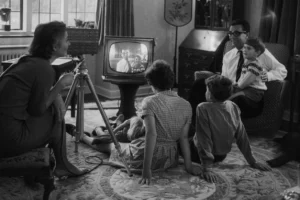
People relied on radio broadcasts, newspapers, newsreels in cinemas, and word of mouth. The BBC memoir describes families gathering around the wireless for crisis news, and newspapers were a primary source of information about the war.



Leave a Reply