
Short Answer
Quick Snapshot
In 1971 Dhaka was the capital of East Pakistan and the focal point of a political crisis that became a war of independence. The city had returned an overwhelming majority for the Awami League in the 1970 elections, but the refusal to transfer power, followed by the Pakistani military’s crackdown, turned Dhaka into a city under occupation, curfew, and fear. By December 1971 it was again the stage on which the war ended, as Pakistani forces surrendered at the Ramna Race Course and Bangladesh emerged as a new state.
This article uses Dhaka in 1971 in its most common encyclopedic sense: the capital city of East Pakistan during the Liberation War, not the wider Bengal delta or the whole of Bangladesh. The city’s experience was shaped by its role as an administrative, educational, and commercial centre, and by the proximity of its university, old town, cantonment, and riverfront to the violence and politics of the year.
Everyday life was transformed. Curfews, checkpoints, shortages, disappearances, and the destruction of neighbourhoods made ordinary routines dangerous. Yet Dhaka also remained a place of rickshaws, family networks, clandestine rumours, resistance, and survival. Its streets and institutions became symbols of both the brutality of the war and the birth of Bangladesh.
Dhaka in 1971
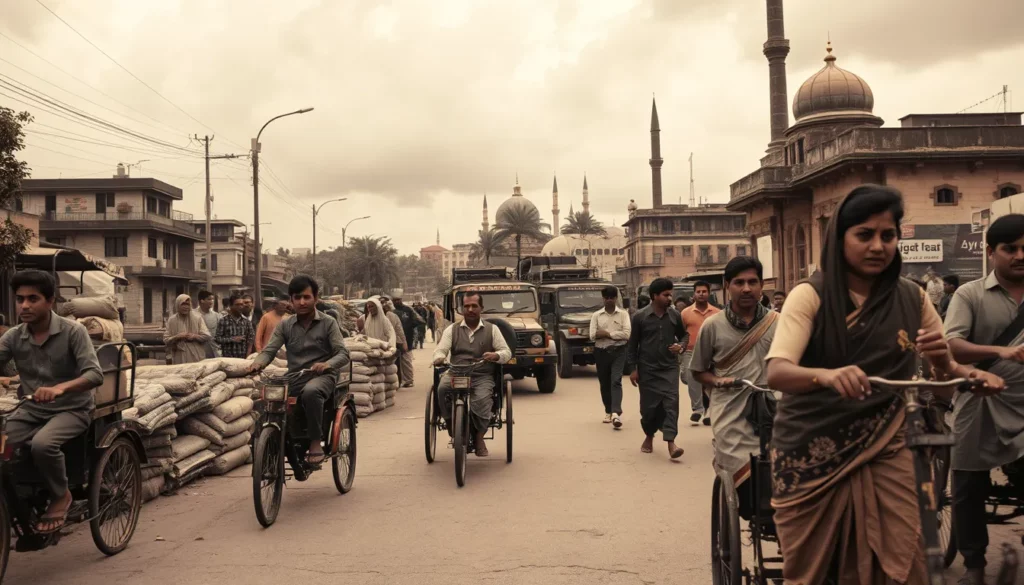
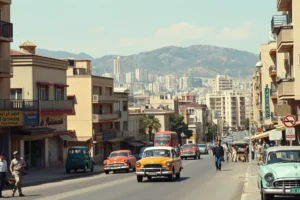
Dhaka lies on the Buriganga River in the flat, humid Bengal delta. In 1971 the city combined an old Mughal-era core with colonial-era streets, government offices, educational institutions, and newer residential quarters. The University of Dhaka, the Ramna Race Course, the cantonment, and the riverfront were not merely landmarks; they were political spaces. The city’s climate was tropical, with hot weather, heavy monsoon rains, and the dense humidity that shaped daily movement and public life.
The atmosphere in 1971 moved from political exhilaration to dread. In January and February, processions, strikes, and meetings filled the streets. After 1 March, when the National Assembly was postponed, non-cooperation spread through Dhaka. From late March, military vehicles, barricades, and patrols became part of the urban landscape. The city’s sounds changed: slogans and songs gave way to gunfire, armoured vehicles, and the silence of curfew.
Population & Economy
No exact wartime census exists for Dhaka in 1971. Estimates commonly place the city’s population at roughly 1.3 to 1.5 million, with a Bengali Muslim majority, a significant Hindu minority, and Urdu-speaking communities including many Biharis. The city also contained students, civil servants, labourers, traders, and refugees from rural areas. War caused displacement into and out of Dhaka, but the scale is difficult to measure because records were disrupted and many people fled to India or to the countryside.
Dhaka’s economy was built on government administration, jute and textile trade, small manufacturing, printing, food processing, and river commerce. The port and rail links connected the city to the delta and to Chittagong. Wartime conditions damaged this economy severely. Offices and schools closed, factories operated intermittently, and transport was restricted. Rice, dal, cooking oil, and other staples became scarce; black-market prices rose; wages lost value; and unemployment spread as normal trade contracted.
Cost-of-living details from 1971 are fragmentary, but contemporary accounts describe hoarding, profiteering, and dependence on relief or village relatives. For many families, the key economic question was not price but access: whether one could leave home under curfew, find food in the market, or reach a safer neighbourhood.
Government & Politics
As the capital of East Pakistan, Dhaka was the seat of the provincial governor and administration. In 1971 the Governor was Vice Admiral S.M. Ahsan; later, under martial law, Lt. Gen. Tikka Khan was appointed Governor of East Pakistan. Real power, however, lay with the Pakistani military and with the political forces contesting the future of the province. Sheikh Mujibur Rahman and the Awami League dominated East Pakistani politics after the 1970 election, while President Yahya Khan and the Pakistan People’s Party’s Zulfikar Ali Bhutto resisted the consequences of that result.
Dhaka’s political climate moved through three phases. First came negotiation and non-cooperation, including Sheikh Mujib’s 7 March speech at the Race Course. Second came the military crackdown of 25–26 March, the arrest of Sheikh Mujib, and the imposition of curfew and military rule. Third came occupation and resistance, as the Mukti Bahini and urban guerrillas challenged Pakistani control. The city’s municipal administration was subordinated to military priorities, and political activity was driven underground or into exile.
“The struggle this time is for emancipation! The struggle this time is for independence!” — Sheikh Mujibur Rahman, Race Course, Dhaka, 7 March 1971
Industry
Dhaka’s industries in 1971 included jute processing and trade, textiles, printing and publishing, food processing, and small workshops producing metal goods, furniture, and consumer items. The city’s commercial life depended heavily on the Buriganga riverfront, where boats brought rice, fish, vegetables, and building materials. Government printing presses, newspapers, and educational institutions also formed part of the urban economy.
War disrupted every sector. Jute exports were affected by the wider conflict, factories faced fuel and parts shortages, and many businesses closed during curfews. Small traders and rickshaw pullers suffered when markets emptied and movement was restricted. Some workshops and presses became sites of clandestine political activity, while others were damaged or abandoned.
Education
Dhaka was the educational centre of East Pakistan. The University of Dhaka, Dhaka College, Jagannath College, the medical college, and numerous schools drew students from across the province. Students had long been central to Bengali political activism, and in 1971 campuses became arenas of mobilization, debate, and later repression. The military crackdown targeted university areas, and the damage to institutions and the killing of students and teachers became part of the war’s traumatic memory.
Literacy remained limited, especially among the poor and in rural areas, but Dhaka possessed a substantial educated class of teachers, lawyers, journalists, doctors, and civil servants. Formal education was largely suspended during the war, and many students joined Resistance or relief efforts. Schools that remained open operated irregularly under curfew and insecurity.
Transportation
In 1971 people moved around Dhaka by rickshaw, cycle rickshaw, bus, taxi, train, and river launch. The rickshaw was essential for short journeys, while buses and railways connected the city to surrounding districts. The Buriganga riverfront handled passengers and goods, and the airport linked Dhaka to West Pakistan and the wider world.
War transformed transport into a matter of survival. Curfews restricted movement, checkpoints multiplied, and military vehicles took priority on roads. Railways and river routes were disrupted by fighting and by the movement of refugees. For civilians, the safest journey was often on foot through lanes and neighbourhoods, avoiding main roads after dark.
Everyday Life
Daily life in Dhaka in 1971 was organized around uncertainty. Families stockpiled rice and lentils when they could, shared news by radio and word of mouth, and observed curfews that could be imposed or extended without warning. Housing ranged from crowded old-town tenements to middle-class quarters and government residences. Clothing followed familiar patterns: saris, lungis, pajamas, and shirts, with many people dressing more simply as conditions worsened.
Food was central to daily anxiety. Rice, fish, vegetables, dal, and tea were staples, but supplies were irregular and prices unstable. Markets opened unpredictably. Entertainment diminished as cinemas and public gatherings closed, though people continued to meet in courtyards and homes, listen to radios, recite poetry, and exchange rumours. Social customs continued under pressure: births, marriages, and funerals were held quietly, often with fewer guests and under the shadow of violence.
Family life was marked by separation. Men and boys might be detained or go into hiding; women often managed households under curfew; children lost schooling and witnessed violence. Neighbours formed informal networks of help, but fear of informers and soldiers made trust complicated.
Major Events
The year’s decisive events were political and military. On 1 March 1971 Yahya Khan postponed the National Assembly, provoking strikes and non-cooperation in Dhaka. On 7 March Sheikh Mujibur Rahman delivered his historic speech at the Race Course, calling for the struggle for emancipation and independence. On 23 March, Pakistan Day, many Bengali households and offices observed Resistance Day, and Bangladeshi flags were raised in parts of the city.
On the night of 25–26 March, the Pakistani military launched Operation Searchlight in Dhaka. Troops attacked the university, police lines, and neighbourhoods associated with political resistance. Sheikh Mujib was arrested and taken to West Pakistan. The crackdown was followed by curfews, killings, and mass displacement. Resistance continued through the Mukti Bahini and urban networks, while the provisional Bangladesh government was formed in April outside Dhaka.
By December, Indian forces and Mukti Bahini had closed in on Dhaka. On 16 December 1971, Lt. Gen. A.A.K. Niazi signed the Instrument of Surrender at the Ramna Race Course, accepted by Lt. Gen. Jagjit Singh Aurora. The surrender ended the war in East Pakistan and marked the birth of Bangladesh, with Dhaka as its capital.
What Newspapers Were Reporting
Before the crackdown, Dhaka’s newspapers covered the political crisis intensely. The Daily Ittefaq, The People, Sangbad, and other papers reported strikes, negotiations, and Awami League statements. After 25 March, publication was disrupted, offices were controlled or closed, and military censorship shaped what could be printed. Reports of casualties and resistance were often suppressed or heavily restricted.
During the occupation, official statements and curfew notices dominated the press. Newspapers that continued to appear operated under close surveillance. In the final weeks of 1971, as Indian forces advanced, reporting focused on military movements, refugee flows, and the impending surrender. The newspaper record is therefore valuable but incomplete: it reveals both the political language of the time and the limits imposed on public information.
What People Were Talking About
Conversations in Dhaka in 1971 turned on survival and loyalty. People asked whether India would intervene, whether Sheikh Mujib would be released, and whether the Mukti Bahini could liberate the city. Rumours spread about troop movements, disappearances, and massacres. Families debated whether to flee to villages or to India. Neighbours discussed food shortages, curfews, and the safety of children.
Letters, memoirs, and oral histories record fear of informers and the difficulty of knowing whom to trust. Some people celebrated Bengali resistance; others worried about reprisals. The war also forced painful questions about identity: Bengali, Muslim, Pakistani, or Bangladeshi. These debates were conducted quietly, in homes and tea stalls, against the background of military patrols and radio broadcasts.
Historical Photographs
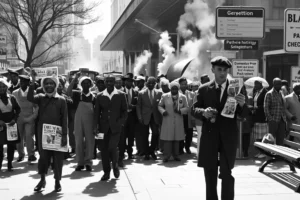
Photographs of Dhaka in 1971 form a powerful visual record. Images show Pakistani soldiers at checkpoints, damaged buildings around the university, refugees on roads and at river ghats, rickshaws passing barricades, and the surrender ceremony at the Ramna Race Course. Press photographers and later archivists preserved scenes of both violence and ordinary endurance.
These photographs are held in archives, museums, and newspaper collections, including the Liberation War Museum in Dhaka and international press archives. They must be read critically: many were taken under censorship or by outside observers, and captions can reflect wartime propaganda. Yet they remain essential evidence of the city’s physical condition and the human experience of occupation and liberation.
Documents & Primary Sources
Historians study Dhaka in 1971 through a range of primary sources. Census records from 1961 and the postwar 1974 census help estimate population and displacement, though neither captures the wartime city precisely. Maps, municipal records, and military communiqués show the geography of control. Newspapers, leaflets, and Awami League statements document political mobilization. Sheikh Mujib’s 7 March speech survives as an audio recording and transcript.
Personal letters, diaries, memoirs, and oral histories provide insight into everyday life and violence. Pakistani government papers, Indian military records, United Nations reports on refugees, and trial documents from later war-crimes proceedings add further evidence. Researchers must compare these sources carefully because wartime records were destroyed, censored, or produced for propaganda purposes.
1971 Timeline
| Date | Event |
|---|---|
| 1 March | Yahya Khan postpones the National Assembly; protests and non-cooperation spread in Dhaka. |
| 7 March | Sheikh Mujibur Rahman delivers his Race Course speech calling for emancipation and independence. |
| 23 March | Resistance Day is observed in Dhaka; Bangladeshi flags are raised in parts of the city. |
| 25–26 March | Operation Searchlight begins; the Pakistani military attacks the university and other targets; Sheikh Mujib is arrested. |
| 26 March | Bangladesh’s independence is declared; resistance continues under curfew and military occupation. |
| April | A provisional Bangladesh government is formed outside Dhaka; guerrilla resistance grows. |
| December | Indian and Mukti Bahini forces close in on Dhaka. |
| 16 December | Pakistani forces surrender at the Ramna Race Course; Bangladesh is established. |
What Changed Next
After December 1971, Dhaka became the capital of an independent Bangladesh. Sheikh Mujib returned in January 1972 to a city scarred by war, and the new government faced reconstruction, refugee resettlement, and the building of state institutions. The 1972 constitution established a parliamentary democracy, though political instability soon followed. Dhaka grew rapidly as people moved in from rural areas, and the city’s population and economy expanded amid continuing challenges.
The war’s consequences endured in memory, architecture, and politics. The university area, old town, and Ramna remained sites of commemoration. Later famines, coups, and political upheavals shaped the city further, but 1971 remained the founding rupture: the year Dhaka moved from provincial capital to national capital through war and independence.
Sources
- Raghavan, Srinath. 1971: A Global History of the Creation of Bangladesh. Harvard University Press, 2013. https://ku.ac.bd/discipline/uploads/offered-course-material/Srinath%20Raghavan%20-%201971_%20A%20Global%20History%20of%20the%20Creation%20of%20Bangladesh-Harvard%20University%20Press%20(2013).pdf
- Alam, Mohit Ul, and Abu Md. Delwar Hossain, eds. Dhaka in the Liberation War 1971. Asiatic Society of Bangladesh, 2011. https://www.learnedbooks.com/books/dhaka-in-liberation-war-1971
- Bass, Gary J. The Blood Telegram: Nixon, Kissinger, and a Forgotten Genocide. Alfred A. Knopf, 2013.
- Schendel, Willem van. A History of Bangladesh. Cambridge University Press, 2009.
- Government of Bangladesh. Bangladesh Documents. Ministry of Foreign Affairs, 1971–72.
FAQ
What was the population of Dhaka in 1971?
No exact wartime census exists; estimates for Dhaka city in 1971 commonly fall around 1.3–1.5 million, with the population displaced by conflict.
What major events happened in Dhaka in 1971?
Key events include the 7 March Race Course speech, Operation Searchlight on 25–26 March, Sheikh Mujib’s arrest, the occupation and resistance, and the 16 December surrender at Ramna Race Course.
What primary sources are available for studying Dhaka in 1971?
Sources include newspapers, Sheikh Mujib’s 7 March speech, census records, military communiqués, maps, letters, diaries, memoirs, oral histories, UN refugee reports, and trial documents.
How did daily life in Dhaka in 1971 differ from today?
Daily life was shaped by curfews, checkpoints, shortages, disrupted schools, limited transport, wartime violence, and the absence of modern communications; fear and separation were routine.










Leave a Reply