
Short Answer
In the early 1970s, a visitor stepping out of the old Souq into the sun-baked streets of Kuwait City would have been struck by a jarring contrast: the low, mudbrick courtyard houses of the pre-oil era stood cheek by jowl with the first marble-fronted office blocks and wide, newly paved highways. The city was being remade at a pace few had ever witnessed. Expatriates who lived there remember it as a kind of paradise—one woman wrote in 2007 that “Kuwait in the 1970’s was called the Paris of the Gulf,” a place of nostalgia for those who had known it. Yet behind the gleaming facade lay a deeper story of a town that was being demolished, replanned, and reconstructed as a symbol of prosperity. This was the decade when the skyline of Kuwait City became a billboard for oil wealth—and when the lived reality of the city began to diverge sharply from the spectacle it presented to the world.
What Happened?
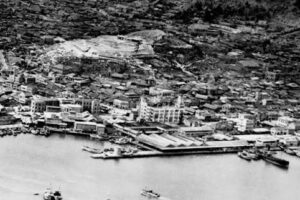
Kuwait City’s transformation began in earnest after the discovery of oil, but it was in the 1970s that the skyline truly changed. According to the scholarly study Kuwait’s Modern Spectacle: Oil Wealth and the Making of a New Capital City, 1950-90, the state, between 1951 and 1971, had devoted enormous effort and expense to planning a capital city that would celebrate its newfound prosperity. By the 1970s, that plan had produced a city of “marble-fronted buildings, vast suburbs, and wide highways,” as the book Kuwait Transformed describes it. The old town of mudbrick houses and narrow lanes was largely demolished and replaced with a grid of wide streets and modern towers.
Key events and features of this transformation include:
- Demolition of the pre-oil town and its replacement with a planned modern city, beginning in the 1950s but accelerating in the 1970s.
- Construction of the Kuwait Water Towers, the Kuwait Towers, and other monumental public buildings that became icons of the new skyline.
- Expansion of the city outward into vast suburbs, connected by a new highway network.
- An influx of expatriate workers, who came to build and run the new city, creating a new social landscape.
- By the mid-1970s, the city was widely described as the “Paris of the Gulf,” a phrase captured in an expat blog from 2007, which recalled that people who lived there “talk about it with great nostalgia, they call it paradise.”
Yet the same scholarly source argues that this modern city was “more of a spectacle than a lived reality.” The state’s development projects focused more on how the city looked than on how it actually worked, creating an urban spectacle that gave the impression of rapid modernization “despite the fact that, behind the scenes, it was…” (the source leaves the sentence unfinished, but the implication is that the city was not as functional as it appeared).
How It Was Seen at the Time
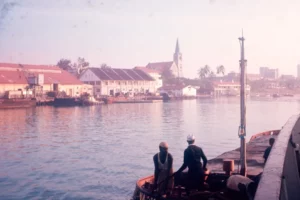
For contemporaries, the transformation was widely experienced as a triumph of progress and modernity. The expat community, in particular, embraced the new skyline. The blog Here There and Everywhere (2007) captures this sentiment: “Kuwait in the 1970’s was called the Paris of the Gulf. People who lived here then talk about it with great nostalgia, they call it paradise.” The same source notes that the city was “an old trading city, full of merchants and traders,” and that Kuwaitis had a “tradition of tolerance and sophistication found nowhere else in the Gulf.”
“Kuwait in the 1970’s was called the Paris of the Gulf. People who lived here then talk about it with great nostalgia, they call it paradise.” — Expat blogger, 2007, recalling the 1970s
However, a more critical view also circulated at the time. The scholarly article Kuwait’s Modern Spectacle (2013) argues that the “modern” city was “more of a spectacle than a lived reality.” It notes that the state’s planning efforts, while costly, produced a city that “focused more on how it looked than on how it actually worked.” The visual impression of modernity was paramount, but the lived experience of the city—its infrastructure, its social spaces, its everyday functionality—lagged behind the image.
Historical Snapshot
| Aspect | Detail |
|---|---|
| Date | 1970s (with roots in the 1950s–1960s) |
| Place | Kuwait City, Kuwait |
| People | Kuwaiti state planners, expatriate workers, Kuwaiti citizens, foreign consultants |
| What Happened | The old town was demolished and replaced with a modern city of marble-fronted buildings, highways, and suburbs, funded by oil revenue. |
| Why It Mattered | It marked the first Gulf city to experience oil urbanization, setting a pattern for the region, but it also created a city that was more spectacle than lived reality. |
Eyewitness Accounts
The most direct eyewitness account available is the blog post from 2007, written by an expat who had lived in Kuwait and who recalled the 1970s with nostalgia. The blogger writes:
“Kuwait was an old trading city, full of merchants and traders. Kuwaiti men went out on fishing boats, and pearling boats, and the love of the sea is still deep in the Kuwaiti soul. The women were strong and adventurous, and took care of all the family business while the men were out to sea. Kuwait had a tradition of tolerance and sophistication found nowhere else in the Gulf. So many changes since then, and so much building since the capture of Saddam Hussein.”
This account is valuable because it contrasts the pre-oil city with the modern skyline, and it expresses the nostalgia of those who witnessed the transformation. It also notes the changing skyline, which the blogger later posted photographs of. While this is a retrospective account from 2007, it is a primary source for the memory of the 1970s.
What People Knew at the Time
| What People Knew Then | What We Know Now |
|---|---|
| They saw a city rising from the sand, a symbol of progress and prosperity. | Modern historians recognize that the city was a “spectacle” that prioritized appearance over function, with significant gaps between the image and the lived reality. |
| They believed the transformation was an inevitable and positive outcome of oil wealth. | Scholars now argue that the transformation was a deliberate state project, but one that created a city that “was more of a spectacle than a lived reality” (MUSE article). |
| They viewed the old town as backward and the new city as forward-looking. | Later scholars, such as Farah Al-Nakib in Kuwait Transformed, connect the city’s past and present, showing how the old town was a vibrant place that was lost. |
How Historians See It Today
Modern scholarship has moved beyond the “rags to riches” narrative that dominated official discourse. The article Kuwait’s Modern Spectacle (2013) explicitly complicates this paradigm, arguing that the “modern” city was more spectacle than lived reality. Farah Al-Nakib’s Kuwait Transformed (2016) traces the relationships between the urban landscape, patterns and practices of everyday life, and the city’s history from 1716 to the twenty-first century. The book Iridescent Kuwait (2021) investigates petroleum’s role in the visual culture of Kuwait, discussing the “ambiguous contribution to modernity: both promise of prosperity and destructive force of sociocultural and ecological environments.”
Historians today thus view the 1970s skyline not simply as a symbol of progress, but as a contested site where the state’s vision of modernity collided with the actual needs and practices of the city’s inhabitants. The transformation was real, but it was also a spectacle—a visual and political performance of wealth and progress that masked deeper social and functional problems.
Common Misconceptions
The 1970s skyline was a natural, unplanned outcome of oil wealth.
The state actively planned and implemented the transformation, as documented in the 1951–1971 planning efforts described in the MUSE article.
The modern city was a fully functional, livable urban space.
The scholarly consensus is that the city was more spectacle than lived reality; it looked modern but did not always work as a rational, usable city.
The old town was destroyed because it was backward.
The demolition was a deliberate choice to create a new capital city that would celebrate oil wealth, as argued in the MUSE article.
Daily Life
Daily life in the 1970s Kuwait City was a study in contrasts. The expat blogger describes the old trading city with its deep connection to the sea: “Kuwaiti men went out on fishing boats, and pearling boats, and the love of the sea is still deep in the Kuwaiti soul.” Yet the new city was being built for a different life—one of highways, air-conditioned buildings, and suburban villas. The old courtyard houses, where families lived in close proximity, were replaced by modern apartments and houses. The state’s planning favored the car, and the wide highways encouraged a new way of living that was less pedestrian and more dispersed. The influx of expatriate workers created a new social layer, as the city’s population swelled. The blog notes that “so many changes since then, and so much building,” suggesting that the pace of change was overwhelming for many. The contrast between the old and new was not just visual but also social, as the traditional merchant and pearling economy gave way to the oil economy.
Aftermath
By the end of the 1970s, the skyline of Kuwait City had been completely transformed. The new city was the symbol of the nation’s oil wealth, and it would become a model for other Gulf cities. However, the spectacle did not fully solve the city’s functional problems. The MUSE article suggests that from the early 1960s onward, the state’s development projects focused more on appearance than on functionality, and this pattern continued into the 1980s. The aftermath of the 1970s was a city that looked modern but struggled with the same issues that many rapidly oil-urbanized cities faced: infrastructure strains, social inequality, and a disconnect between the planned city and the lived city. The legacy of the 1970s skyline remains visible today, but it is also a subject of critical study, as historians continue to examine the gap between the spectacle and the reality.
In conclusion, the primary sources of the 1970s—the nostalgic memories of expats, the photographs of the changing skyline, and the state’s own planning documents—reveal a city that was remade in the image of oil wealth. The transformation was real, but it was also a spectacle, a careful construction of modernity that would shape the city for decades to come.
FAQ
What was the 'Paris of the Gulf' nickname about?
It was a popular nickname for Kuwait City in the 1970s, reflecting its rapid modernization, modern architecture, and cosmopolitan feel, as described by expat residents and recalled in the 2007 blog post.
Was the 1970s transformation of Kuwait City successful?
Contemporaries saw it as a success, but modern scholarship argues it was more of a spectacle than a lived reality. The city looked modern but did not always function as a rational, usable city, according to the MUSE article.









Leave a Reply