

Short Answer
In the early 1970s, the United States was a country caught between the fading promises of the 1960s and the hard realities of a new decade. The Vietnam War still dragged on, the economy had begun to sputter, and the first of two oil shocks would soon force Americans to wait in line at gas stations and wonder if the lights would stay on. At the same time, the culture was bursting with new sounds and styles: disco music thumped from nightclubs, bell-bottoms flared on city streets, and a new focus on personal fulfillment was taking hold in the middle class. Journalist Tom Wolfe would famously label the era the “Me Decade” in 1976, a time when many Americans, exhausted by the activism of the 1960s, turned inward to pursue therapy, self-improvement, and individual satisfaction. Yet beneath the glitter of the disco ball lay a profound anxiety—about energy, about the future, and about a nation that seemed to have lost its bearings.
What Happened?
The 1970s were, in many ways, a continuation of the 1960s. Women, African Americans, Native Americans, and other marginalized groups continued their fights for equality, and the antiwar movement remained vocal until the fall of Saigon in 1975. But the decade also marked a sharp repudiation of the previous one. A “New Right” mobilized in defense of political conservatism and traditional family roles, even as President Richard Nixon’s behavior and the ensuing Watergate scandal shattered public trust in the federal government.
The defining economic event of the decade was the Arab oil embargo of October 1973. In response to U.S. support for Israel during the Yom Kippur War, oil-producing Arab states cut off exports to the United States and several other countries. The cost of a barrel of oil roughly quadrupled, from around $3 to nearly $12, and gasoline prices at the pump soared. Fuel shortages, rising food costs, and inflation took hold across the country. Although the embargo was lifted in March 1974, higher fuel prices and a sense of energy insecurity persisted, culminating in a second oil crisis following the Iranian Revolution in 1979.
Amid these economic shocks, the decade saw the rise of the environmental movement, the expansion of feminism, and the emergence of gay liberation as a public cause. The first Earth Day was held in 1970, and the Environmental Protection Agency was created that same year. Women’s rights advanced with the legalization of abortion in Roe v. Wade (1973) and the growing strength of the women’s liberation movement. Meanwhile, the “Me Decade” saw a boom in psychotherapy, self-help books, and a higher divorce rate, as individuals increasingly left marriages that did not bring personal fulfillment.
How It Was Seen at the Time
Contemporaries saw the 1970s as a time of withdrawal and self-absorption. In 1976, journalist Tom Wolfe coined the term “The Me Decade” to describe the era. As the Encyclopedia.com notes, “In the eyes of many, Americans in the 1970s retreated from the political and social changes they had pursued in the 1960s and were happy to focus only on themselves.” This inward turn was partly a response to the economic slowdown. People became more concerned with protecting their families from financial trouble than with changing the world. The youthful baby boomers who had populated the activist movements of the 1960s were settling down, and they looked inward instead of outward. As one observer put it, “Fewer people protested in the streets, and many more visited therapists or sought to improve their spiritual lives.” The quest for individual perfection led to a higher divorce rate, as people found it more acceptable to leave a marriage if it did not make them happy.
“The Me Decade” — Tom Wolfe’s 1976 label for the 1970s, when Americans, in his view, turned from collective action to personal self-improvement.
Historical Snapshot
| Aspect | Detail |
|---|---|
| Date | 1973–1974 (first oil crisis); 1979 (second oil crisis) |
| Place | United States, with global effects |
| People | American consumers, oil producers, the New Right, feminist and gay rights activists, the “Me Generation” |
| What Happened | The Arab oil embargo, Watergate, economic stagflation, and the rise of disco and self-culture |
| Why It Mattered | It reshaped American energy policy, politics, and social norms, and left a lasting sense of insecurity |
Daily Life
Daily life in the 1970s was marked by the material consequences of the energy crisis. At the peak of the 1973–74 embargo, Americans waited in long lines at gas stations, sometimes for hours, and many stations limited purchases to a few dollars’ worth. The price of a gallon of gasoline, which had been around 30 cents in the early 1970s, rose to over 50 cents in many areas, and the cost of heating oil and food climbed as well. People began to carpool, to buy smaller and more fuel-efficient cars, and to turn down their thermostats. The term “energy crisis” entered the everyday vocabulary, and the government imposed price controls and speed limits to conserve fuel.
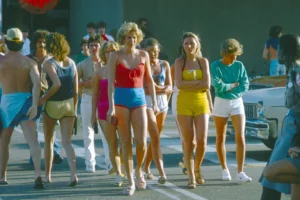
Beyond the pump, the decade was marked by a distinctive fashion and music scene. Bell-bottoms, tie-dye, and platform shoes were everywhere, and disco—with its pulsating beat and flashy nightlife—became the soundtrack of the late 1970s. For many, the disco floor was a place to escape the anxieties of the era. At home, the “Me Decade” meant a boom in self-help books, encounter groups, and a growing acceptance of therapy. The divorce rate climbed, and the two-career family became more common as women entered the workforce in greater numbers.
What People Feared
The 1970s were a time of intense fear and uncertainty. The oil crisis sparked fears of permanent energy scarcity and economic collapse. Americans worried about the future of the American Dream—whether they could afford to heat their homes, fill their gas tanks, and provide for their children. Inflation, which reached double digits by the end of the decade, eroded savings and wages. The Watergate scandal, which brought down a president, deepened a sense of cynicism and distrust in the government. There was also a broader cultural fear that the social fabric was unraveling, as divorce rates soared and the traditional family seemed to be under threat.
At the same time, there were fears about the environment. The first Earth Day in 1970 had raised awareness of pollution, and many feared that industrial growth was destroying the planet. The nuclear arms race continued, and the Cold War remained a constant backdrop. But the most immediate fears were economic: the fear of not having enough fuel, of not being able to pay the bills, and of a future that seemed less bright than the 1950s and 1960s.
What People Expected Would Happen Next
Contemporary expectations were often bleak. Many Americans believed that the energy crisis would be a permanent condition, that oil prices would continue to rise, and that the American standard of living would decline. Some predicted the end of the automobile culture, with a return to smaller, more efficient cars and alternative energy sources. The government promoted solar and nuclear power, and there was talk of a future of wind and solar. At the same time, there was a sense of cultural pessimism: some feared that the social fabric would continue to tear, that divorce would become the norm, and that the “Me Decade” would lead to a permanent retreat from civic engagement.
Yet there were also expectations of technological progress. The 1970s saw the emergence of the personal computer, the video game, and the beginning of the internet. Many people expected that technology would solve the energy problem and improve daily life. In the end, the oil crisis of the 1970s did not lead to a permanent collapse; rather, it prompted a shift toward energy conservation and the development of new technologies. But the expectations of the time were heavily weighted toward uncertainty and fear.
Contemporary Terminology
The 1970s introduced a number of terms that captured the spirit of the era. “The Me Decade,” coined by Tom Wolfe in 1976, described the turn toward self-absorption. “Stagflation,” a blend of stagnation and inflation, described the unusual combination of high unemployment and high inflation that plagued the economy. “Energy crisis” and “oil embargo” became household words. The term “disco” referred to both a music genre and the dance clubs where it was played. “Bell-bottoms” described the flared pants that were a fashion staple. The phrase “New Right” described the emerging conservative movement that challenged the liberal consensus. “Watergate” became shorthand for political scandal and corruption. These terms reflect the concerns and cultural shifts of the decade.
How Historians See It Today
Modern historians have reassessed the 1970s, often challenging the negative image that the decade has acquired. As the BBC’s historian Dominic Sandbrook points out, “Of all post-war decades, the 1970s has undoubtedly had the worst press, but the truth is that most ordinary families in 1970s Britain were better off than ever.” The same was true in the United States. While the oil crises and inflation caused real hardship, many Americans enjoyed rising incomes, improved housing, and new consumer goods. The decade also saw major social progress, including the expansion of civil rights and the beginnings of the environmental movement. Historians now view the 1970s as a transitional period between the post-war boom and the neo-liberal era of the 1980s, a time when the United States and other Western countries adjusted to new economic realities. The “Me Decade” is now seen not simply as a retreat from activism, but as a complex response to the exhaustion of the 1960s and the challenges of a changing economy.
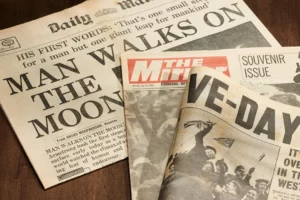
In retrospect, the 1970s were not just a hangover from the 1960s, but a decade with its own distinct character and legacy. The oil crises forced a rethinking of energy policy, the social movements of the decade laid the groundwork for later advances, and the culture of self-improvement continues to influence American life today. The primary sources—newspapers, diaries, and the words of contemporaries like Tom Wolfe—capture the anxiety and the hope, the fear and the fun, of a decade that was far more complex than the caricature of bell-bottoms and disco.
FAQ
What was the 'Me Decade'?
The 'Me Decade' was a term coined by journalist Tom Wolfe in 1976 to describe the 1970s, when Americans, after the social activism of the 1960s, turned inward to focus on personal fulfillment, therapy, and self-improvement. It reflected a shift from collective action to individual self-concern.
How did the oil crisis affect daily life in the 1970s?
The 1973 Arab oil embargo caused oil prices to quadruple, leading to fuel shortages, long lines at gas stations, rising food costs, and inflation. Americans had to conserve energy, and the crisis shaped everything from car choices to home heating practices.










Leave a Reply