Short Answer
Quick Snapshot
In 1969, the United States was a nation of contrasts—technological triumph and social turmoil. On July 20, millions watched as Neil Armstrong and Buzz Aldrin became the first humans to walk on the Moon, fulfilling President John F. Kennedy’s 1961 challenge. Yet the same year saw the Vietnam War escalate, the Stonewall riots ignite the modern LGBTQ+ rights movement, and the Woodstock festival draw over 400,000 young people in a celebration of counterculture. Richard Nixon took office in January, promising an “era of negotiation” in Vietnam, but the war’s divisiveness continued to tear at the social fabric.
The year also witnessed the Manson family murders, the Chappaquiddick incident, and Hurricane Camille’s devastation along the Gulf Coast. Economically, the nation experienced steady growth, though inflation began to rise. The average movie ticket cost $1.50, and television was the dominant medium, broadcasting the moon landing to an estimated 600 million viewers worldwide. It was a year of profound change, setting the stage for the 1970s.
United States in 1969
Geographically, the United States spanned from the Atlantic to the Pacific, with a population of approximately 202 million. The climate varied dramatically—from the humid Southeast to the arid Southwest—and 1969 saw extreme weather, including Hurricane Camille, which struck Mississippi in August with winds over 175 mph, killing 256 people. The atmosphere was charged with political activism: anti-war protests, civil rights marches, and a growing environmental movement. The nation was also deeply engaged in the space race, with the Apollo program capturing the public’s imagination.
Daily life was shaped by the Baby Boom generation coming of age. Suburban expansion continued, shopping malls proliferated, and the interstate highway system connected the country as never before. Television brought the world into living rooms, and color sets were becoming common. The overall mood was one of both optimism and anxiety—the future seemed bright, but the present was fraught with conflict.
Population & Economy
According to the U.S. Census Bureau’s Statistical Abstract for 1969, the population was about 202 million. The economy was robust, with a GDP of roughly $984 billion (in 1969 dollars). Unemployment averaged 3.5%, and inflation was around 5.5%. The median household income was about $8,500. Key economic sectors included manufacturing, aerospace, automotive, and services. The cost of living was modest: a loaf of bread cost about 23 cents, a gallon of gasoline 35 cents, and the average new home sold for $25,000. The stock market experienced volatility, with the Dow Jones Industrial Average reaching a high of 985 in December.
Employment was strong in industries tied to defense and space. The Apollo program employed hundreds of thousands across NASA centers and contractors. The Vietnam War also stimulated military spending. However, deindustrialization was beginning to affect some regions, and poverty remained a persistent issue, particularly in rural Appalachia and urban inner cities.
Government & Politics
Richard Nixon was inaugurated as the 37th President on January 20, 1969, succeeding Lyndon B. Johnson. Spiro Agnew became Vice President. The Supreme Court saw a change in leadership: Chief Justice Earl Warren retired in June, replaced by Warren E. Burger. Nixon’s administration focused on “law and order,” a response to urban riots and anti-war protests. He also pursued a policy of Vietnamization, gradually withdrawing U.S. troops while strengthening the South Vietnamese army. The political climate was deeply polarized, with the Democratic Party split between pro-war and anti-war factions. The Republican Party, under Nixon, sought to appeal to the “silent majority.”
In Congress, Democrats held majorities in both houses, but conservative coalitions often blocked liberal legislation. The Voting Rights Act of 1965 was being enforced, and the Civil Rights Movement continued, though with new leadership after Martin Luther King Jr.’s assassination in 1968. The Stonewall riots in June 1969 marked a turning point for LGBTQ+ activism, though it was not yet a mainstream political issue.
Industry
The aerospace industry was at its zenith, driven by the Apollo program. Boeing, Lockheed, and North American Rockwell were major employers. The automotive industry produced over 10 million vehicles, with Detroit’s Big Three—General Motors, Ford, and Chrysler—dominating. The technology sector was nascent, with IBM and Xerox leading in computing and photocopying. The oil and petrochemical industry expanded, and the first commercial jumbo jet, the Boeing 747, made its debut in 1969.
Manufacturing was the backbone of the economy, employing about 30% of the workforce. Steel, chemicals, and consumer goods were produced in vast quantities. The service sector was growing, including finance, healthcare, and education. The rise of television and advertising created new industries. The military-industrial complex was a significant economic driver, with contracts for weapons and equipment.
Education
Education in 1969 was undergoing significant changes. The baby boom generation filled schools and universities, leading to overcrowding and a need for new facilities. Higher education expanded rapidly, with community colleges proliferating. Student activism was rampant, with protests against the Vietnam War and for civil rights. The first college-level Black studies programs were established. Desegregation continued under federal court orders, though resistance remained in the South.
Primary and secondary education saw innovations like the “new math” and increased federal funding through the Elementary and Secondary Education Act. The National Assessment of Educational Progress (NAEP) was first administered in 1969. Literacy rates were high, around 99% for adults. Notable universities included Harvard, Yale, Berkeley, and the University of Michigan, all centers of student protest.
Transportation
The automobile was king. The Interstate Highway System, begun in 1956, was nearly complete, enabling long-distance road travel. Car ownership was nearly universal, with about 80% of households owning at least one vehicle. Air travel was becoming more accessible, though still a luxury for many. The Boeing 747’s first flight in February 1969 promised to revolutionize air travel. Rail passenger service was declining, but Amtrak was not yet created (it would come in 1971).
In cities, buses and subways were the main public transit, but many systems were aging. The first Earth Day in 1970 would highlight environmental concerns about auto emissions. Traffic congestion and highway construction often displaced urban neighborhoods. The National Traffic and Motor Vehicle Safety Act of 1966 was beginning to have an effect, with seat belts becoming standard.
Everyday Life
Daily life in 1969 was marked by distinct routines. Families typically lived in single-family homes in suburbs, with a car in the driveway and a television in the living room. Meals often included convenience foods like TV dinners and Jell-O. Clothing reflected the era: bell-bottoms, miniskirts, and tie-dye for the young, while adults wore suits and dresses. Entertainment centered on television, with shows like “The Brady Bunch” (premiering in 1969) and “Laugh-In.” Music was dominated by rock and roll, with Woodstock epitomizing the counterculture. Movies like “Butch Cassidy and the Sundance Kid” and “The Love Bug” were box office hits.
Social customs were changing. The sexual revolution and women’s liberation movement challenged traditional norms. The birth control pill was widely available, and the National Organization for Women (NOW) was active. The Vietnam War affected families directly, with many young men drafted. The draft lottery was introduced in December 1969. Community life revolved around churches, schools, and local organizations, but trust in institutions was declining.
Major Events
1969 was a year of landmark events. The most significant was the Apollo 11 moon landing on July 20, when Neil Armstrong and Buzz Aldrin walked on the lunar surface. The Woodstock Music & Art Fair took place in August, drawing over 400,000 people to a farm in Bethel, New York. The Stonewall riots in June marked the beginning of the gay liberation movement. Hurricane Camille struck the Gulf Coast in August, causing catastrophic damage. The Manson family murders in August shocked the nation. In January, an explosion on the USS Enterprise killed 27 people in Pearl Harbor. The Chappaquiddick incident involving Senator Ted Kennedy occurred in July. The Vietnam War continued with the Battle of Hamburger Hill in May. The first test flight of the Boeing 747 occurred in February.
These events were covered extensively by newspapers and television, shaping public consciousness. The moon landing was a unifying moment, while the war and social unrest were divisive.
What Newspapers Were Reporting
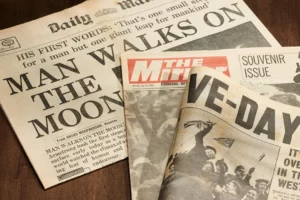
Newspapers in 1969 were dominated by the Vietnam War, the moon landing, and social upheaval. The New York Times, Washington Post, and Los Angeles Times provided extensive coverage. Headlines on July 21, 1969, read “MEN WALK ON MOON” and “Armstrong Takes First Step.” The Washington Post covered the Stonewall riots, initially reporting it as a police raid on a Greenwich Village bar, but later stories highlighted the LGBTQ+ community’s resistance. The Manson murders dominated tabloids and broadsheets alike, with sensational coverage. Hurricane Camille’s aftermath was reported with stories of survival and federal relief efforts.
Editorials debated Nixon’s Vietnam policy, with some calling for immediate withdrawal and others supporting Vietnamization. The draft lottery was a major story in December. Economic news covered inflation and the stock market. Local newspapers reported on school desegregation, urban renewal, and community events. The Chicago Tribune and other papers often took conservative stances, while the New York Times and Washington Post were more liberal.
What People Were Talking About
Around dinner tables and water coolers, Americans discussed the moon landing—many recalled where they were when Armstrong took that first step. The Vietnam War was a constant topic, with families worrying about sons and brothers in combat. The draft lottery in December gave many young men anxiety. The counterculture’s music and fashion were debated: some saw Woodstock as a peaceful gathering, others as a symbol of moral decay. The Stonewall riots were not widely discussed in mainstream society, but within LGBTQ+ communities, they were a call to action.
People also talked about the economy, the high cost of living, and the changing roles of women. The women’s liberation movement was gaining visibility, with protests at the Miss America pageant in 1968 still fresh. The environmental movement was emerging, with concerns about pollution and the first Earth Day planned for 1970. Conspiracy theories about the moon landing being faked were not yet widespread, but some skeptics existed. Overall, the national conversation was intense and polarized.
Historical Photographs
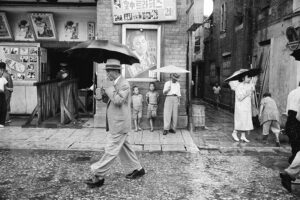
The visual record of 1969 is rich and iconic. Photographs from the Apollo 11 mission show Neil Armstrong and Buzz Aldrin on the lunar surface, with the famous image of Armstrong in his spacesuit. Earthrise photographs from Apollo 8 (December 1968) and Apollo 10 (May 1969) captured the planet from space. Woodstock photographs by Elliott Landy and others show crowds, mud, and peace signs. The Stonewall riots were captured by amateur photographers, showing young people confronting police. Hurricane Camille’s aftermath was documented in stark black-and-white images of destruction along the Gulf Coast. The Manson family photos, often mugshots, circulated in the press. News photographers captured Nixon’s inauguration, anti-war protests, and the funeral of Senator Robert Kennedy’s brother (though that was 1968). These images are preserved in archives like the Library of Congress and Getty Images.
Documents & Primary Sources
Historians studying the United States in 1969 have a wealth of primary sources. The U.S. Census Bureau’s Statistical Abstract of the United States: 1969 provides demographic and economic data. The National Archives holds presidential records from the Nixon administration, including tapes and documents. The Public Papers of the Presidents: Richard Nixon, 1969 contain speeches and statements. Newspapers and magazines from the era are available on microfilm and digitized databases. Personal letters and diaries of soldiers, activists, and ordinary citizens are held in libraries and museums. The Library of Congress has collections of photographs, including the Farm Security Administration and news agency archives. Oral histories from the Vietnam War and the civil rights movement are accessible through the Library of Congress Veterans History Project.
1969 Timeline
| Date | Event |
|---|---|
| January 14 | Explosion on the USS Enterprise kills 27 in Pearl Harbor |
| January 20 | Richard Nixon inaugurated as 37th President |
| February 9 | First flight of the Boeing 747 |
| May 20 | Battle of Hamburger Hill in Vietnam |
| June 23 | Warren E. Burger becomes Chief Justice |
| June 28 | Stonewall riots begin in New York City |
| July 16 | Apollo 11 launches from Kennedy Space Center |
| July 20 | Apollo 11 lands on the Moon; Armstrong walks |
| August 15-18 | Woodstock Music & Art Fair in Bethel, New York |
| August 17 | Hurricane Camille makes landfall in Mississippi |
| August 9-10 | Manson family murders in Los Angeles |
| December 1 | First draft lottery since 1942 |
What Changed Next
The events of 1969 had lasting consequences. The moon landing marked the peak of the space race; after Apollo 17 in 1972, NASA’s budget was cut, and no humans have returned since. The Vietnam War continued until 1975, with the fall of Saigon. The anti-war movement grew, leading to the Kent State shootings in 1970. The Stonewall riots gave birth to the gay liberation movement, leading to the first Pride marches in 1970. Woodstock became a symbol of the counterculture, but the 1970s saw a conservative backlash. Hurricane Camille led to improved building codes and disaster preparedness. The Manson murders ended the optimism of the 1960s, contributing to a sense of fear and disillusionment. The draft lottery changed conscription, and the all-volunteer military was established in 1973. The economic policies of Nixon, including wage and price controls, set the stage for stagflation in the 1970s. The year 1969 was a turning point, closing the 1960s and ushering in a more cynical era.
FAQ
What was the population of the United States in 1969?
The population was approximately 202 million, according to the U.S. Census Bureau.
What major events happened in the United States in 1969?
Key events included the Apollo 11 moon landing, Woodstock, Stonewall riots, Hurricane Camille, the Manson murders, and Richard Nixon's inauguration.
What primary sources are available for studying the United States in 1969?
Historians can use census data, presidential papers, newspapers, photographs, personal letters, and oral histories from archives like the National Archives and Library of Congress.
How did daily life in the United States in 1969 differ from today?
Daily life lacked modern technology like the internet and smartphones; television was the main medium. Social norms were more conservative, but the counterculture was challenging them. The Vietnam War and draft affected many families.






Leave a Reply