
Short Answer
Quick Snapshot
In 1966, the State of Kuwait was a small but rapidly modernizing nation on the Arabian Gulf. Just five years after gaining full independence from British protection, the country was leveraging its vast oil wealth to build a modern infrastructure, expand education, and define its political identity. The year was marked by the establishment of Kuwait University in October—a symbol of national ambition—and by the formal appointment of Sheikh Jaber Al-Ahmad Al-Sabah as Crown Prince in May, securing the line of succession under Emir Sabah Al-Salim Al-Sabah.
Oil dominated the economy, with the Kuwait Oil Company (KOC) operating the world’s largest known oil reserves at the time. The 1966 annual review of KOC documented a year of high production and investment. Meanwhile, the first comprehensive statistical abstract of Kuwait, published in 1966, provided a detailed snapshot of the population, economy, and social conditions—a sign of the government’s growing administrative sophistication. For ordinary Kuwaitis, this was a time of rising incomes, new schools, and the gradual shift from a pearling and trading past to an oil-driven future.
Kuwait in 1966
Geographically, Kuwait is a small, arid country at the northwestern corner of the Persian Gulf, bordered by Iraq and Saudi Arabia. In 1966, its capital, Kuwait City, was a blend of old mud-brick houses and new concrete buildings, with a skyline punctuated by the water towers and the newly constructed ministries. The climate was harsh—summers brought intense heat and dust storms, while winters were mild with occasional rain. The country’s coastline, once a center for pearling and seafaring, was now dotted with oil terminals and tanker loading facilities.
The atmosphere was one of cautious optimism. The government, led by Emir Sabah Al-Salim Al-Sabah, was investing heavily in public services, including health, education, and housing. The discovery of oil in the 1930s and the subsequent boom had transformed Kuwait from a poor sheikhdom into one of the wealthiest per capita nations in the world. Yet, traditional values and tribal customs remained strong, and the ruling Al-Sabah family worked to balance modernization with cultural continuity.
Population & Economy
The 1966 Statistical Abstract, published by the government, recorded a population of approximately 500,000—a figure that included a large expatriate workforce, primarily from other Arab countries, who came to work in the oil industry and construction. The census data, now preserved in the Global Census Archive, provides detailed breakdowns by nationality, age, and gender, though exact figures are not available in the summary source. The population was growing rapidly, driven by both natural increase and immigration.
The economy was overwhelmingly oil-based. The Kuwait Oil Company, jointly owned by British Petroleum and Gulf Oil, was the dominant producer. In 1966, its annual review highlighted record production levels and ongoing investments in extraction and export infrastructure. Oil revenues funded the state budget, allowing for generous social programs and the construction of roads, schools, and hospitals. Non-oil industries were limited—mostly small-scale manufacturing, construction, and services. The cost of living was relatively low for citizens, who benefited from subsidized housing, free healthcare, and education, but expatriates often faced higher costs for rent and goods.
Government & Politics
Kuwait was a hereditary emirate under the Al-Sabah dynasty. In 1966, Emir Sabah Al-Salim Al-Sabah, who had ruled since 1965, held executive authority. The Prime Minister was Sheikh Jaber Al-Ahmad Al-Sabah, the Emir’s nephew, who also served as the head of government. On May 31, 1966, the Emir signed an Amiri Order appointing Sheikh Jaber as Crown Prince, a move that formalized the succession and consolidated the ruling family’s control. This appointment was reported in Kuwait’s press and marked a significant political event of the year.
The political system included a National Assembly, established in 1963, which provided a degree of parliamentary representation. However, the Emir retained ultimate power, and political parties were banned. The atmosphere was one of controlled liberalization, with a free press and active debates in the assembly, but within the bounds of loyalty to the ruling family. Regional tensions, including the Arab-Israeli conflict and the Cold War, influenced foreign policy, but Kuwait maintained a neutral stance while supporting Arab causes.
Industry
The oil industry was the backbone of Kuwait’s economy. The Kuwait Oil Company’s operations at Burgan, Magwa, and Ahmadi fields produced millions of barrels per day. The annual review for 1966, now archived in the Digital Archive of the Middle East, documented the company’s activities, including drilling, production, and export. The review, written in Arabic and English, also covered safety measures, community relations, and workforce development.
Beyond oil, there were nascent industries such as a cement factory, a flour mill, and a few food-processing plants. The government was actively diversifying, but the oil sector dominated. The construction industry boomed as new government buildings, schools, and housing projects rose across Kuwait City and its suburbs. Traditional trades, such as boat building and fishing, were in decline as the economy shifted toward oil and services.
Education
In October 1966, Kuwait University was founded by Decree Law No. 29 of 1966, a landmark event in the nation’s history. Initially, the university comprised four colleges: Science, Arts, Education, and the College for Women. This was a major step toward creating a domestic educated elite and reducing reliance on foreign universities. The founding was part of a broader educational expansion that included new primary and secondary schools across the country. Literacy rates were rising, though they remained low among the older generation, particularly women.
The university’s establishment was widely celebrated as a symbol of national progress. In April 1967, additional colleges were added by Amiri Decree, but in 1966 the initial four colleges began planning their curricula and facilities. The university would later become a leading institution in the Gulf, but in its first year it was a modest undertaking with a handful of students and faculty.
Transportation
Kuwait’s transportation network was expanding rapidly. A network of paved roads connected the capital to the oil fields and to the border with Iraq and Saudi Arabia. The main port, Shuwaikh, handled cargo and passenger traffic, while oil was exported from the offshore terminal at Mina Al-Ahmadi. There was no railway system; cars and buses were the primary modes of urban transport. Many Kuwaitis owned cars, and American and Japanese models were popular. The government was also investing in an international airport, which had regular flights to other Arab capitals and Europe.
Within Kuwait City, traditional dhows still plied the waterfront, but they were increasingly used for fishing and recreational purposes. The government was planning a modern highway system, but in 1966, traffic congestion was already a sign of prosperity. For the large expatriate workforce, buses provided cheap transportation between labor camps and work sites.
Everyday Life
Daily life in Kuwait in 1966 was a blend of tradition and modernity. Most Kuwaiti families lived in single-family homes, often with inner courtyards, though new apartment buildings were appearing. The government provided subsidized housing for citizens, while expatriates lived in company camps or rented apartments. Food was abundant, with fresh fish, rice, and lamb forming the staples. The introduction of electricity and air conditioning had transformed comfort, though many older homes still used traditional wind towers.
Clothing varied: many men wore the traditional dishdasha and ghutra, while women often wore the abaya in public, though younger women began to adopt Western styles at home. Entertainment included radio broadcasts from Kuwait and neighboring countries, and television had been introduced in the early 1960s. Social life centered on family gatherings, visits to the souq, and coffeehouses. The government organized public celebrations for national holidays, and the growing middle class enjoyed new leisure activities like swimming and football.
Major Events
The most significant event of 1966 was the founding of Kuwait University in October, which represented a major investment in human capital. In May, the appointment of Sheikh Jaber Al-Ahmad Al-Sabah as Crown Prince was a key political milestone, ensuring a smooth succession. The Kuwait Oil Company’s annual review, published that year, highlighted continued production growth, reflecting the global demand for oil. The government also conducted a comprehensive census and statistical survey, providing detailed data for planning.
On the international stage, Kuwait continued to assert its independence and participated in Arab League meetings. The country also hosted various cultural events, including exhibitions and conferences, as part of its modernization drive. These events, while not dramatic, were part of a steady trajectory of nation-building.
What Newspapers Were Reporting
Kuwaiti newspapers in 1966, such as Al-Rai Al-Aam and Al-Seyassah, covered the appointment of the Crown Prince with front-page headlines. According to a retrospective in the modern Kuwait Times (which referenced the event), the Amiri Order was signed on May 31, and the news was celebrated with official ceremonies. The founding of Kuwait University was also major news, with editorials praising the government’s commitment to education. The oil industry’s performance was regularly reported, with production figures and export statistics. Newspapers also carried international news, particularly about the Arab world and the Cold War.
Local papers often published letters from readers discussing social issues, such as the role of women in society and the challenges of modernization. The government’s development projects—new hospitals, roads, and housing—were frequently highlighted as evidence of progress.
What People Were Talking About
In the souqs and coffeehouses, Kuwaitis discussed the rapid changes brought by oil wealth. Many welcomed the new schools and hospitals, but some worried about the erosion of traditional values. The influx of expatriates was a common topic, with debates about the impact on local culture and employment. The appointment of Sheikh Jaber as Crown Prince was generally well-received, as he was seen as a capable administrator. The founding of the university sparked conversations about the future of education and the need for skilled Kuwaiti professionals.
Among the younger generation, there was excitement about opportunities for higher education and careers in the oil industry. Some women began to push for greater access to education and employment, a topic that would gain momentum in the coming years. The global events, such as the Vietnam War and the Arab-Israeli conflict, were also discussed, but the focus remained on local development.
Historical Photographs
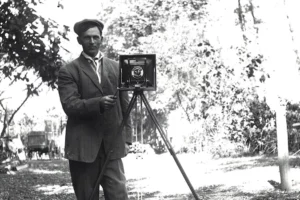
The visual record of Kuwait in 1966 includes photographs from the Kuwait Oil Company’s annual reports, which featured images of oil installations, workers, and company towns. These photographs show the modern infrastructure of the oil industry—towering derricks, storage tanks, and tanker ships—as well as the arid landscape. The government also published photographs in its statistical abstract and promotional materials, depicting new schools, hospitals, and government buildings. These images often showed a mix of traditional and modern elements, such as a Kuwaiti man in traditional dress standing in front of a modern building.
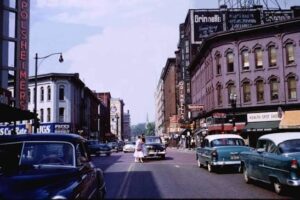
Private photographs from families and expatriates capture everyday life: picnics on the beach, children in school uniforms, and the bustling streets of Kuwait City. These visual sources are invaluable for understanding the physical environment and social atmosphere of the time.
Documents & Primary Sources
Key primary sources for studying Kuwait in 1966 include the Kuwait Oil Company – Annual Review of Operations, 1966, which is preserved in the Digital Archive of the Middle East. This bilingual report details production, financial data, and company activities. The 1966 Statistical Abstract, available through the Global Census Archive, provides comprehensive demographic and economic data, including population tables, employment figures, and housing statistics. The Decree Law No. 29 of 1966, establishing Kuwait University, is a crucial legal document, and the university’s official website provides a historical account of its founding.
Other sources include the Amiri Order appointing the Crown Prince, which is referenced in historical records, and contemporary newspaper articles from Kuwaiti and international press. Diplomatic correspondence from the British Embassy (Kuwait was a former British protectorate) also offers insights into political developments. These documents, along with photographs and oral histories, allow historians to reconstruct the year in detail.
1966 Timeline
| Date | Event |
|---|---|
| May 31 | Emir Sabah Al-Salim Al-Sabah signs an Amiri Order appointing Sheikh Jaber Al-Ahmad Al-Sabah as Crown Prince. |
| October | Kuwait University is founded by Decree Law No. 29 of 1966, with four initial colleges. |
| Throughout the year | Kuwait Oil Company publishes its annual review, documenting record oil production and exports. |
| Year-long | Government conducts the 1966 census and statistical survey, resulting in the Statistical Abstract. |
What Changed Next
The events of 1966 set the stage for Kuwait’s continued modernization. The founding of Kuwait University led to the establishment of additional colleges in 1967, including Law, Sharia, and Business, and the university would grow into a major regional institution. The appointment of Sheikh Jaber as Crown Prince paved the way for his eventual accession as Emir in 1977, providing political stability. The oil industry continued to expand, and by the early 1970s, Kuwait had nationalized its oil operations, gaining greater control over its resources.
The 1966 census and statistical abstract became the foundation for subsequent development planning. The government used this data to build more schools, hospitals, and housing, and to address the needs of a growing population. The influx of expatriates continued, leading to demographic shifts that would shape Kuwait’s society for decades. The year 1966 thus stands as a turning point, marking Kuwait’s transition from a small, oil-rich sheikhdom to a modern, educated nation.
FAQ
What was the population of Kuwait in 1966?
According to the 1966 Statistical Abstract, the population was approximately 500,000, including a large expatriate workforce.
What major events happened in Kuwait in 1966?
The most significant events were the founding of Kuwait University in October and the appointment of Sheikh Jaber Al-Ahmad Al-Sabah as Crown Prince in May.
What primary sources are available for studying Kuwait in 1966?
Key sources include the Kuwait Oil Company annual report, the 1966 Statistical Abstract, Decree Law No. 29 establishing the university, and contemporary newspaper articles.
How did daily life in Kuwait in 1966 differ from today?
Daily life was less modernized, with a smaller population, fewer cars, and traditional clothing and housing. Oil wealth was already transforming the country, but many customs remained.







Leave a Reply