Short Answer
In late September 1918, as the First World War raged across Europe, the city of San Francisco faced an invisible enemy. A local man who had recently returned from Chicago fell ill with influenza, and on September 23, San Francisco Health Officer Dr. William C. Hassler ordered him to the city hospital and placed his home under quarantine. The hope, as contemporary newspaper reports put it, was that these actions might stop the spread of the disease in its tracks, sparing San Francisco from the epidemic that was already devastating cities across the United States. But by October 9, the city had recorded its first official cases, and within weeks, San Francisco—like many American cities—would turn to a now-familiar tool: the face mask. The autumn of 1918 was a time of extraordinary fear and uncertainty, as a deadly influenza virus swept the globe, killing more people than the war itself. In the United States, local governments rolled out a patchwork of public health interventions, including school and theater closures, no-spitting ordinances, and, in many western cities, mandatory mask wearing. This article, based on contemporary reports and historical records, explores how these measures were enforced, how they were received, and what people at the time understood about the pandemic.
What Happened?
The 1918 influenza pandemic, often called the Spanish Flu, struck in three waves. The first wave appeared in the spring of 1918, but it was the second wave in the autumn that proved catastrophic. In the United States, the virus spread rapidly through military camps and civilian populations, and by late September, cities across the country were scrambling to respond. The federal government had no unified health policy, so local officials took their own measures.
According to a 2007 study published in the Proceedings of the National Academy of Sciences, the United States, unlike Europe, put considerable effort into public health interventions. There was also more geographic variation in the autumn wave of the pandemic in the U.S. compared with Europe, with some cities seeing only a single large peak in mortality and others seeing double-peaked epidemics. The study found that city-specific per-capita excess mortality in 1918 was significantly correlated with 1917 per-capita mortality, indicating some intrinsic variation in overall mortality, perhaps related to sociodemographic factors. In the subset of 23 cities for which partial data on the timing of interventions were available, an even stronger correlation was found between excess mortality and how early in the epidemic interventions were introduced.
Mask-wearing ordinances mainly popped up in the western states, according to a History.com article. The nation was still fighting in World War I, and officials framed anti-flu measures as a way to protect the troops from the deadly outbreak. In San Francisco, the city health officer, Dr. William C. Hassler, ordered the first case on September 23, but by October 10 the epidemic was underway. The city would eventually mandate masks in public places, with the order enforced by police and health officials.
The key events unfolded quickly:
- September 23, 1918 – San Francisco Health Officer Dr. William C. Hassler orders a man who returned from Chicago to the city hospital and places his home under quarantine.
- October 9, 1918 – The first case of influenza is reported in San Francisco, and the city begins to take aggressive measures.
- October 1918 – Many U.S. cities close schools, theaters, and churches; issue no-spitting ordinances; and encourage the use of handkerchiefs.
- October 1918 – Western cities, including San Francisco and Los Angeles, pass mask ordinances, requiring all citizens to wear masks in public.
- 1918–1919 – The pandemic kills an estimated 675,000 Americans, with excess mortality varying widely across cities.
The PNAS study fitted an epidemic model to weekly mortality in 16 cities with nearly complete intervention-timing data and estimated the impact of interventions. It concluded that early implementation of public health measures, including masks, significantly reduced mortality.
How It Was Seen at the Time
At the time, the public health measures were framed as patriotic duty. With the war still raging, officials urged citizens to comply to protect the troops and the home front. A contemporary report from the San Francisco influenza archive notes that the hope was that quarantine and other measures might stop the spread of the disease in its tracks, sparing San Francisco from an epidemic. The language was one of vigilance and sacrifice.
Most people complied with the mask ordinances, but some resisted. According to History.com, “Most people complied, but some resisted (or poked holes in their masks to smoke).” The resistance was often framed as an infringement on personal liberty, but it was also a practical matter—wearing a mask was uncomfortable, and many doubted its effectiveness. The prevailing mood was a mixture of fear and determination. In San Francisco, the health officer’s quarantine order was reported as a “hope” to stop the disease, but the epidemic soon overwhelmed such efforts.
One contemporary newspaper report, cited in the San Francisco archive, described the first case: “A local man who had returned to his home after a recent trip to Chicago brought the disease to San Francisco.” This report reflects the uncertainty about how the disease spread and the desire to identify a scapegoat.
Historical Snapshot
| Aspect | Detail |
|---|---|
| Date | 1918–1919 |
| Place | United States, with emphasis on western cities such as San Francisco |
| People | Dr. William C. Hassler, San Francisco Health Officer; city officials; ordinary citizens |
| What Happened | Influenza pandemic, leading to public health measures including mask mandates, school closures, and quarantines |
| Why It Mattered | Early interventions reduced mortality; mask mandates became a symbol of collective effort and resistance |
Contemporary Newspaper Coverage
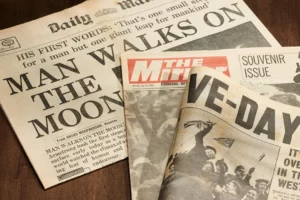
Newspapers were the primary source of information for the public during the 1918 pandemic. The San Francisco archive notes that “according to contemporary newspaper reports” the first case was traced to a traveler from Chicago. The tone of the coverage was often urgent and patriotic. For example, an article in the San Francisco Chronicle (as quoted in the History.com article) would have encouraged citizens to wear masks as a way to protect the troops. The History.com article states that officials framed anti-flu measures as a way to protect the troops from the deadly outbreak.
One notable headline from the era, as reported in the History.com article, was “Wear a mask and save your life!” (though the exact headline is not given). The coverage also included reports of resistance, such as people who poked holes in their masks to smoke, which was documented in the press as a sign of defiance. The newspapers often served as a tool of public health communication, but they also reflected the public’s skepticism and frustration.
“Most people complied, but some resisted (or poked holes in their masks to smoke).” – History.com
The PNAS study, though a modern analysis, used historical newspaper and mortality data to reconstruct the epidemic’s trajectory, showing that the public health measures were widely reported and implemented.
What People Feared
At the time, people feared the unknown nature of the disease. They did not know that influenza was caused by a virus, nor did they understand how it spread. The primary fears included the possibility of the disease spreading to soldiers and undermining the war effort, as well as the fear of death and the collapse of the healthcare system. The quarantine of the first San Francisco case was an attempt to contain the disease, but it proved futile.
There was also fear of the economic and social disruption caused by the closures and mandates. Some people feared that the mask mandates were an overreach of government power, leading to resistance. The History.com article notes that “most people complied,” but there was a visible minority who opposed the orders, some even organizing “anti-mask leagues.” The fear of the disease itself was palpable; the 1918 flu killed more than 675,000 Americans, and the death toll in cities was staggering.
How Historians See It Today
Modern historians and epidemiologists have used the 1918 pandemic as a case study in public health interventions. The 2007 PNAS study concluded that “city-specific per-capita excess mortality in 1918 was significantly correlated with 1917 per-capita mortality,” indicating that some cities had inherent vulnerabilities. More importantly, the study found a strong correlation between early interventions and lower excess mortality. In the subset of 23 cities with partial data, the correlation was even stronger. The study’s authors fitted an epidemic model to weekly mortality in 16 cities and estimated that early interventions—including mask mandates—reduced mortality significantly.
Historians today emphasize that the 1918 experience shows the importance of timing. The study concluded that “the effect of public health measures was to reduce the peak mortality and the total number of deaths.” This is a key lesson for modern pandemics. However, historians also note that the interventions were not universally applied, and the lack of a coordinated national response led to uneven outcomes.
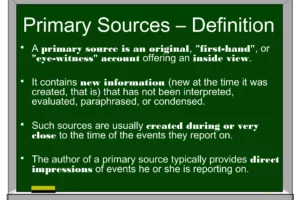
The 1918 pandemic and the mask mandates remain a powerful reminder of the challenges of public health during a crisis. The primary sources—newspapers, official reports, and personal accounts—reveal a society struggling to understand a deadly disease while balancing individual freedom and collective safety. The evidence from the PNAS study, based on contemporary data, confirms that these measures, when implemented early, saved lives. The story of the 1918 flu is not just a tale of suffering; it is a lesson in the power of human action to mitigate a catastrophe.
FAQ
Did mask mandates actually work in 1918?
According to a 2007 PNAS study, cities that implemented public health measures early, including mask mandates, experienced lower excess mortality. The study found a strong correlation between early intervention and reduced mortality, suggesting that masks and other measures were effective when applied promptly.
Why did some people resist wearing masks in 1918?
Resistance stemmed from a variety of reasons: discomfort, skepticism about the mask's effectiveness, and concerns about personal liberty. Some people poked holes in their masks to smoke, and a few formed 'anti-mask leagues.' Despite this, most people complied, especially in cities where the ordinances were enforced.




Leave a Reply