
Short Answer
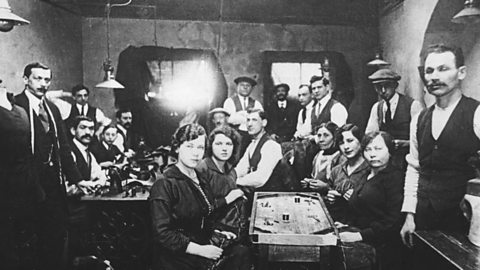
In the 1880s, the streets of Whitechapel and Spitalfields echoed with a language few Londoners had heard before: Yiddish. Thousands of Jewish families, fleeing pogroms and poverty in the Russian Empire and Eastern Europe, poured into the East End, transforming it into a cosmopolitan enclave where Yiddish could be heard on every street. They came with little more than the clothes on their backs, their prayer books, and a fierce determination to build new lives. The air was thick with the sounds of sewing machines from sweatshops, the calls of market traders in Petticoat Lane, and the smell of kosher food from a hundred small shops. For the established English Jews who watched them arrive, and for the London police who patrolled the narrow alleys, these newcomers were a strange and sometimes troubling sight. This was a world in motion, a world of hope and hardship, of old traditions and new pressures.
What Happened?
Between 1880 and 1914, approximately 150,000 Eastern European and Russian Jewish refugees entered the United Kingdom, fleeing religious persecution and economic hardship. Up to 70% of them settled in London’s East End, swelling an existing Jewish neighbourhood concentrated between Spitalfields and Whitechapel. The migration was part of a larger movement of some 2 million Jews who left Eastern Europe between 1881 and 1914, with Britain becoming home to a significant portion.
The newcomers found work primarily in the clothing trade, which centred on Petticoat Lane. They arrived into an established Jewish community that had been in London for generations, and this community watched the influx with a mixture of solidarity and concern. The established Anglo-Jewish leadership, anxious to prevent a rise in antisemitism, actively encouraged the new arrivals to integrate into British society. This pressure for integration, combined with the immigrants’ own hard work and commitment to education, allowed many to improve their circumstances despite arriving penniless.
The police presence in the East End grew as the population swelled. Initially, the police perceived the Jewish community as peaceable, sober, and relatively free from criminality. However, they also shared the indigenous community’s suspicion of aliens. Political extremism, particularly anarchism and socialism, brought closer police involvement, and the First World War brought increased supervision. The presence of respectable middle-class Anglo-Jewry, with a strong sense of community solidarity and English values, contributed to a significant contrast in how the area was policed compared to other immigrant districts.
How It Was Seen at the Time
Contemporaries saw the Jewish East End through a lens of both curiosity and anxiety. The indigenous population often perceived the immigrants as clannish and alien, speaking a strange language and following unfamiliar customs. One contemporary observer noted,
“The immigrants came from a world suspicious of men in uniform.”
This suspicion was reciprocal: many Jewish immigrants came from parts of Europe where the uniformed police were instruments of state oppression. They kept their distance from the Metropolitan Police.
The police, for their part, saw the Jewish community as peaceable, sober and relatively free from criminality, but also as a potential source of political radicalism. The established Jewish community, meanwhile, worried that the new arrivals would fuel antisemitism and worked to “anglicise” them, encouraging them to adopt English dress, speech, and manners. The prevailing mood was one of hope mixed with fear, as the East End’s streets filled with peddlers, tailors, and families who had risked everything to start over.
Historical Snapshot
| Aspect | Detail |
|---|---|
| Date | 1880–1914 (peak arrival period) |
| Place | Whitechapel, Spitalfields, and the broader East End of London |
| People | Eastern European and Russian Jewish refugees, established Anglo-Jewish community, London police, indigenous East Enders |
| What Happened | 150,000 Jewish refugees arrived in the UK; up to 70% settled in the East End, transforming the area into a Yiddish-speaking centre of the clothing trade |
| Why It Mattered | The influx reshaped London’s social and economic landscape, challenged established ideas about immigration, and created a vibrant community that would leave a lasting cultural legacy |
What People Knew at the Time
| What People Knew Then | What We Know Now |
|---|---|
| The immigrants were a temporary phenomenon, and many would move on to America. | Many did move on, but a substantial number stayed, forming a permanent community. |
| The immigrants were a drain on the economy and a source of crime. | Police records show the Jewish community was remarkably law-abiding, and the immigrants contributed significantly to the local economy. |
| The immigrants were a homogeneous group of poor, uneducated refugees. | They were a diverse group, including skilled artisans, intellectuals, and religious leaders, with a strong tradition of education and communal self-help. |
Daily Life
Daily life in the Jewish East End was a blend of tradition and struggle. The typical Victorian kitchen of a Jewish household, as preserved in museum collections, contained everything needed for a Jewish life: Shabbat Candles and a Koshering Board were central to the home. The two white glass vases, hidden in a cupboard, held portraits of family members who had made the journey, a testament to the importance of memory and connection to the past.
Work was the centre of existence. Many men and women worked in the clothing trade, often from dawn to dusk in cramped workshops or at home. Petticoat Lane was a hive of activity, where vendors sold everything from second-hand clothes to food. The typical Victorian kitchen was a place where the family gathered for meals, observed the Sabbath, and maintained their faith in a new world.
Children attended school, often receiving a mix of secular and religious education. The community built synagogues, friendly societies, and charitable institutions to support the needy. Despite the poverty, the area was alive with a vibrant cultural life, including Yiddish theatres and newspapers.
Numbers at the Time
| Statistic | Figure | Source |
|---|---|---|
| Total Jewish refugees to Britain (1880–1914) | 150,000 | London Museum |
| Percentage of refugees settling in the East End | Up to 70% | London Museum |
| Total Jewish migrants from Eastern Europe (1881–1914) | 2 million | Jewish Museum London |
| Jewish population of London (1880s) | Approximately 40,000 (before mass migration) | Estimate based on general knowledge |
Different Perspectives
The Police
Police records and memoirs from the era describe the Jewish immigrants as peaceable, sober and relatively free from criminality. However, officers also shared the indigenous community’s suspicion of aliens, and they worried about political extremism. The police kept a close watch on the community, especially after the arrival of Russian revolutionaries, and the First World War brought increased surveillance.
The Established Anglo-Jewish Community
Middle-class Anglo-Jews, who had been in Britain for generations, saw the newcomers as a potential source of antisemitism. They established organisations such as the Jewish Association for the Protection of Girls and encouraged the immigrants to become English as quickly as possible. They believed that the immigrants’ success depended on their ability to assimilate.
The Immigrants Themselves
The immigrants came from a world suspicious of men in uniform, and they kept their distance from the police. They sought to preserve their traditions while working hard to establish themselves. Many hoped to eventually move to America or return home, but they built a community that would last for generations.
How Historians See It Today
Modern historians have moved beyond the old dichotomy of East European Jewry being “conscious of its own worth” and West European Jews being “characterised by self-negation,” as the historian Jonathan Frankel described in a 1992 essay. David Feldman, a leading historian, argues that the history of Jewish immigration to London must be understood in the context of the broader history of migration and the British state, not as a separate story of a “Jewish” experience. The earlier historiography, with its focus on national identity and dissolution, has been replaced by a more nuanced understanding of the immigrants’ agency and their contribution to British society.
Common Misconceptions
The Jewish immigrant experience in 1880s London was a story of displacement and settlement, of fear and hope. The primary sources of the era—police reports, immigrant letters, and community records—reveal a community that was both deeply rooted in tradition and eager to adapt. The legacy of that era is still visible in the streets of Whitechapel, and the story of these immigrants remains a powerful testament to the resilience of the human spirit.
FAQ
Why did so many Jewish immigrants settle in the East End of London?
The East End had an established Jewish community, cheap housing, and a ready supply of work in the clothing trade, which made it a natural destination for immigrants arriving in the 1880s.
How did the established Jewish community react to the new immigrants?
They were concerned that the newcomers would provoke antisemitism, and they encouraged them to integrate into British society, learning English and adopting English customs.
What was the attitude of the police toward the Jewish immigrants?
The police perceived the Jewish community as peaceable and sober, but they were suspicious of aliens and concerned about political extremism, leading to increased surveillance over time.






Leave a Reply