
Short Answer
In the spring of 1933, a young girl sat down at a kitchen table with a pencil and a piece of paper. She wrote to Mrs. Roosevelt, the First Lady, describing her family’s poverty—no food, no shoes, no money for school supplies. Her letter was one of thousands that poured into the White House from children across America during the Great Depression. These letters, along with family correspondence and diaries, offer an intimate window into the lives of the Depression’s youngest victims. They show children who were hungry, sick, and frightened, yet often hopeful, addressing Mrs. Roosevelt with a desperate trust that seems remarkable to modern readers. This article draws on these primary sources to reconstruct what it meant to be a child in the 1930s.
What Happened?
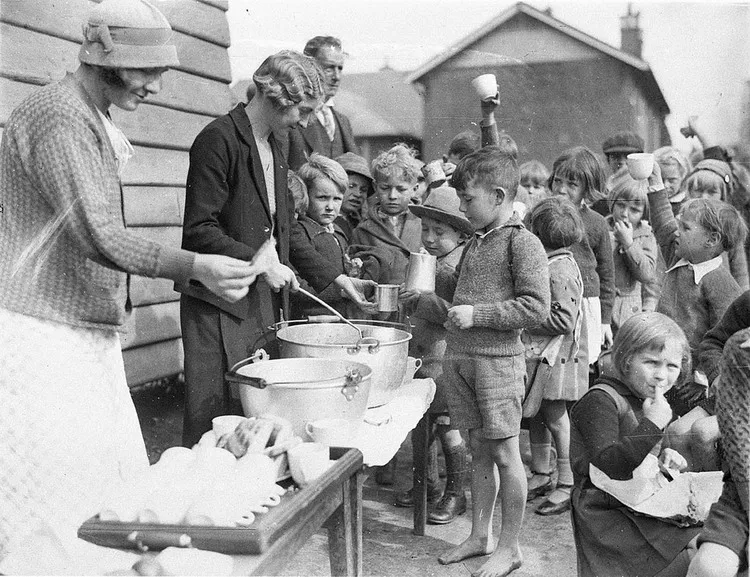
The Great Depression began with the stock market crash of October 1929, but its deepest impact on children came in the early 1930s as unemployment reached 25 percent and families lost homes, farms, and savings. Children experienced malnutrition, disease, and interrupted schooling. In 1933, the New Deal established the National Youth Administration (NYA) to provide aid to needy youth, and Eleanor Roosevelt became its most visible spokesperson. She used her newspaper columns and radio broadcasts to advocate for expanded federal aid to poor children and teens. The First Lady also personally received a flood of letters from children begging for clothes, food, and money. These letters were collected and later published in the volume Dear Mrs. Roosevelt: Letters from Children of the Great Depression, edited by Robert Cohen (University of North Carolina Press, 2002).
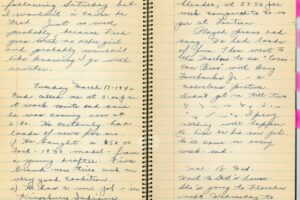
The letters are dated throughout the 1930s, with a peak during the worst years of the Depression (1932–1935). They describe families without income, children forced to quit school, and the shame of poverty. The Linsley family, whose correspondence from 1932 to 1934 survives in the Dear Daddy – The Farm Letters, lived in a tiny cabin near Nevis, Minnesota, with no running water or electricity, while the father worked in Minneapolis. The Bean Ticket Letters, written by Nellie Blair Greene to a friend in Jackson, Michigan, from 1930 to 1948, document a middle-class family’s struggle to keep up appearances. These primary sources show that children were not passive victims; they wrote, begged, and hoped for relief.
How It Was Seen at the Time
Contemporaries saw Eleanor Roosevelt as a unique champion for children. As one publisher later noted, “Impoverished young Americans had no greater champion during the Depression than Mrs. Roosevelt.” She was seen as a figure who listened and who could influence the federal government. Children wrote to her with a mixture of formality and desperation. Their letters often began with “Dear Mrs. Roosevelt” and then pleaded for basic necessities. The prevailing mood was one of hope mixed with despair—hope that the First Lady might help, and despair at the conditions they endured. The letters themselves, preserved in archives, show that children believed the President and his wife could save them. They were not always accurate in their expectations, but the letters reveal a faith in the federal government that was remarkable for the time.
Historical Snapshot
| Aspect | Detail |
|---|---|
| Date | 1929–1939 (Depression era); letters primarily from 1930–1936 |
| Place | United States, especially rural and urban areas; letters sent to the White House |
| People | Children and teens, Eleanor Roosevelt, families, government officials |
| What Happened | Children wrote letters to Eleanor Roosevelt describing poverty, hunger, and need |
| Why It Mattered | The letters led to increased federal aid to children and youth, and they became a primary source for understanding the Depression |
Letters & Diaries
The most direct evidence of children’s experiences comes from the letters they wrote. The Dear Mrs. Roosevelt collection includes hundreds of letters from children aged roughly six to sixteen. Many ask for food, clothing, and money. One child wrote, “I am a girl of twelve years old. My mother is sick and my father has no work. We have no food. Please send me something.” Another wrote, “I want to go to school, but I have no shoes.” These letters are raw and unedited, offering a direct glimpse into the child’s mind.
Beyond the White House letters, family correspondence provides a broader view. The Linsley family letters, written between James, Martha, and their children Ruth and John, from 1932 to 1934, were exchanged almost daily. James lived in Minneapolis while Martha and the children lived on a farm near Nevis, Minnesota. They wrote about the weather, the crops, the lack of money, and the struggle to keep the children fed and clothed. The letters are remarkable for their honesty—they do not hide the difficulty. The Bean Ticket Letters, written by Nellie Blair Greene to her friend Delia, describe the middle-class family’s efforts to maintain appearances and to keep a roof over their heads. These letters show that children experienced the Depression not only through hunger but also through the emotional strain of their parents.
Daily Life
For many children, daily life was a constant struggle for the basics. The Linsley family’s cabin near Nevis, Minnesota, had no running water or electricity and remained uninsulated through two Minnesota winters. Children wore patched clothing, often went to school barefoot, and ate only what the family could grow or afford. The letters describe meals of beans and potatoes, and sometimes no meals at all. Children often worked alongside parents, helping with chores or taking jobs to earn a few cents. The Bean Ticket Letters describe a middle-class family trying to maintain a household, but the children still felt the pinch—less meat, no new clothes, and the constant worry of eviction. The Depression forced children to grow up quickly, taking on responsibilities that would have been unthinkable a decade earlier.
What People Feared
Children and their families feared the immediate threat of hunger and homelessness. The letters reveal fears of losing the family home, of being sent to orphanages, and of never being able to return to school. The Linsley letters show the father’s fear of not being able to support his family, and the children’s fear of being separated. The Bean Ticket letters reveal a middle-class family’s fear of losing respectability and falling into poverty. There was also a broader fear that the Depression would never end, and that the children would be permanently damaged. The letters themselves often express a fear of being forgotten, of being invisible to the government. The fear was rational—many families did lose their homes and children were sent to institutions—but it was also a psychological burden that the letters make palpable.
How Historians See It Today
Modern historians, such as Robert Cohen, who edited Dear Mrs. Roosevelt, interpret these letters as a crucial primary source for understanding the Depression’s impact on children. They argue that the letters show not only the suffering but also the agency of children—they were not passive victims but actively sought help. Historians also point out that Eleanor Roosevelt’s advocacy, and the letters themselves, helped shape the New Deal’s programs for youth, such as the National Youth Administration. The letters reveal a broader pattern of poverty and inequality that affected children of all backgrounds, though the letters also show racial discrimination, as Mrs. Roosevelt insisted that aid be given without discrimination. Today, historians view these letters as a powerful corrective to the image of the Depression as a purely adult crisis; they show that children were at the center of the struggle.
Common Misconceptions
The letters and diaries of the 1930s remain a testament to the resilience and vulnerability of children. They remind us that the Great Depression was not just a financial event but a human one, and that the voices of the youngest survivors have much to teach us about the past.
FAQ
Why did children write to Eleanor Roosevelt during the Depression?
Children wrote to Eleanor Roosevelt because she was the most visible advocate for poor children. She used her newspaper columns and radio broadcasts to speak out for federal aid to children, and she was the head of the National Youth Administration. Children wrote to her asking for food, clothing, money, and help to stay in school.
What kinds of things did children describe in their letters?
Children described hunger, lack of clothing, the fear of losing their homes, and the inability to attend school. They often asked for specific items like shoes, coats, and food, and they expressed hope that the First Lady could help them.
How did Eleanor Roosevelt respond to these letters?
Eleanor Roosevelt was deeply moved by the letters and used them to advocate for expanded federal aid. She also encouraged the National Youth Administration to respond to the needs of children, and she worked to ensure that aid was distributed without discrimination.



Leave a Reply